Fabric Guide
A separate guide for every product we sell: which type suits which job, and what to watch for in cutting and sewing.
Lining
All lining →
Satin lining
Satin lining: what it is, how to choose it, and where it goes wrong
Satin lining is a woven lining with a glossy face and a slippery hand that covers the inside of a garment. Here is where the sheen comes from, which lining suits which job, and the mistakes that show up between spreading and pressing.
UB-SA150 Read the guide →

Polyester lining
Polyester lining: why this is the one everybody uses
Polyester lining is a plain-woven, matt-faced, hard-wearing lining — the type that moves most in garment production. Here is why it is so common, what weight and thread density actually tell you, and what to watch in cutting and sewing.
UB-PA150 Read the guide →
190T lining
190T lining: what the number counts, and what happens when it goes up
190T lining is a densely woven polyester lining that takes its name from the number of threads in a unit area. Here is what the count actually measures, where the gap between 170 and 210 is felt, and which jobs call for this cloth.
UB-TA190 Read the guide →

Jesica lining
Jesica lining: when you want matt with body
Jesica is a densely woven, matt-faced lining that gives a full hand without adding weight and holds its shape through washing. Here is what a matt lining is for, how to work with trade names, and where it earns its place in jackets and overcoats.
UB-JS150 Read the guide →
Micro lining
Micro lining: why a finer filament is soft and strong at once
Micro lining is densely woven from microfibre yarn; its soft hand and high strength put it under heavy outer fabrics. Here is when a filament counts as "micro", what that fineness actually changes, and where it earns its place in coats and raincoats.
UB-MK150 Read the guide →
Interlining
All interlining →
Paper interlining
Paper interlining: how a fusible works and how to set the press
Paper interlining is a fusible with a non-woven face; it gives body to collars, cuffs and plackets and keeps cut edges from opening up. Here is what non-woven means in practice, the three settings that make a fuse work, and the three faults that come up most.
UB-KT090 Read the guide →

Chiffon interlining
Chiffon interlining: fusing to a fabric that shows everything
Chiffon interlining is a thin, semi-transparent fusible; in 30 and 45 g it supports light fabrics without disturbing their drape. Here is how to stop the interlining showing through a sheer cloth, how to pick between the two weights, and why the press setting is more delicate here.
UB-ST150 Read the guide →

Body interlining
Body interlining: what actually holds a jacket front up
Body interlining is a medium-weight fusible used across the body of a garment; in 55 and 65 g it gives a form that stays up rather than collapsing. Here is how to pick the weight, the order of the layers in a jacket front, and what has to happen before you fuse anything.
UB-BT150 Read the guide →

Filling interlining
Filling interlining: what 160 cm and a 1,000-metre roll are for
Filling interlining is a wide, long-roll non-woven used as a filling and support layer in volume production. Here is why the width and the roll length are that large, what a filling layer actually does, and how consumption is worked out at this scale.
UB-DT160 Read the guide →

Full-width interlining
Full-width interlining: what holding a cloth in both directions means
Full-width interlining holds the fabric in both directions, along the length and across the width; it goes on panels that have to keep their shape. Here is the difference between one-way and two-way stability, what it changes in a jacket or coat, and when it is the wrong choice.
UB-ET150 Read the guide →
Terfix tape
Terfix tape: stabilising a line, not a surface
Terfix is a narrow fusible tape that stabilises cut edges; in 1, 1.5 and 2 cm widths it keeps seam allowances and the shoulder line in place. Here is why holding a single line often beats interlining a whole panel, which width goes where, and the order of application.
UB-TF001 Read the guide →
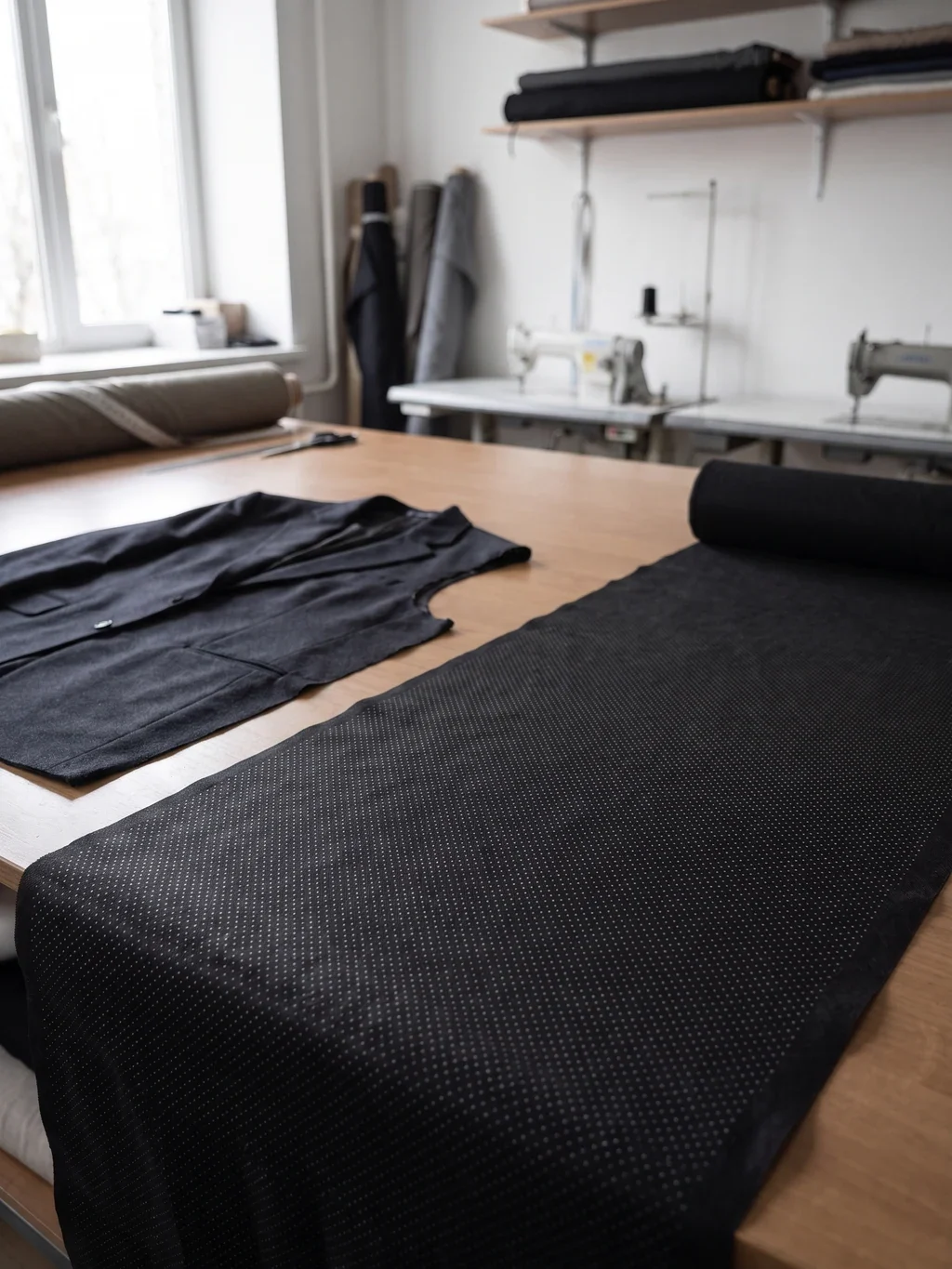
Corded jersey interlining
Corded jersey interlining: body without killing the stretch
Corded jersey interlining is a fusible on a knitted base with warp threads laid in; it gives body to stretch fabrics without killing the stretch. Here is what the knitted base does, what the laid-in threads solve, and the rules for interlining knitwear.
UB-IJ150 Read the guide →
Tulle
All tulle →
Hayal tulle
Hayal tulle: building volume with a soft tulle
Hayal is a fine tulle with a soft hand; it adds volume without stiffness and layers well. Here is what tulle actually is as a structure, what each number of layers gives you, and where it earns its place in eveningwear, bridal and veils.
UB-HT050 Read the guide →

Crystal tulle
Crystal tulle: what actually holds a full skirt out
Crystal tulle is a crisp tulle with a bright surface, used where a full skirt or a puff has to keep its shape. Here is where the crispness comes from, the logic of building volume from underneath, and what to watch when working with a stiff mesh.
UB-KR050 Read the guide →
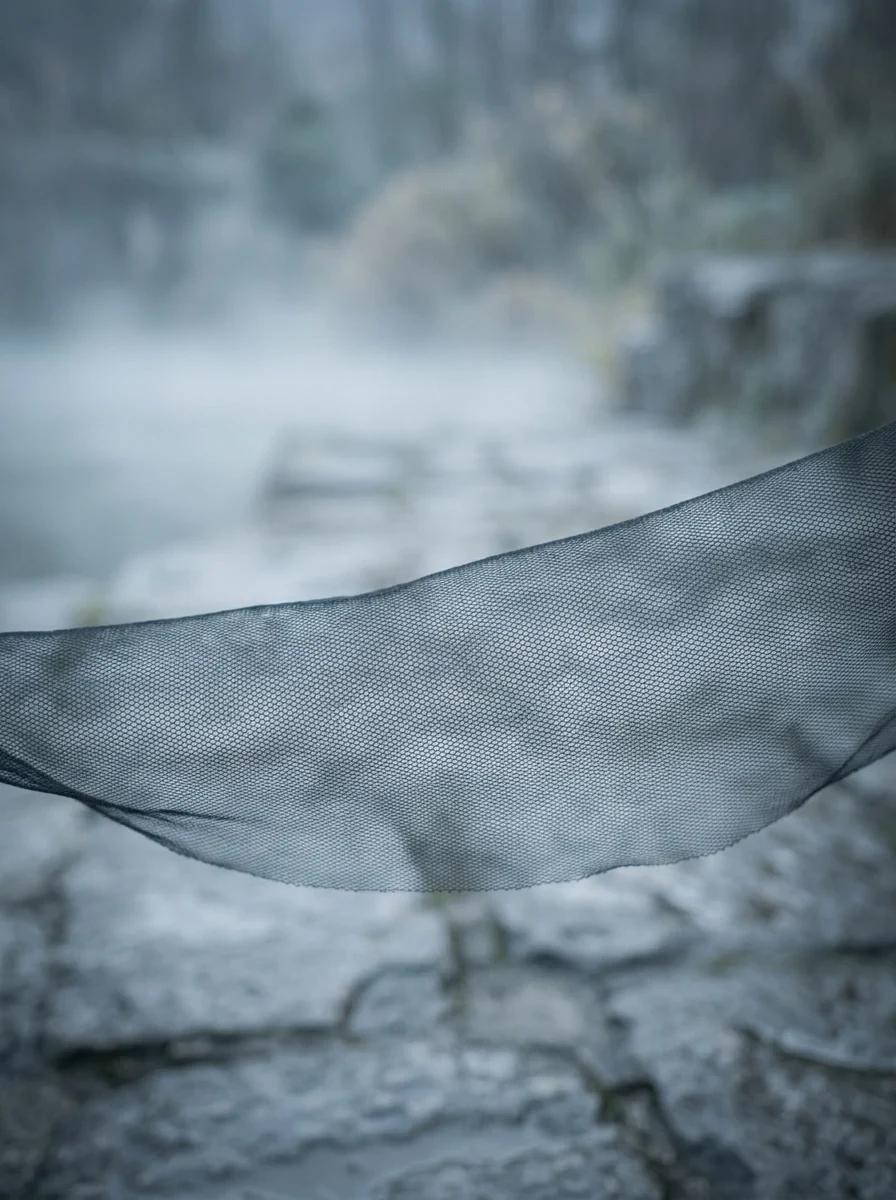
Stretch tulle
Stretch tulle: how an invisible lace join is made
Stretch tulle is a mesh that gives; it is used on close-fitting panels and wherever lace has to be joined. Here is how the stretch gets into a mesh, the invisible-join technique, and why this material is indispensable in lingerie.
UB-SR150 Read the guide →
Shoulder Pads & Felt
All shoulder pads & felt →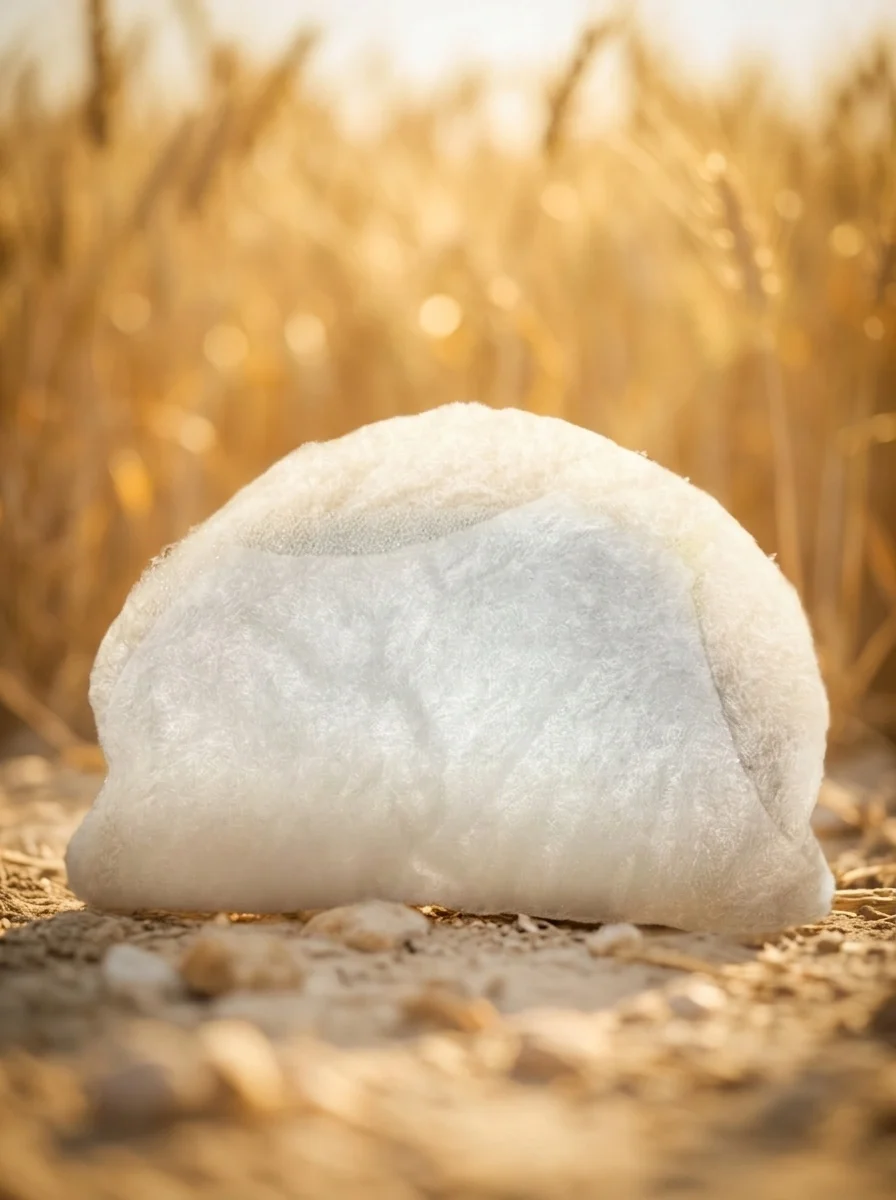
Shoulder pad
Shoulder pads: how a shoulder line is built
A shoulder pad shapes the shoulder line; thickness and curve are chosen to match the garment size. Here is why the shoulder needs support at all, what thickness and curve each change, and where and how the pad is placed.
UB-VT001 Read the guide →
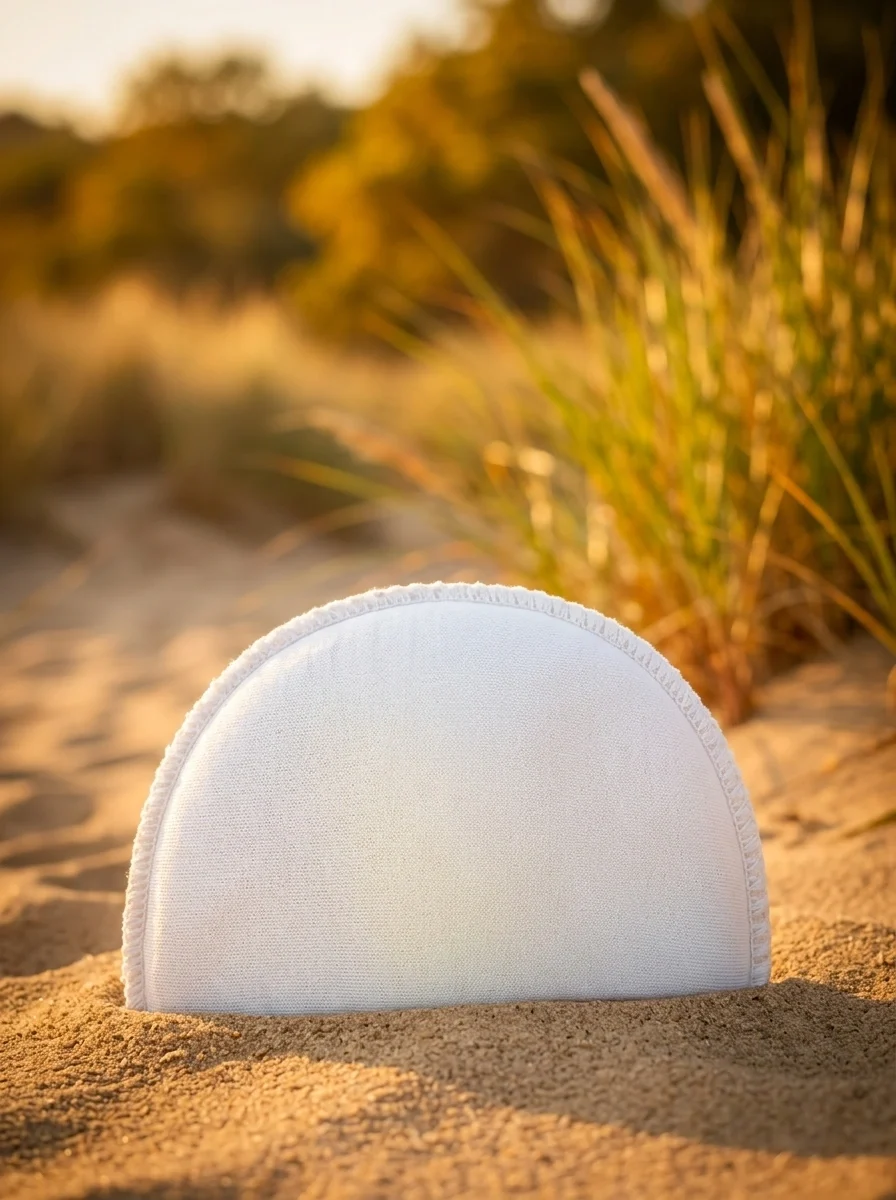
Padded shoulder pad
Padded shoulder pads: a transition that leaves no mark
A padded shoulder pad is a pad covered with wadding; it softens the shoulder transition and leaves no mark on the outer fabric. Here is why a pad shows through at all, what the covering solves, and on which cloths it becomes compulsory.
UB-VV001 Read the guide →

Felt
Felt: working with a material whose edge never frays
Felt is a pressed non-woven surface; thick, with a cut edge that does not fray, it works as filling and support. Here is how it is made, how much that non-fraying edge changes in design, and where it goes in bags and footwear.
UB-KC100 Read the guide →
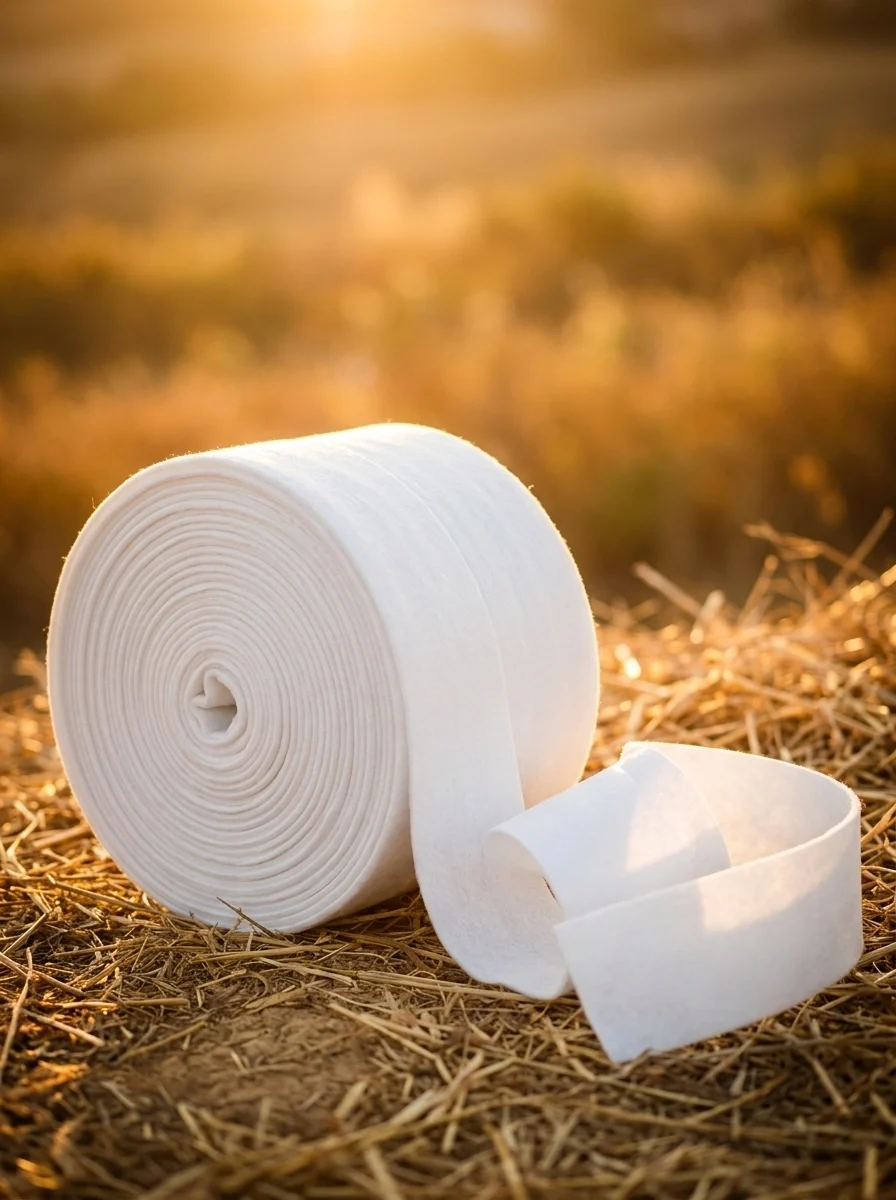
Sleeve head
Sleeve heads: why a sleeve cap collapses, and how it stays round
A sleeve head is a thin wadding strip set into the armhole; it keeps the sleeve cap round and even. Here is why the cap collapses in the first place, how the strip fills that gap, and how far around the armhole it goes.
UB-FT100 Read the guide →
Elastic, Tape & Paper
All elastic, tape & paper →
Elastic
Garment elastic: choosing the width, cutting the length, and keeping the stretch
Garment elastic is a woven tape made in widths from 1 cm to 6 cm; it keeps its stretch through washing. Here is how an elastic actually works, which width goes where, how long to cut it, and what kills the stretch.
UB-LS025 Read the guide →
Millimetre elastic
Cord elastic: where a flat elastic cannot go
Cord elastic is a fine round elastic in 0.5 and 0.7 mm, used for light gathering, straps and ties. Here is what the round section buys you, how to choose between the two diameters, and how shirring is actually done.
UB-ML001 Read the guide →

Hook and loop tape
Hook and loop tape: which side goes where, sewn or bonded?
Hook and loop tape is a two-part fastening applied by stitching or by bonding. Here is which of the two parts goes where, the difference between sewing and bonding, and why the fastening stops gripping over time.
UB-CR001 Read the guide →

Marker top paper
Marker top paper: what the layer above the lay is doing
Marker top paper is laid over the fabric plies on the spreading table; it keeps the cutting line clean. Here is why the top ply is a problem of its own, how a cutting line goes wrong, and why this layer is indispensable on an automatic cutter.
UB-PU152 Read the guide →
Marker under paper
Marker under paper: what happens beneath the lay
Marker under paper is laid beneath the fabric plies; it stops them shifting and protects the table. Here is what that invisible bottom layer actually solves, how the width is chosen, and how consumption is worked out.
UB-PL152 Read the guide →
Leather & Scuba
All leather & scuba →
Scuba suede
Scuba suede: a cloth that holds its shape and does not fray
Scuba suede has a suede-touch back and a full hand; it holds its shape and the cut edge does not fray. Here is how a scuba is built, what a non-fraying edge changes in design, and how buying by weight is worked out.
UB-SS150 Read the guide →
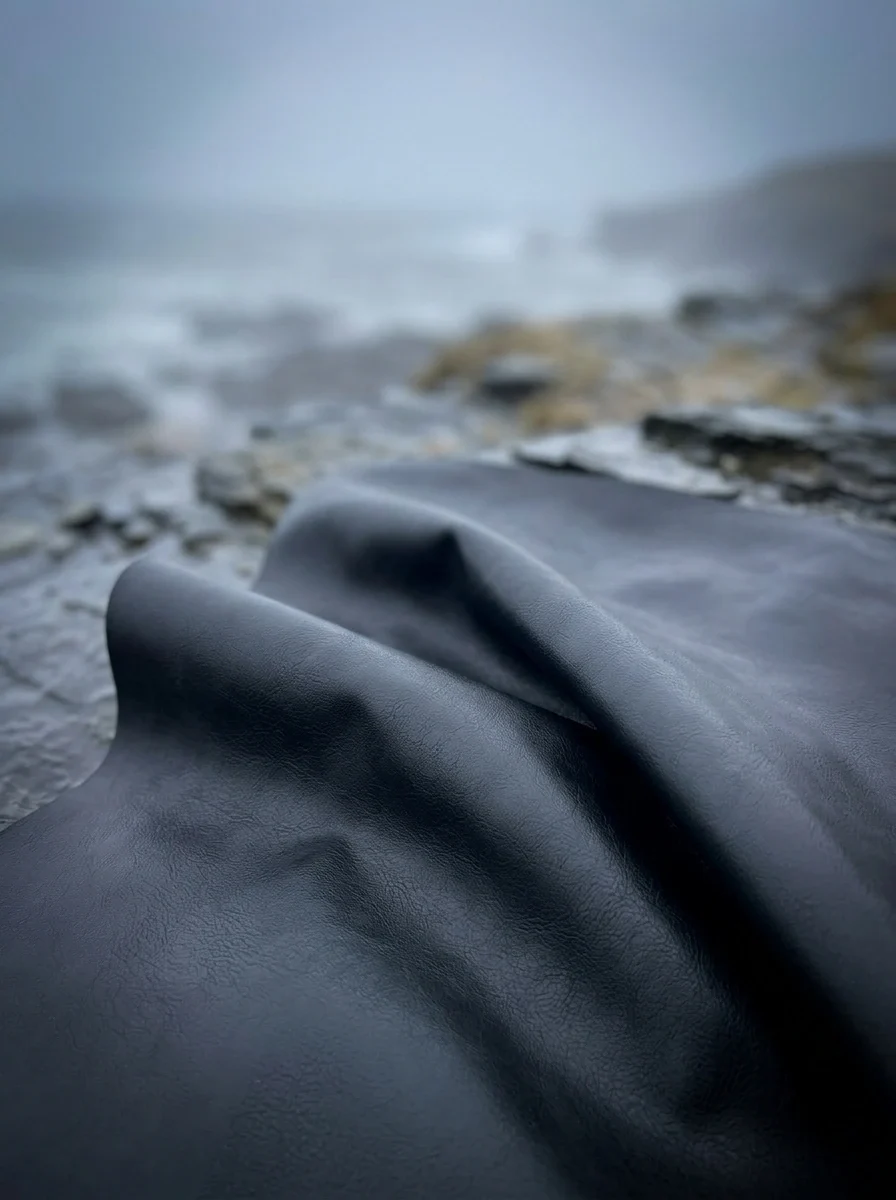
Diego leather
Diego leather: how synthetic leather is sewn, and where it goes wrong
Diego is a matt-faced synthetic leather; its soft drape and wide colour range suit everyday wear. Here is how a synthetic leather is built, where the drape comes from, and the mistakes made most often at the machine.
UB-DD135 Read the guide →
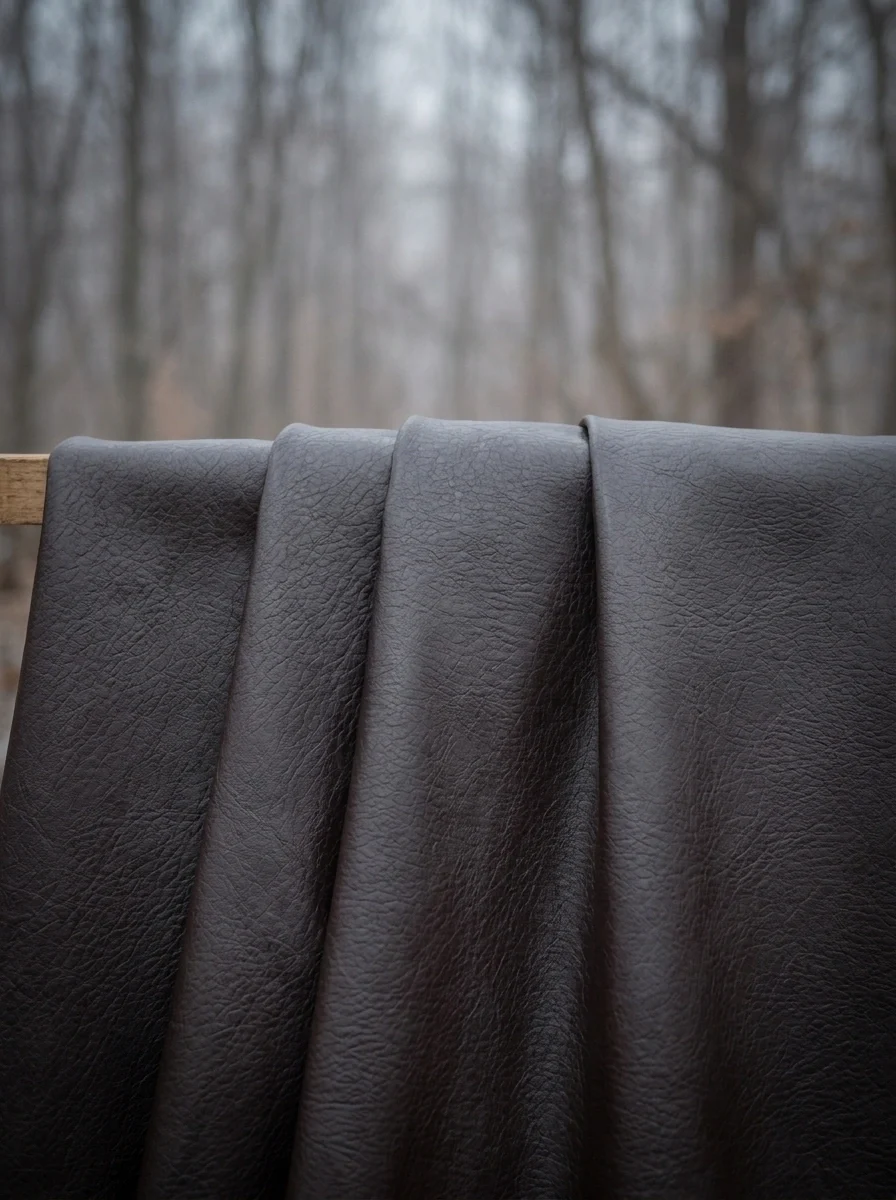
Yağmur leather
Yağmur leather: what a textured surface is actually for
Yağmur is a synthetic leather with a raindrop texture; it is slightly lustrous and comes in a wide colour range led by dark brown. Here is how the texture is made, what it buys over a smooth face, and why the texture has to be tracked when cutting.
UB-YD135 Read the guide →

Zara leather
Zara leather: when a thin synthetic leather beats a thick one
Zara is a thin, soft synthetic leather; its drape follows the body, which makes it suitable for garment production. Here is where thinness is a gain and where it is a limit, how the pattern is adapted, and how bulk is managed at the seams.
UB-ZD145 Read the guide →
Other Products
All other products →
Denier
Denier: the measure of yarn fineness, and ordering by weight
Denier is a knitted fabric sold by weight, named after the unit that measures yarn fineness. Here is what the denier unit actually says, how the fabric changes as the number rises, and how an order by weight is worked out.
UB-DN001 Read the guide →
Pocketing
Pocketing: why the hardest-worked part of a garment needs its own cloth
Pocketing is a thin, hard-wearing cloth for pocket bags; it does not shrink in the wash and sews easily. Here is why a pocket needs its own fabric, why lining tires there, and how a shrinking pocket bag ruins the outside of a pair of trousers.
UB-CP200 Read the guide →