Denier: the measure of yarn fineness, and ordering by weight
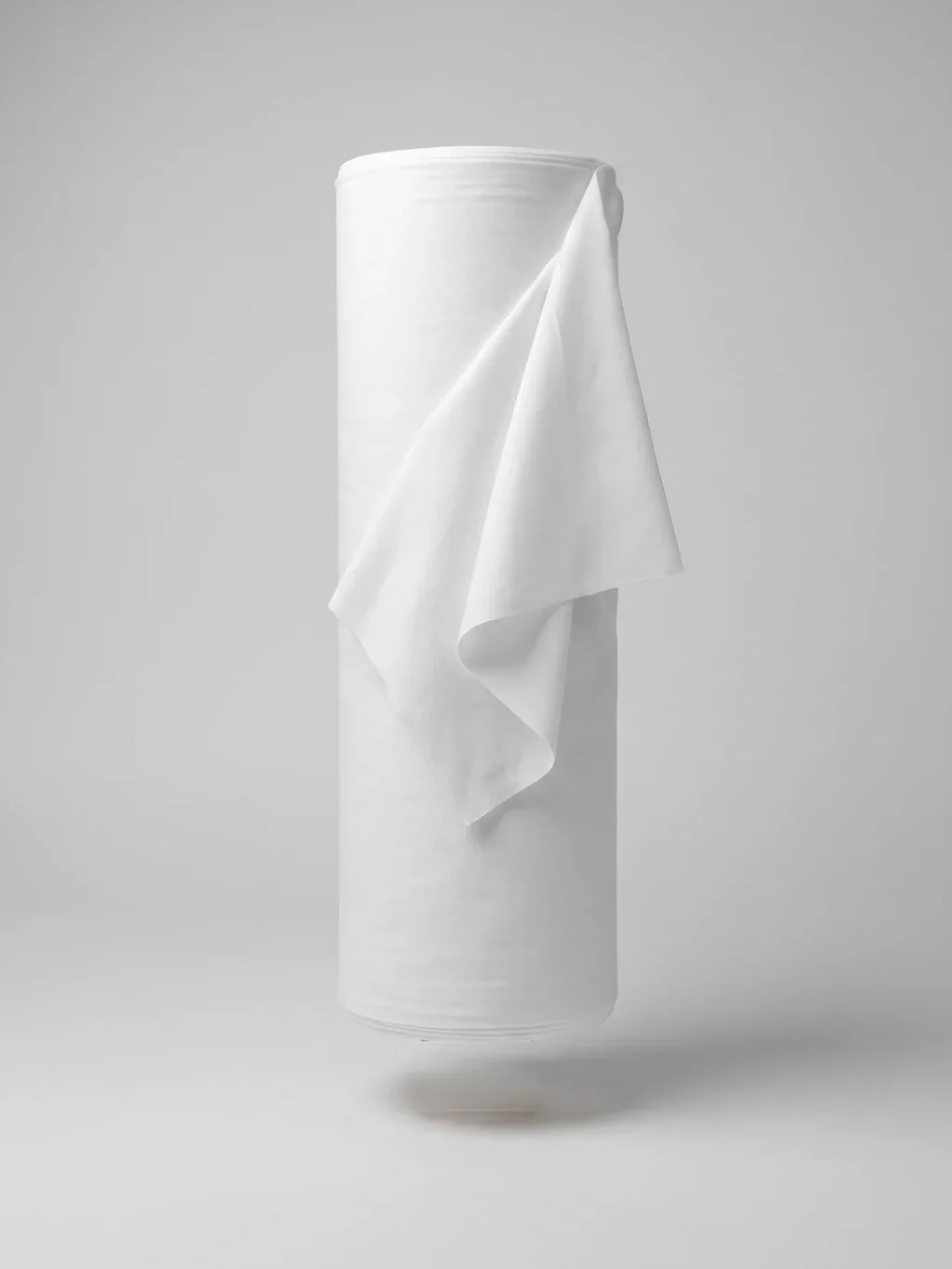
Denier is a knitted fabric sold by weight, named after the unit that measures yarn fineness. Here is what the denier unit actually says, how the fabric changes as the number rises, and how an order by weight is worked out.
UB-DN001 Updated

Denier is a unit: what does it measure?
Denier tells you how fine a yarn is. The definition is surprisingly concrete: the weight in grams of 9,000 metres of that yarn.
So 70 denier means 9,000 metres of that yarn weighs 70 grams. 40 denier is lighter, and therefore finer. 150 denier is heavier, and therefore thicker.
The logic runs backwards from what people expect and confuses at first hearing: as the number rises, the yarn gets thicker. In most familiar measures a bigger number means a bigger thing — and it does here too, but what is getting bigger is the weight, not the thickness. Because weight follows thickness, it comes out at the same place.
For scale: a natural silk filament is about 1 denier. That is, 9,000 metres of silk yarn weighs one gram. That is the scale of fineness we are talking about.
How the fabric changes as the number rises
The denier number decides the character of the cloth directly. A rough map:
| Denier | Yarn | Fabric |
|---|---|---|
| 20 – 40 | Very fine | Sheer, light, fine knit |
| 50 – 70 | Fine | Lining weight, lightly draping |
| 100 – 150 | Medium | Full, opaque, hard-wearing |
| Above 150 | Heavy | Heavy knit, outerwear and accessories |
Three things rise together with the number: opacity, strength and weight. The first two are gains, the third usually a loss. The right denier is the lowest number that gives you the opacity you need.
Denier, dtex and count: the same thing on different scales
More than one unit circulates for yarn fineness, and it causes confusion. All three measure the same thing, only the scale differs.
- Denier: the weight in grams of 9,000 metres. Common for filament yarns — polyester, nylon.
- Dtex: the weight in grams of 10,000 metres. Found as denier × 10 ÷ 9; 70 denier ≈ 78 dtex.
- Cotton count (Ne): runs the other way — the higher the number, the finer the yarn. Used for cotton yarns.
The practical consequence: if one supplier talks denier and another dtex, do not compare the numbers directly. The gap is about 11%, and that is enough to make you think two cloths are different when they are not.
Because denier and dtex are close, the difference slips past. 100 denier and 100 dtex are not the same yarn; the second is noticeably finer.
What the fabric is used for
This product is a knitted cloth, and its uses come out of its stretch and its lightness:
| Use | Why | Note |
|---|---|---|
| Lining | An inner surface that gives | Where a woven lining will not stretch |
| Inner body | Follows the figure | The layer against the skin |
| Accessories | Light and opaque | Little waste on small pieces |
Used as a lining it does a different job from a woven one. Polyester lining and satin lining are woven and do not stretch; a denier fabric is knitted and does. On close-fitting garments, or anywhere stretch is needed, that difference decides the choice.
Working out an order by weight
This cloth is sold by weight rather than by the metre. In knitted fabrics the weight per metre can vary with the batch and the tension; weight is the more reliable measure.
But what you need is metres. Bridging the two takes one figure: the weight per metre.
- Work out the metres per unit from the marker.
- Multiply by the order quantity.
- Find out the weight per metre — we give you that on the phone and it can vary by batch.
- Metres × weight per metre = the weight you need.
- Add an allowance for waste and testing.
There is a further warning with knitted cloth: it comes off the roll under tension and relaxes as it rests. Measure while it is still stretched and the real metreage comes out lower. Let the cloth lie open for a few hours before measuring.
Roll weight varies between 15 and 25 kg. Confirm the current roll weight and weight per metre on the phone before ordering; building the calculation on an old number throws your consumption estimate out.
Colour options
25 – 30 base colours are held in stock. That is a different way of working from products dyed to order: the colour is already there, with no waiting.
In return the choice is limited. If you need an unlimited colour range, a dyed-to-order product like polyester lining is the conversation — but there a lead time enters the picture.
- On small runs a stock colour is an advantage: no waiting, no minimum dye order.
- On large runs a special tone can make more sense.
- On a repeat order the risk of batch variation is lower in a stock colour.
- For tone matching, bring a piece of your fabric; we will find the closest of the 25 – 30 together.
At the machine
Being a knitted cloth, the sewing rules differ from those for woven linings:
- Needle: ball point, 70/10 – 80/12. A sharp point cuts the knitting yarn and starts a ladder.
- Stitch: it has to give — zigzag, overlock or a stretch stitch. A straight stitch breaks when the cloth stretches.
- Do not pull the cloth through; a piece sewn under tension gathers when released.
- The cut edge can curl; overlock it the same day.
- Drop the presser foot pressure.
Laddering is not as critical here as it is with stretch tulle, but it still needs attention: once a ladder starts it runs along the knit and cannot be stopped.
Common mistakes
- Comparing denier and dtex numbers directly. The gap is about 11%.
- Measuring the metreage while the cloth is still under tension. The real metreage comes out lower.
- Building the weight calculation on an old metre-weight figure. The consumption estimate goes wrong.
- Sewing with a sharp needle. The knitting yarn is cut and a ladder starts.
- Using a straight stitch. The thread breaks when the cloth stretches.
When you order
Sold by weight, with roll weights between 15 and 25 kg, in 25 – 30 base colours held in stock.
Tell us how many units you are producing and we can convert your metre requirement into kilos together.
If you know the denier you want, say so; if not, describing where the cloth is going is enough — we will work out the right fineness together.
For tone matching, bring a piece. We find the closest stock colour by eye.
Samples, stock and delivery are settled on the phone.
Frequently asked questions
What exactly does denier measure?
The weight in grams of 9,000 metres of yarn. 70 denier means 9,000 metres of that yarn weighs 70 grams. As the number rises the yarn gets thicker. For scale, a natural silk filament is about 1 denier — 9,000 metres of it weighs one gram.
Are denier and dtex the same?
They measure the same thing on different scales. Denier is the weight of 9,000 metres, dtex the weight of 10,000. Dtex = denier × 10 ÷ 9, so 70 denier ≈ 78 dtex. Because the numbers are close they get confused: 100 denier and 100 dtex are not the same yarn — the second is noticeably finer.
How many kilos should I order?
Work out the metres per unit from the marker, multiply by the order quantity and by the weight per metre. We give you the weight per metre on the phone and it can vary by batch. Before measuring metres, let the cloth lie open for a few hours — it comes off the roll under tension and relaxes as it rests.
Can it replace a woven lining?
It depends on the job. A denier fabric is knitted and stretches; polyester lining and satin lining are woven and do not. On close-fitting garments, or anywhere stretch is needed, the knitted cloth suits better. For work like a classic jacket lining, a woven lining is preferred.
Which colours are available?
25 – 30 base colours are held in stock, so there is no waiting. If you need an unlimited range, a dyed-to-order product is the conversation — with a lead time. For tone matching, bring a piece of your fabric.