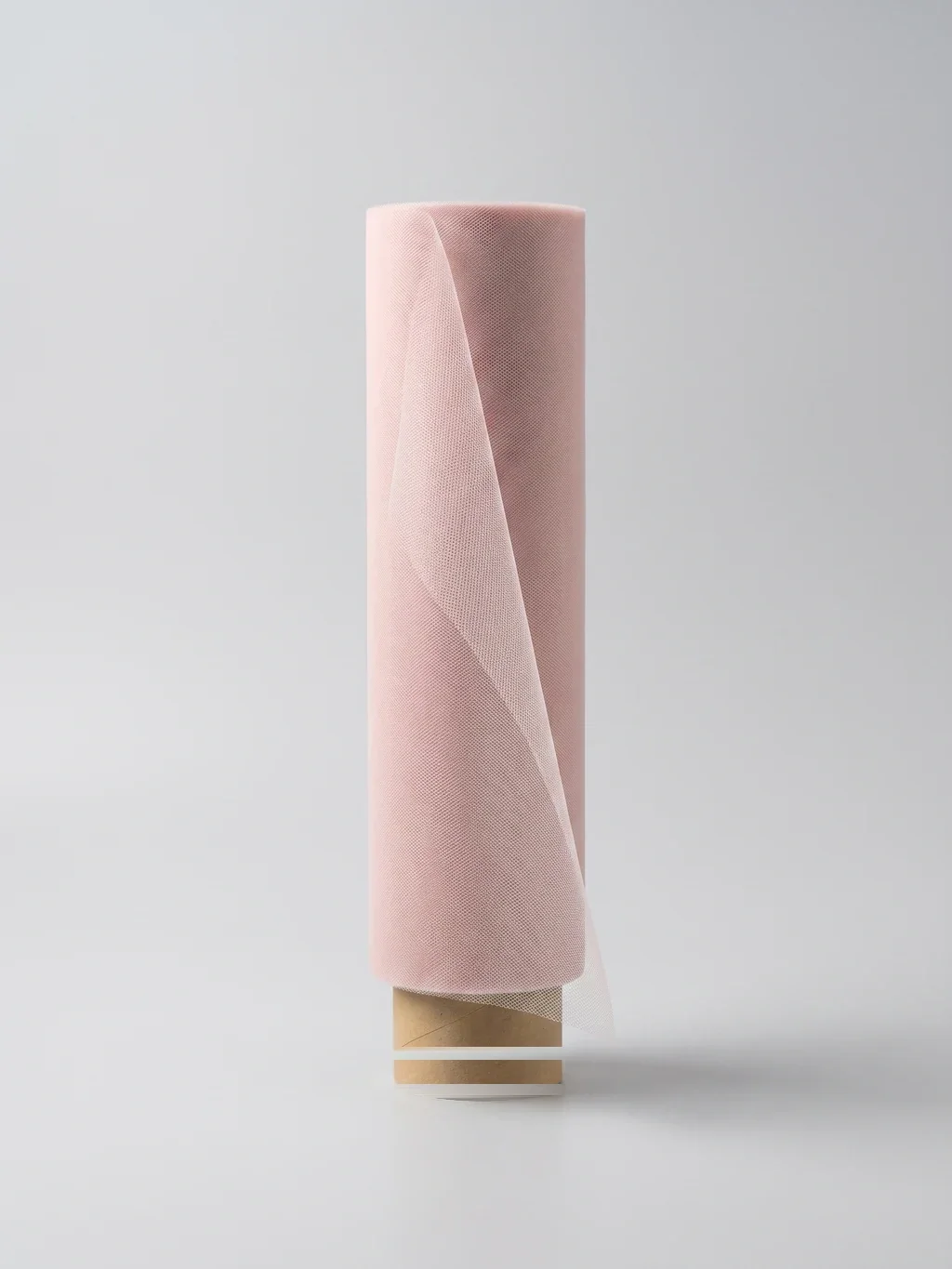
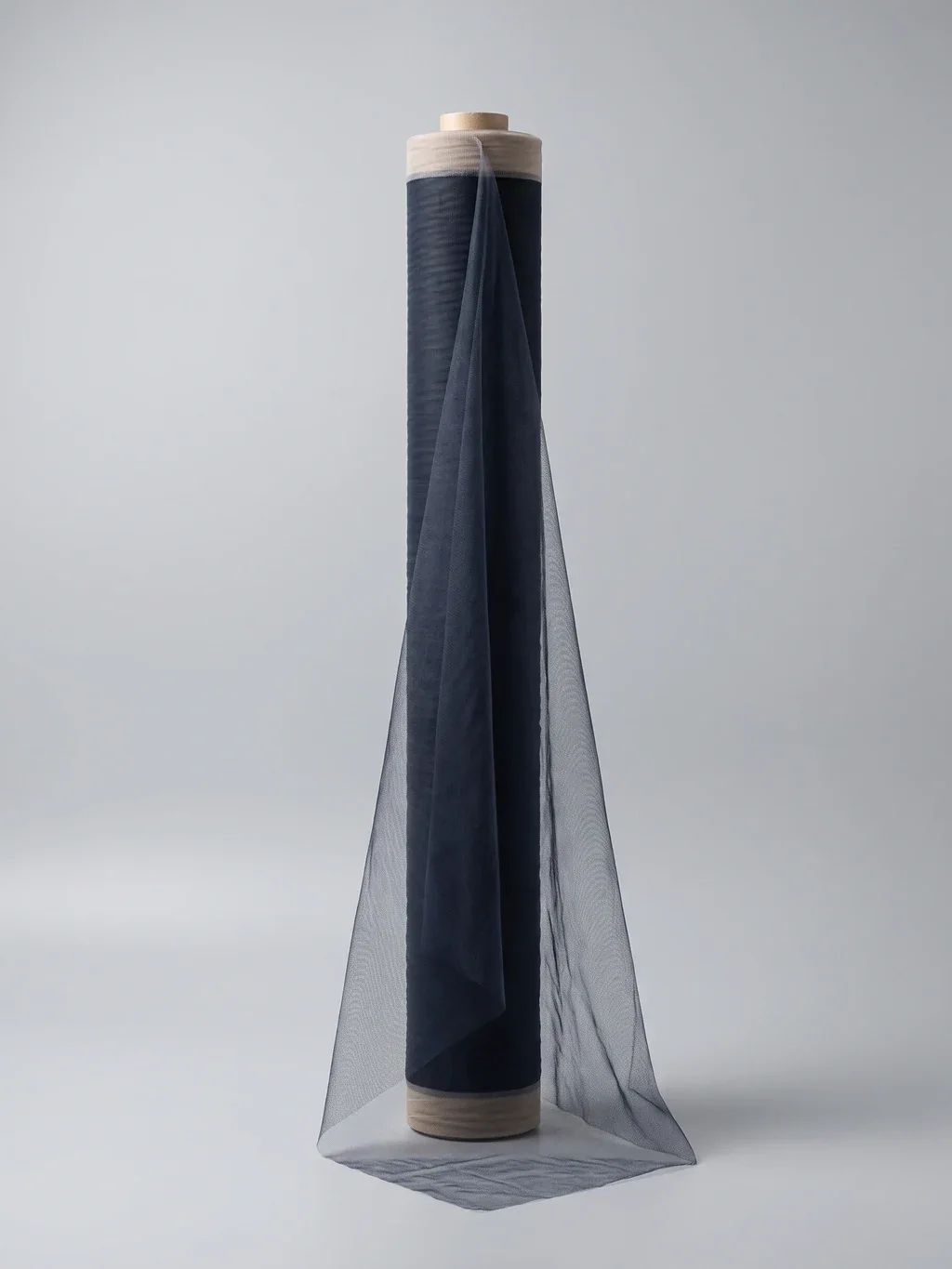
Hayal tulle: building volume with a soft tulle
Hayal is a fine tulle with a soft hand; it adds volume without stiffness and layers well. Here is what tulle actually is as a structure, what each number of layers gives you, and where it earns its place in eveningwear, bridal and veils.
UB-HT050 Updated
What is tulle, and what makes this one soft?
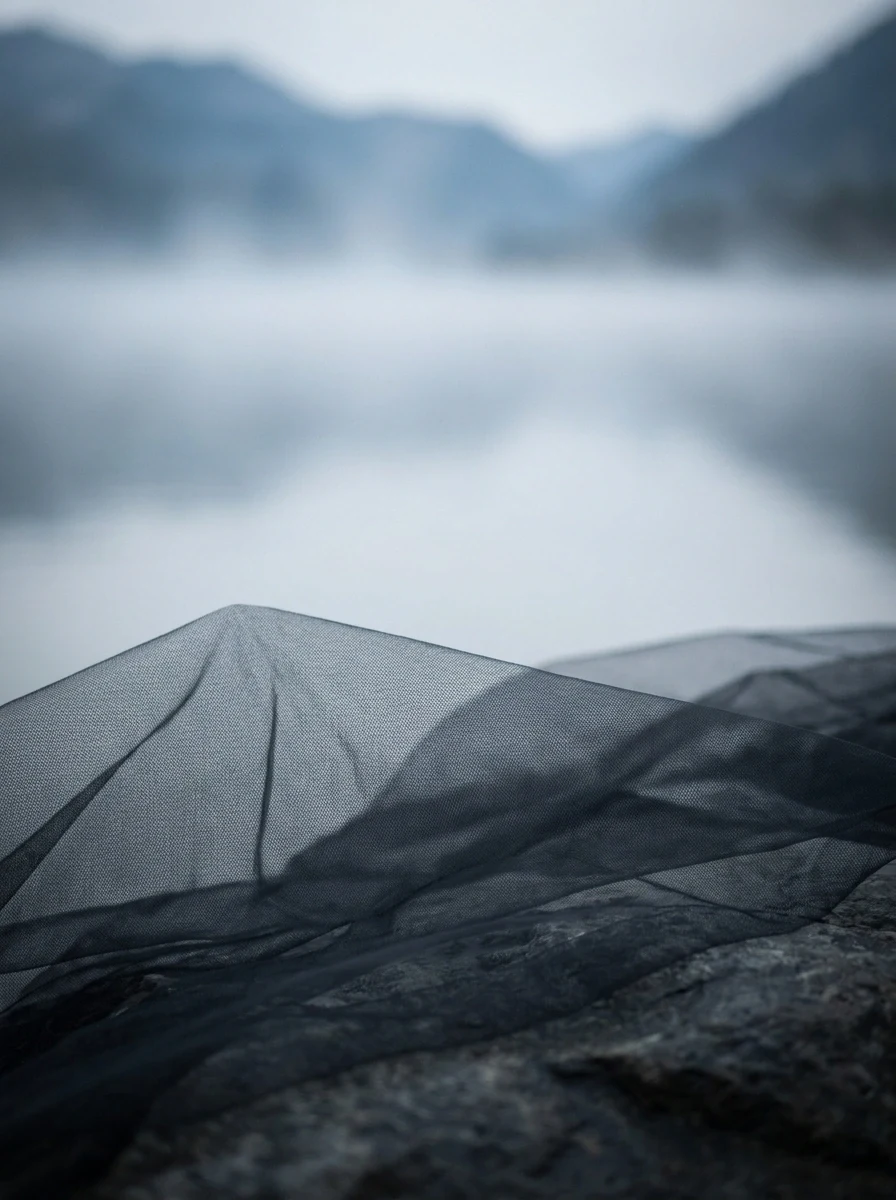
Tulle is not a woven cloth; it is a mesh. The threads knot into one another to form hexagonal holes, and most of the material is in fact air. That is where the lightness and the transparency come from.
The same mesh can be made stiff or soft. What decides is the fineness of the yarn and the finish applied to it. Hayal sits on the soft side: it flows in the hand, it does not crease, and it does not prickle against skin.
Ours comes in 50-metre rolls with no limit on colour — dyed to the tone you ask for. The crisp tulle is crystal tulle; the two do not do the same job and do not substitute for one another.
Soft tulle or crisp tulle?
This is the only real decision in choosing tulle. The rest is colour and metreage.
| Hayal (soft) | [[UB-KR050|Crystal]] (crisp) | |
|---|---|---|
| Stance | Falls downwards | Stands outwards |
| Volume | Builds with layers | Gives volume in a single layer |
| Against skin | Does not prickle, can go unlined | Can prickle, wants a lining under it |
| Look | Cloudy, soft transitions | Defined, sharp form |
| Where | Skirt layers, veils, sleeves | Full skirts, underskirts, trims |
In practice most evening dresses use both: the volume is built underneath with crystal tulle, and the layers you actually see are Hayal. That way the skirt both stands and looks soft.
Asking one tulle to give both volume and softness usually means compromising on both. Combining two tulles as layers gives a better result with less material.
What each number of layers gives
With a soft tulle, volume comes from the number of layers rather than from one layer. A rough map — it shifts with the fineness of the cloth and the length of the skirt:
- 1 – 2 layers: light movement, a shadow effect. As an overlay on a lining.
- 3 – 4 layers: definite but soft volume. Everyday eveningwear, engagement dresses.
- 5 – 8 layers: a full skirt. Bridal and ball skirts, with the lower layers cut short and the upper ones long.
- More than 8: weight starts to be a problem. At that point it is better to build the volume underneath with crystal tulle or a hoop.
Cutting the layers to different lengths makes the skirt look more natural. Cut them all the same and the hem finishes in a single hard line that reads as artificial. Finishing each layer a few centimetres off the one before softens the transition.
Cutting and sewing tulle
Cutting tulle is nothing like cutting cloth. The mesh slides, it lifts, and it folds back over itself as the blade advances.
- Keep the ply count low. Stacked up, tulle clings to itself and the cutting line goes.
- Put marker under paper on the table; tulle slides less on paper.
- The cut edge does not need finishing. Tulle does not fray — it stays as cut, which is the most practical thing about it.
- Needle: 70/10, sharp point. A heavy needle tears a hole, and the tear runs.
- Stitch length: 2 – 2.5 mm. A long stitch gathers the mesh.
- Drop the presser foot pressure, and lay thin paper under the seam line if you need to.
When gathering, do not force the tulle. Pulled hard, the mesh opens up and does not close again. Running a long basting stitch and drawing it up slowly gives a far cleaner result than gathering in one pull.
Why soft tulle for a veil
A veil is the hardest test tulle faces. It has to be fine enough to cover the face, its movement has to show as it falls, and it must not pull on the hair once it is fixed.
Crisp tulle fails on two counts at once: it prickles against the face, and it does not move — it sits there like a mould. Soft tulle stays where it falls and travels with the wearer.
- Veil layers are cut to different lengths; a single length reads flat and stiff.
- The edge can be left raw — tulle does not fray.
- Colour is chosen against the tone of the dress; an off-white veil over a white dress can read grey.
- The fixing point — comb or clip — has to be strong enough to carry the weight of the tulle.
Colour and tone matching
Colour reads differently in tulle than in cloth. Because the mesh is transparent, the tulle's colour blends with whatever lies under it: a blush tulle over a white lining and the same tulle over skin are not the same colour.
- Always check the tone over the fabric that will sit beneath it.
- Colour deepens as layers build; a tone that reads pale in one layer is pronounced in five.
- Do not mix whites in bridal. Two different whites side by side make one of them read grey.
- Bring a piece of your fabric for tone matching; screen matching is even more misleading with tulle.
You have to account for the layer effect: stack as many layers as you intend to use and look at that. A colour decision made on a single layer nearly always comes out too dark.
Common mistakes
- Cutting every layer to the same length. The hem finishes in a hard line.
- Choosing the colour from a single layer. The tone deepens as layers build.
- Trying to build all the volume from soft tulle. The weight climbs and the skirt still does not stand.
- Gathering in one pull. The mesh opens and does not close.
- Sewing with a heavy needle. A hole tears and the tear runs.
When you order
Rolls are 50 metres, with no limit on colour. Call about the width; with tulle, width is discussed against the job.
Tell us how many layers you are planning. The metreage depends on the layer count and the skirt length, and working it out together is the healthiest route.
For colour, bring a piece of the fabric that will sit underneath. Tulle is never judged on its own, only with what is behind it.
Samples, stock and delivery are settled on the phone.
Frequently asked questions
What is the difference between Hayal and crystal tulle?
How they stand. Hayal is soft, falls downwards and does not prickle. Crystal tulle is crisp, stands outwards and gives volume in a single layer. Most evening dresses use both as layers: volume underneath from crystal, the visible surface from Hayal.
How many layers make a full skirt?
For everyday eveningwear, 3–4 layers give definite but soft volume. Bridal and ball skirts run to 5–8. Past eight the weight becomes a problem, and it is better to build the volume underneath with crystal tulle or a hoop.
Does the cut edge need finishing?
No. Tulle does not fray and stays as cut. That is the most practical thing about working with it — hems and veil edges are usually left raw.
How should I choose the colour?
Stack as many layers as you intend to use, and look at them over the fabric that will sit beneath. Tulle is transparent, so its colour blends with what is behind it and deepens as layers build. A decision made on one layer nearly always comes out too dark.
How long is a roll?
50 metres. Call for the width and colour options.