Filling interlining: what 160 cm and a 1,000-metre roll are for
Filling interlining is a wide, long-roll non-woven used as a filling and support layer in volume production. Here is why the width and the roll length are that large, what a filling layer actually does, and how consumption is worked out at this scale.
UB-DT160 Updated

What is filling interlining?
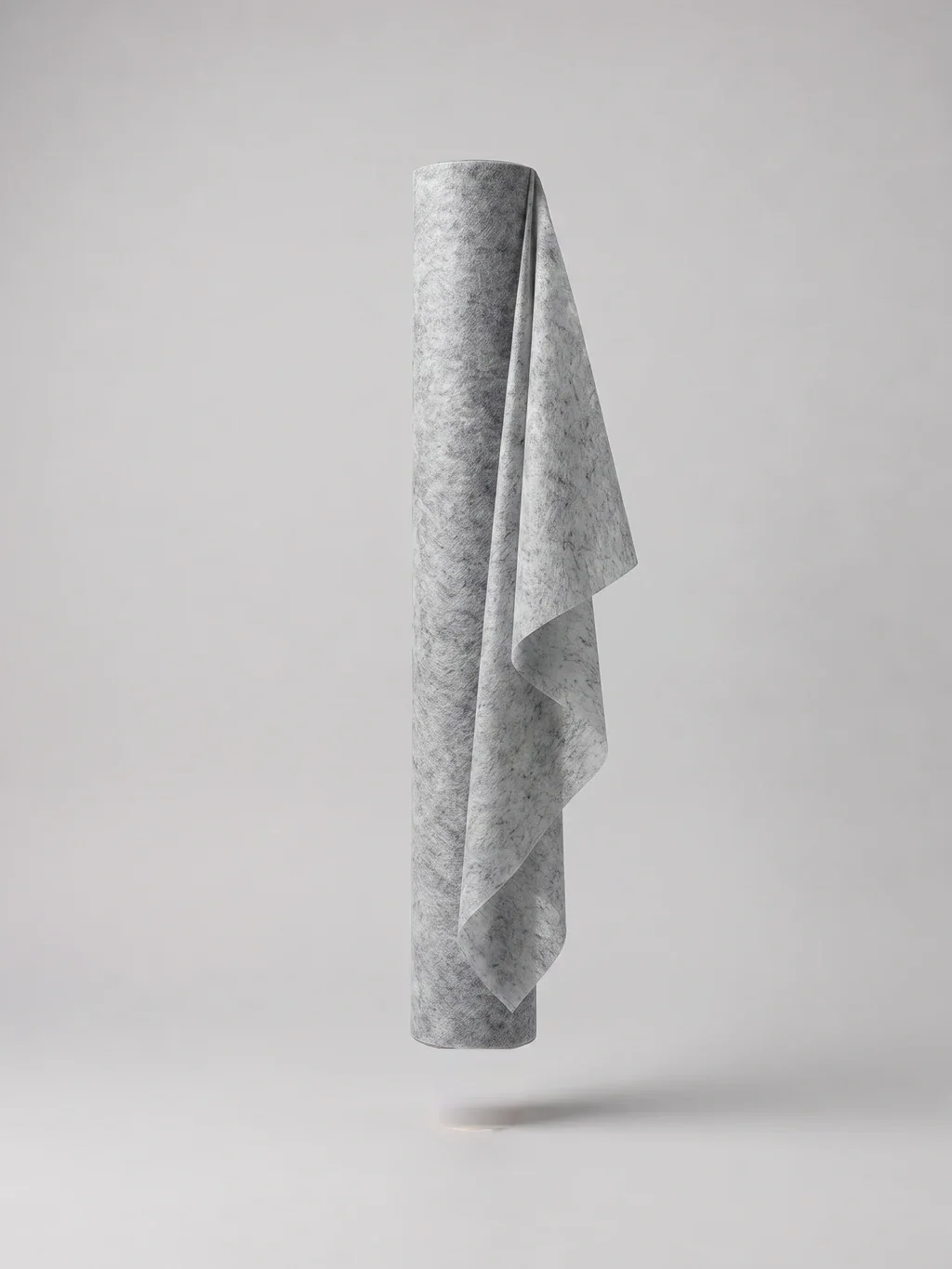
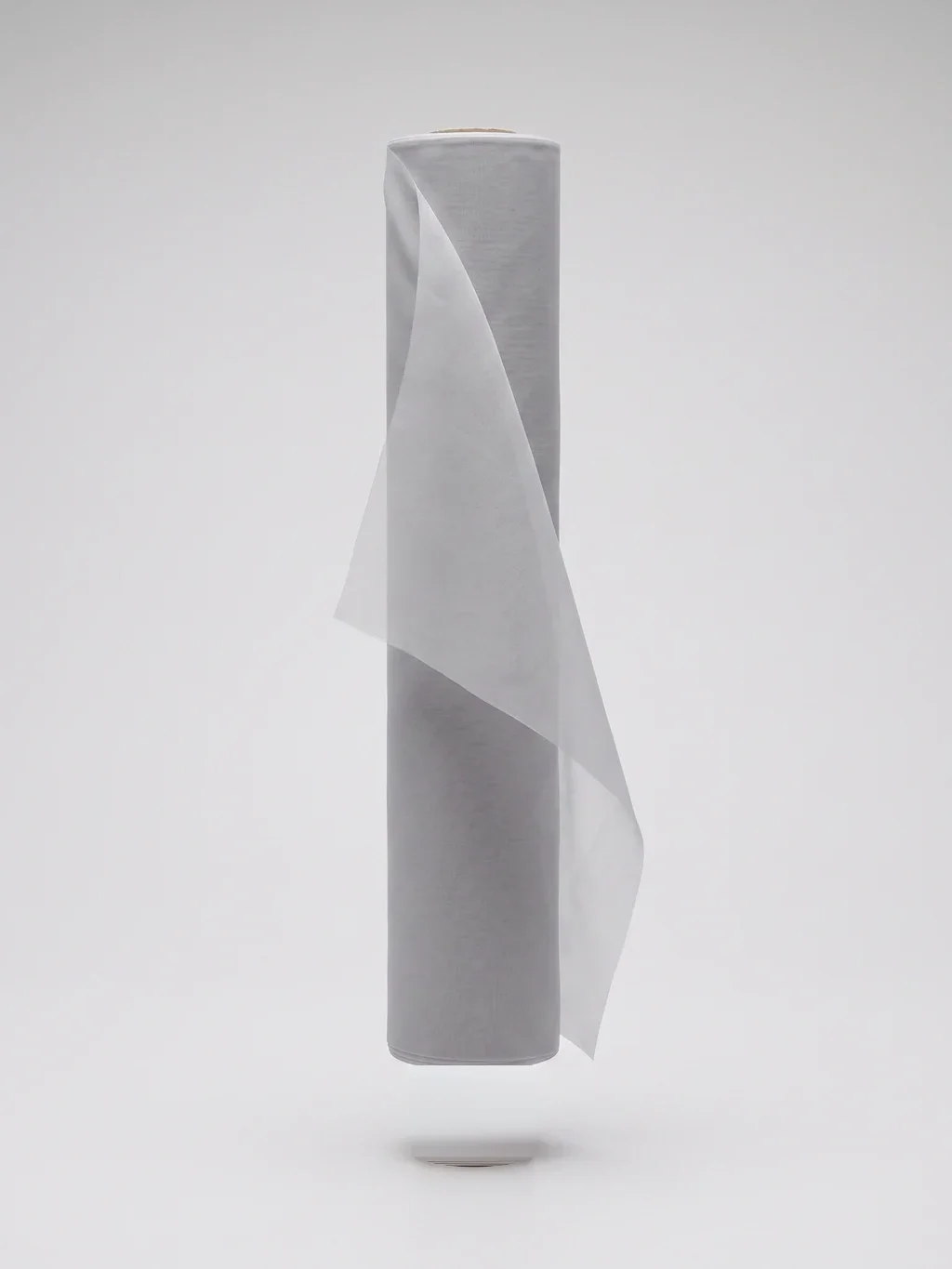
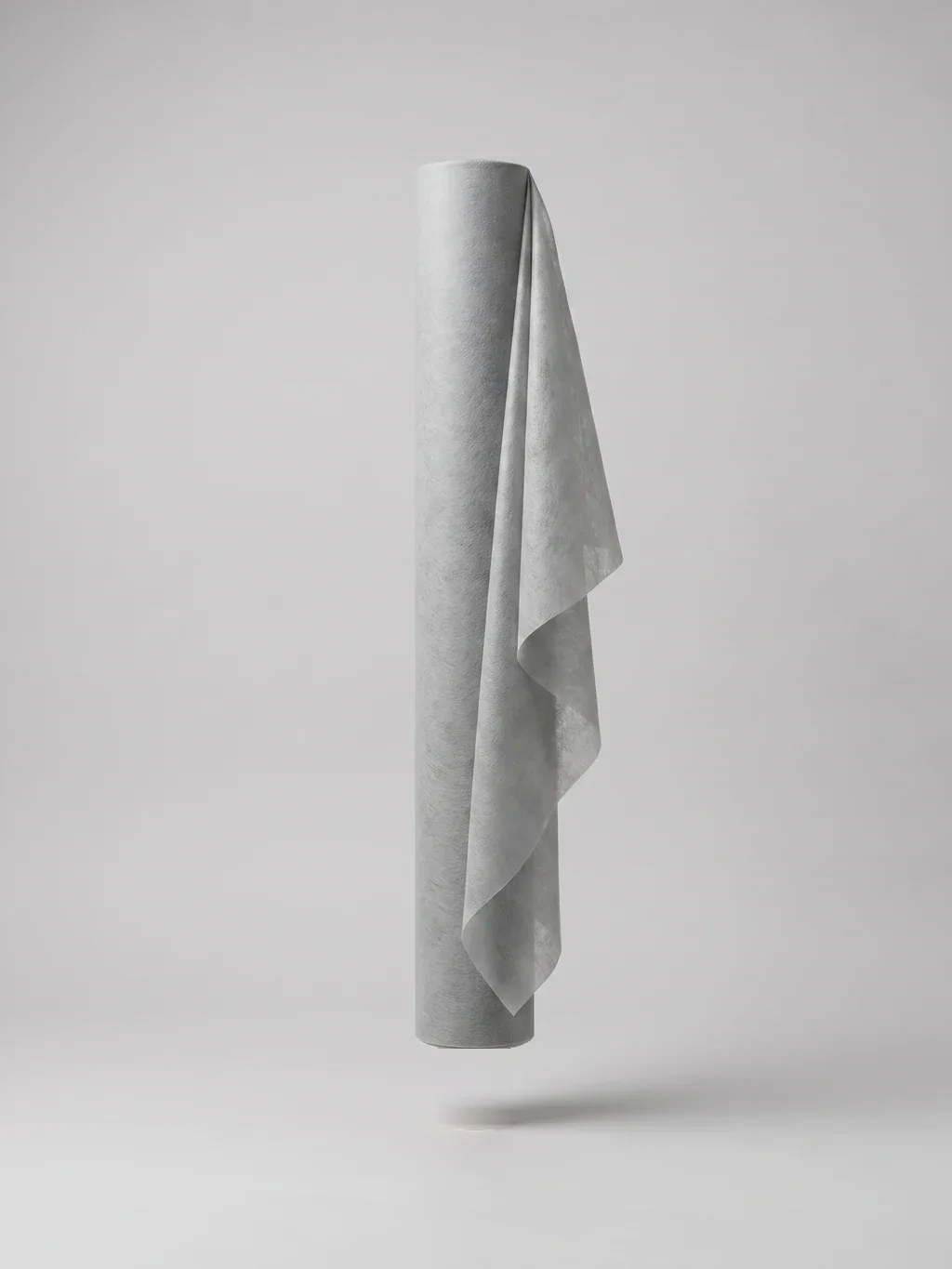
Filling interlining is a non-woven surface made by bonding fibres rather than weaving them. Structurally it belongs to the same family as paper interlining, but its job and its scale are different: instead of giving body to small parts, it works as a filling and support layer across wide surfaces.
Its most obvious feature is its size. It comes 160 cm wide, in 1,000-metre rolls — the widest width and the longest roll on this site. In white and black.
Those two numbers say what the product was designed for: this interlining is not for one-off pieces, it is for volume production.
Why 160 cm makes a difference
Width decides marker efficiency directly. Cutting the same piece from 90 cm and from 160 cm are not comparable jobs, particularly with large, flat pieces.
If a piece will not sit twice side by side in a narrow width, the leftover goes to waste. As the width grows, the dead space between pieces shrinks and the metreage spent on the same job falls. A wide width is not a convenience — it goes straight into the arithmetic.
- The gain is largest on big, flat pieces: bag panels, coat fronts, shoe linings.
- On small pieces the gain is limited; there, nesting is what decides.
- The number of joins drops. A piece cut from a wide width has no seam through the middle.
- Spreading is quicker: fewer plies for the same area.
When choosing a width, measure the longest edge of the piece and divide it into the width. If it does not fit cleanly, looking at the next width up often reverses the waste calculation.
A 1,000-metre roll: the advantage and the difficulty
A long roll buys two things in volume production. The first is continuity: the line does not stop to change rolls, and spreading runs uninterrupted. The second is consistency — material off one roll has no batch variation, and the same thickness and behaviour continue for a thousand metres.
Batch variation is underrated in volume work and expensive later. A small difference in weight between two rolls means different sizes of the same style carrying themselves differently. Working off one roll removes that risk.
The difficulty comes from the same place: a thousand-metre roll is heavy and bulky. It takes warehouse space, it takes equipment to move, and it has to be stored flat. For a small workshop this may not be the right scale — in which case a shorter roll is the sensible conversation.
What a filling layer does
"Filling" here does not mean warmth; it means volume and body. In a layered product this interlining goes between two layers and does the following:
- It evens out the surface. Seam allowances, folded edges and joins underneath stop reading from the outside.
- It gives body. A thin outer material can stand up by itself once there is a filling layer behind it.
- It spreads impact. In bags and footwear, pressure from outside is not concentrated at one point.
- It holds form. A surface that would sag in use keeps its original shape far longer.
Outside garments this layer is close to compulsory. The difference between a bag panel with and without it looks large enough to be mistaken for a difference in material quality.
Where it is used
| Product | What the layer does | Note |
|---|---|---|
| Bags | Evens the surface, gives form | The most common use |
| Footwear | Supports the inner structure | Often used alongside felt |
| Coats and jackets | Filling between layers | The wide width pays off |
| Home textiles | Surface evenness | High metreage makes the job easier |
| Accessories | Body in small parts | Offcuts can be used up |
Working out consumption at this scale
Working from a thousand-metre roll, the arithmetic should be built on consumption per unit, not on metres. The order runs like this:
- Work out the total area of the interlined pieces in one unit.
- Add the marker waste — with a non-woven, cutting direction is free, so this ratio comes out lower than it would on a woven material.
- Get consumption per unit and multiply by the order quantity.
- Add an allowance for testing and waste. Keeping that allowance generous on a first order and tightening it on the second is the healthiest route.
The non-woven has an advantage here: with no grain, pieces can be rotated freely on the marker. Do the same job in a woven material and the cutting direction would be fixed, pushing the waste ratio up.
Storage and handling
- Store the roll flat. Stood on end, a heavy roll crushes its own bottom edge.
- Keep it cool and dry; damp changes the hand of a non-woven surface.
- Keep it out of direct sunlight.
- Keep the end of an opened roll covered; dust clings easily to a non-woven face.
- Support a long roll in the middle when carrying it; held only at the ends, it folds in the centre.
Common mistakes
- Buying a thousand-metre roll for a small job. It takes up space and the advantage goes unused.
- Ordering without planning the width. 160 cm only pays off if the pieces are nested for it.
- Using filling interlining in place of a fusible. They are different jobs; for body support you need body interlining.
- Storing the roll on end. The bottom edge is crushed and that part becomes waste.
- Keeping the waste allowance tight on a first order. Real consumption only settles in the first production run.
When you order
160 cm wide, 1,000-metre rolls, in white or black. Tell us what product it is going into — the thickness and hand of a filling layer are discussed against the product.
If you work at smaller metreages, say so up front; this scale does not suit every workshop and there are alternatives to talk about.
Samples, stock and delivery are settled on the phone.
Frequently asked questions
Is filling interlining fusible?
Filling interlining works as a filling and support layer; a fusible that bonds to the cloth and gives body is a separate product. If body support is what you are after, body interlining or paper interlining is the conversation. Call and we can work out which one fits your job.
Does 160 cm really make a difference?
On large, flat pieces, yes, clearly. If a piece will not sit twice side by side in a narrow width, the gap goes to waste; as the width grows that dead space closes. On small pieces the gain stays limited.
Is a thousand-metre roll right for a small workshop?
Usually not. It is heavy and bulky, it takes warehouse space, and its advantage only appears in uninterrupted volume production. At a smaller scale a shorter roll makes more sense — let us talk it through on the phone.
Does cutting direction matter?
No. In a non-woven the fibres lie in random directions and the material behaves the same way whichever way you turn it. You can rotate pieces freely on the marker, which is why the waste ratio comes out lower than on a woven material.
How long is a roll?
1,000 metres, 160 cm wide. If you need a different scale, let us talk it through on the phone.