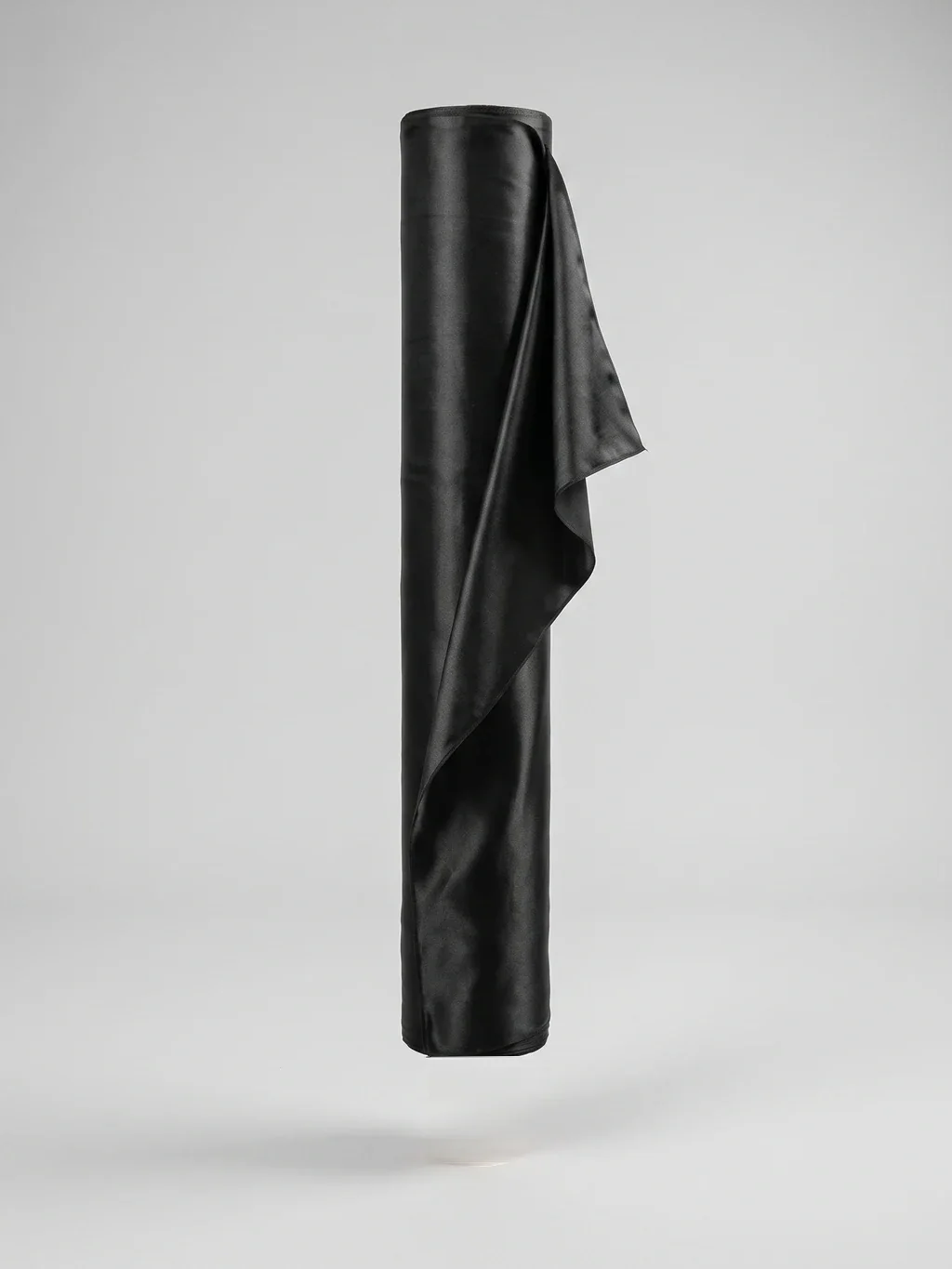
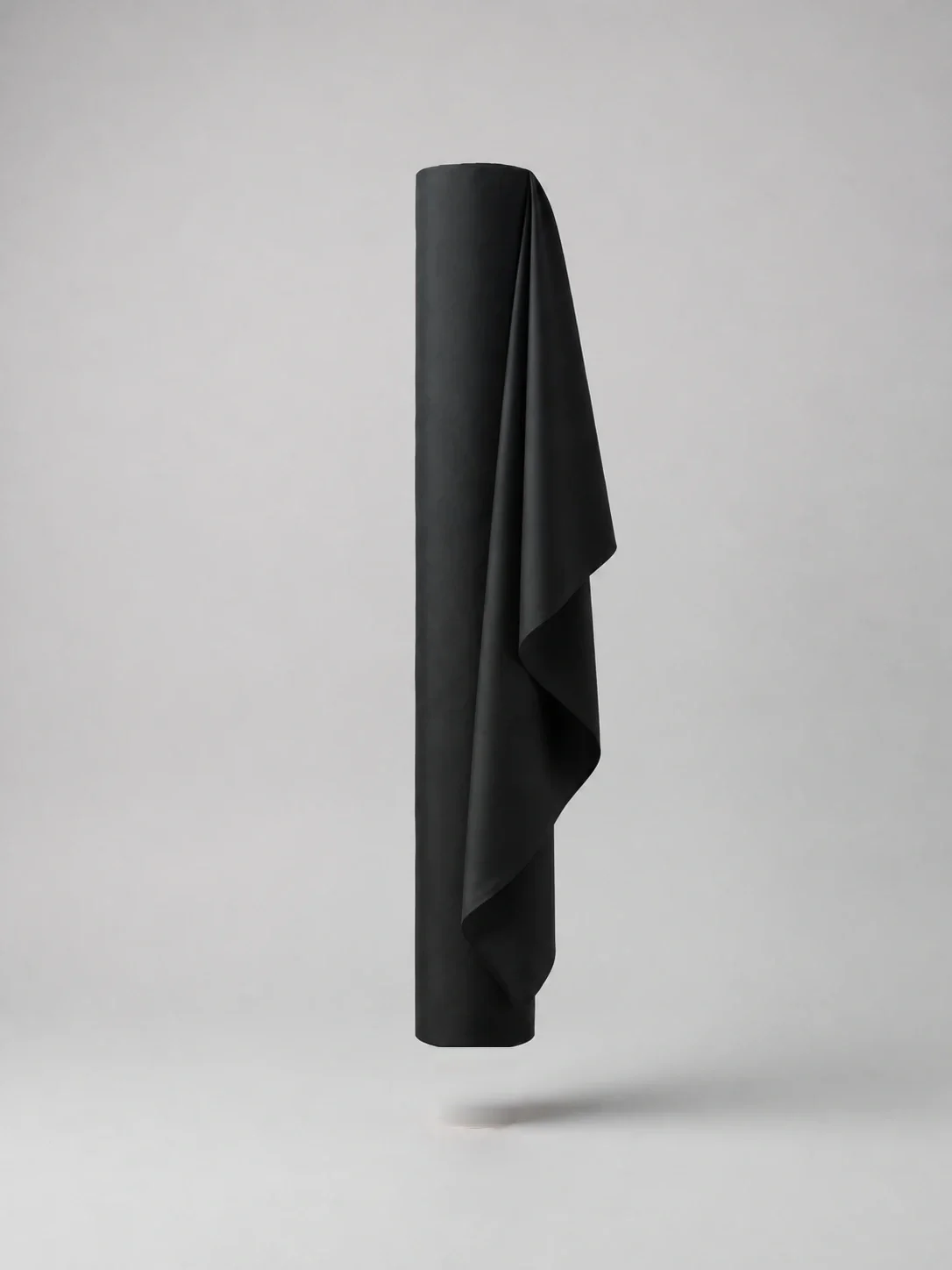
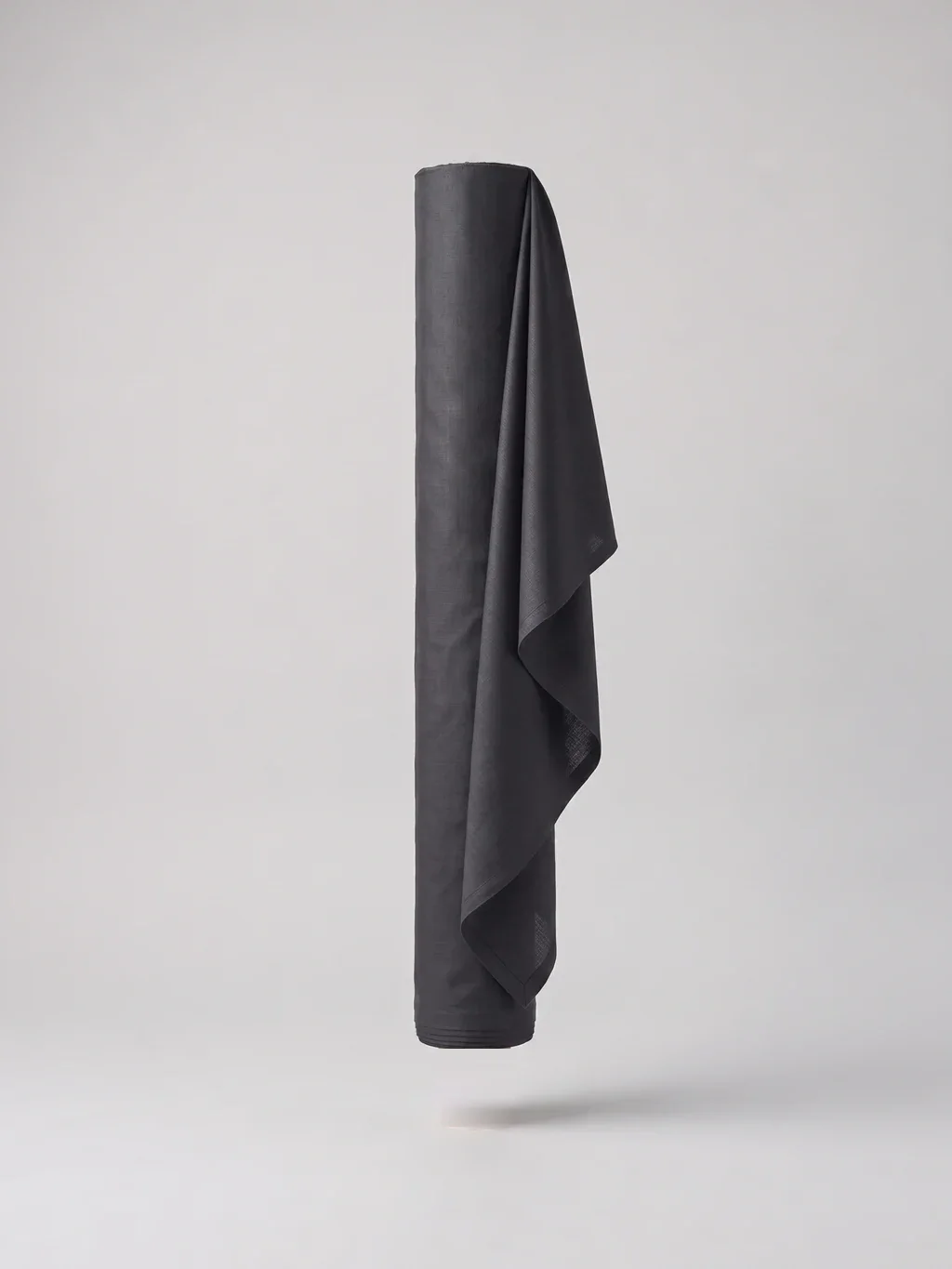
190T lining: what the number counts, and what happens when it goes up
190T lining is a densely woven polyester lining that takes its name from the number of threads in a unit area. Here is what the count actually measures, where the gap between 170 and 210 is felt, and which jobs call for this cloth.
UB-TA190 Updated
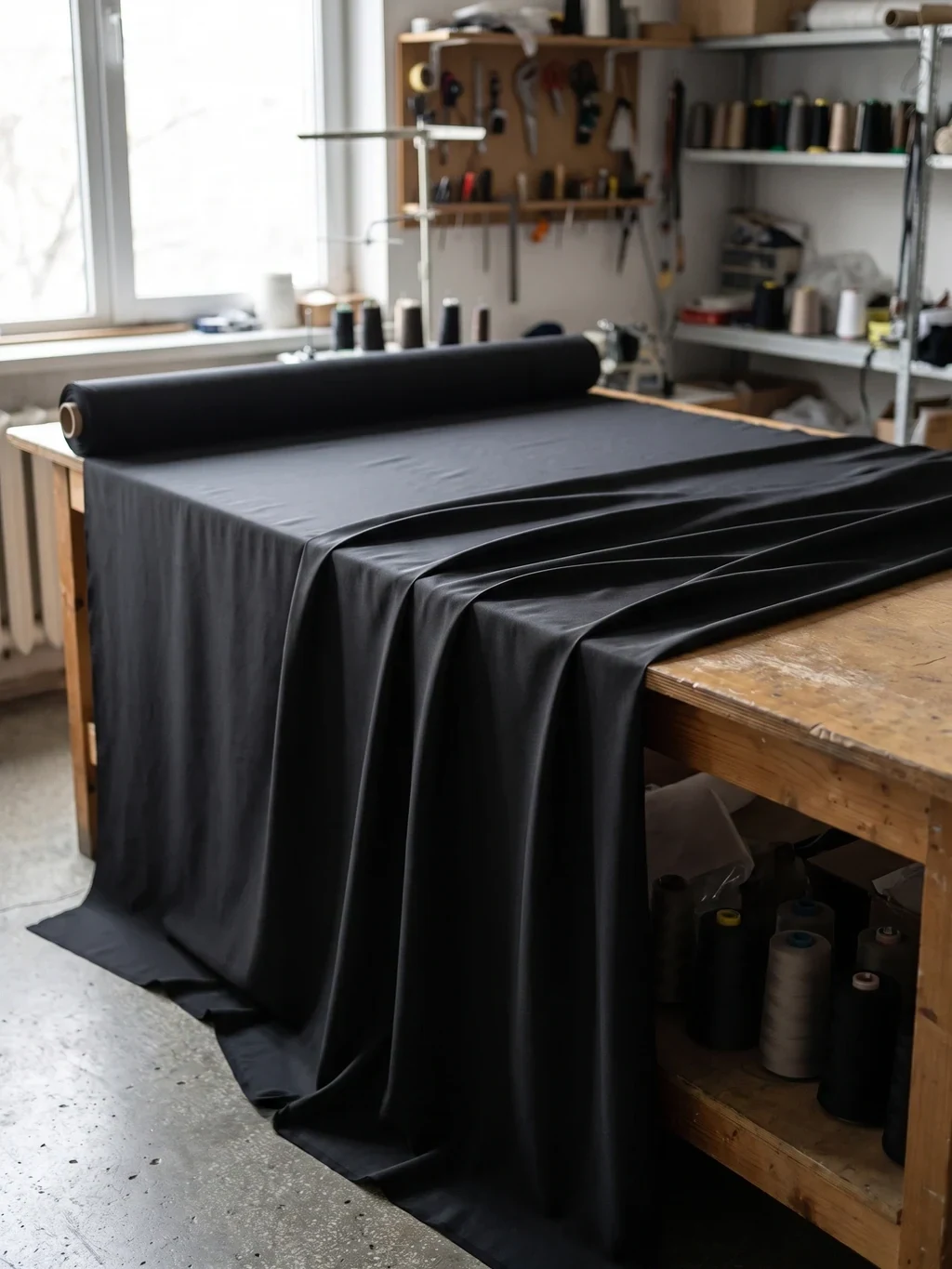
What does "190T" mean?
The number is the density of the weave: the warp and weft threads in a square inch, added together. At 190T that total comes to roughly 190. In Turkish the same measure is called "tel" — 190 tel and 190T are the same thing.
What the figure measures is density, not weight. Two linings can weigh the same while one is woven densely from fine yarn and the other loosely from coarse yarn. A difference the scales cannot see shows up immediately in the hand and under the needle.
Ours is 150 cm wide, in 100-metre rolls, dyed to the tone you ask for. Structurally it is in the same family as polyester lining — plain weave, polyester filament yarn — only woven tighter.
170, 190, 210: what changes as the number rises
The counts in circulation sit close together, but the gaps between them are felt by hand. A rough comparison:
| Count | Hand | Where it earns its place |
|---|---|---|
| Around 170 | Soft, slightly open | Light dresses, inner linings |
| Around 190 | Tight but thin, balanced | Jackets, coats, uniforms, bags |
| 210 and above | Firm, a touch papery | Windbreak layers, technical sewing |
As density rises the cloth changes in three directions at once: it resists tearing better, it lets less air through, and its hand gets firmer. The first two are gains, the third is a loss. 190 is used as much as it is because it sits in the middle of that trade-off — it raises strength without giving up the thinness a lining has to keep.
A higher number does not simply mean better. A 300T cloth used as a lining stiffens the garment from the inside, and stiffness is not what a lining is for.
Should you be talking about weight or density?
Two figures get quoted when linings are discussed: weight in grams per square metre, and thread count. They do not measure the same thing and they do not substitute for one another.
Weight tells you how heavy the cloth is. Thread count tells you how many threads are packed into the space. Between two cloths of the same weight, the denser one is generally stronger, less air-permeable and smoother on the face. The information you actually want is in the count.
In practice, ask for both. "A thick lining" is the wrong request; "a densely woven, thin lining" is the right one, and it is almost always what is really wanted.
Where 190T is preferred
This lining comes into its own where the lining carries load. In a dress, where the lining only closes the inside, nobody notices the difference. In a uniform, where the lining rubs all day, the difference shows in the first month.
- Uniforms and workwear. In a garment worn eight hours a day the lining is the surface that wears out first.
- Coats and jackets. The sleeve lining rubs against knitwear, and a dense weave takes that rubbing.
- Bag and accessory interiors. The cut edge is slow to fray and tear resistance is high.
- Garments that are washed often. A dense weave holds its measurements better through the cycle.
- Layered work with a filling, where a tight weave reduces fibre migration.
There is a limit on that last point. 190T reduces fibre migration but it is not a down-proof cloth. A genuinely down-filled product needs a far denser or coated fabric. In that garment 190T stays in the lining layer, not the shell.
Side by side with the other linings
| Product | What stands out | When |
|---|---|---|
| 190T lining | Dense weave, abrasion resistance | Uniforms, coats, bags |
| Polyester lining | Balanced, works anywhere | General use |
| Satin lining | Glossy, slippery face | Jackets, blazers, suits |
| Micro lining | Soft hand, high strength | Overcoats, raincoats |
| Jesica | Matt with a full hand | Jackets, overcoats |
What changes in cutting and sewing
A dense weave cuts both ways. The good side: the cloth travels less in the lay and the cut edge frays less. The hard side: the needle has more work to do, and a dull blade shows itself sooner.
- Needle: 70/10 – 80/12, sharp point. A blunt point pushes threads aside in a dense weave.
- Change needles on time; a worn needle causes yarn slippage in tight cloth.
- Stitch length: 2 – 2.5 mm.
- Keep the blade sharp; a dull blade melts the edge and hardens it.
- Marker under paper still helps in the lay, though ply slippage is less than with a standard lining.
Common mistakes
- Reading the count as a quality score. A high number means firmness, and firmness is not wanted in a lining.
- Confusing weight with density. A heavy lining is not a dense lining.
- Using 190T in place of a down-proof cloth. In a filled product the shell is chosen separately.
- Sewing with a worn needle. In a dense weave the marks and yarn shift appear straight away.
When you order
Rolls are 100 metres, 150 cm wide, with no limit on colour. Naming the count and the colour together is enough.
If you have a lining you want to compare against, bring a piece. A difference in density is settled by eye and hand in a minute; describing it takes far longer.
Samples, stock and delivery are settled on the phone.
Frequently asked questions
Are 190T and 190 tel the same thing?
Yes. "T" comes from the English usage and counts the total threads in a unit area. Turkish says "tel"; the measure is identical.
Does a higher count always make a better lining?
Only up to a point. Density brings strength and air resistance, but it also firms up the hand. A lining has to stay thin and leave the drape alone, which is why very high counts are not used for linings.
Is 190T down-proof?
Not as a shell for a down-filled product. A dense weave reduces fibre migration, but true down-proofing needs a much denser or coated cloth. In that garment 190T stays in the lining layer.
Which colours can we get?
No limit on colour; it is dyed to the tone you ask for. Tones that move often are held at the warehouse, and a special tone needs notice.
How long is a roll?
100 metres, 150 cm wide. If you need a smaller quantity, let us talk it through on the phone.