Garment elastic: choosing the width, cutting the length, and keeping the stretch
Garment elastic is a woven tape made in widths from 1 cm to 6 cm; it keeps its stretch through washing. Here is how an elastic actually works, which width goes where, how long to cut it, and what kills the stretch.
UB-LS025 Updated
How does an elastic work?
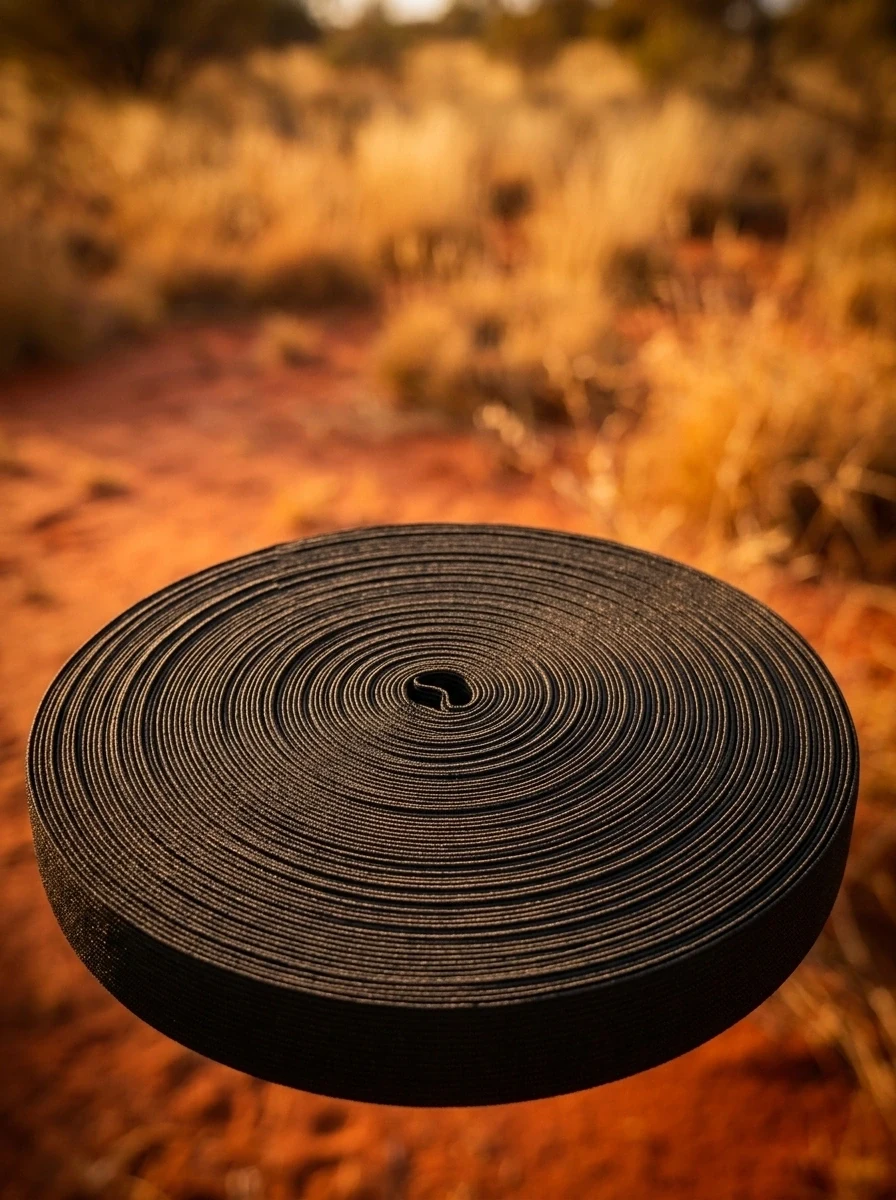
A garment elastic is not one material. Inside it there is a stretching core — elastane or rubber thread — and that core is wrapped and woven around with polyester or nylon yarn.
The division of labour is clear: the stretch comes from the core, the strength and the surface from the outer yarn. Used on its own the core would wear out quickly under friction; the outer structure protects it and at the same time gives the elastic a surface that can be sewn.
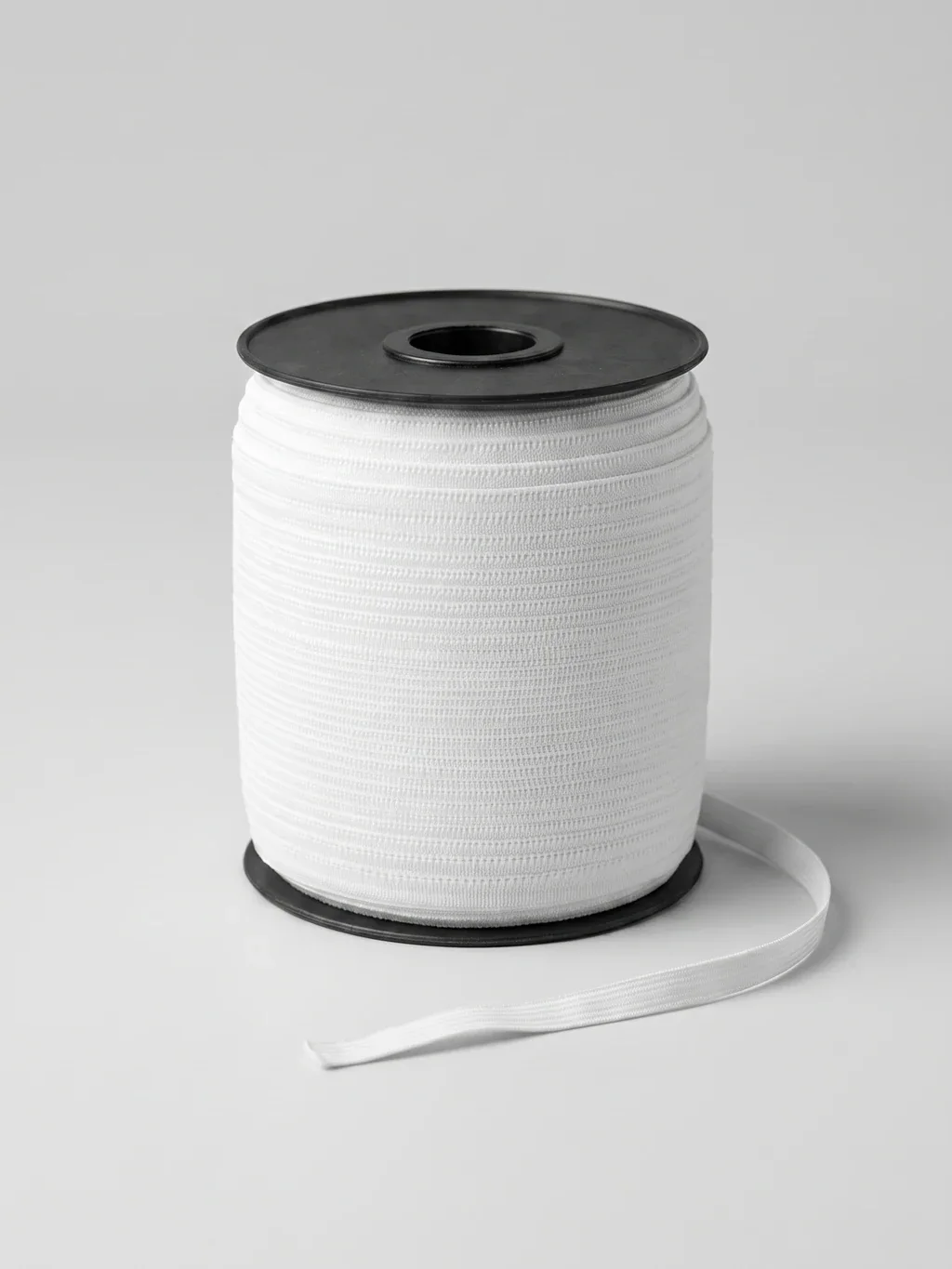
Ours is woven, in ten widths from 1 cm to 6 cm: 1 · 1.5 · 2 · 2.5 · 3 · 3.5 · 4 · 4.5 · 5.5 · 6 cm. Rolls are 25 metres, in the tones shown plus white.
What makes a woven elastic different
Three main structures circulate in the trade and they behave differently. Knowing which one you have is half the job.
| Structure | What happens when stretched | Where |
|---|---|---|
| Woven | Keeps its width | Waistbands, anywhere it is stitched through |
| Knitted | Narrows a little, soft | Light garments, lingerie |
| Braided | Narrows noticeably | Inside a casing only |
The decisive advantage of a woven elastic is this: it does not narrow under tension and it can be stitched through. On a braided elastic the stitch cuts the core and the elastic dies at that line. That is why any job where the elastic is stitched directly to the waistband calls for a woven one.
The most common cause of "the elastic stopped stretching after sewing" is the choice of structure. Stitching through a braided elastic leaves it useless along that line.
Which width for which job?
Width comes down to two things: the load being carried and the comfort wanted. A narrow elastic digs in; a wide one rolls. The right width sits between the two.
| Width | Where | Note |
|---|---|---|
| 1 – 1.5 cm | Cuffs and hems, lingerie, childrenswear | Fine; not enough over a wide area |
| 2 – 2.5 cm | Skirt and dress waists, pyjamas | The most common range |
| 3 – 3.5 cm | Sweatpants, trouser waists | Spreads the load without rolling |
| 4 – 6 cm | Wide waistbands, activewear, corset lines | Shaping; needs its own room in the pattern |
One thing to watch with wide elastics: anything over 4 cm tends to roll when the wearer sits down. To stop that, either a few vertical rows of stitching are run through the elastic, or a channelled elastic — one with vertical ribs — is chosen.
How long should you cut it?
This is where most of the questions come from, and there is no single number. The length comes not from the body measurement but from how that particular elastic behaves under tension.
The method: wrap the elastic around the body or the stand, bring it to the tension where it sits comfortably but will not slide, and measure that length. It is always more reliable than a calculated figure — for the same waist measurement, a firm elastic and a soft one get cut to different lengths.
- Stretch the elastic by hand around the waist and find the point where it neither restricts breathing nor slides down.
- Add a joining allowance to that length, usually 1 – 1.5 cm at each end.
- Sew and try one sample in the first production run; from the second batch the number settles.
- Across sizes of the same style, keep the ratio constant, not the number.
Cutting the elastic too short does more than make the garment uncomfortable — it shortens the elastic's life. Elastane held under constant high tension tires faster.
Casing or stitched directly?
There are two ways to attach an elastic, and the choice affects both the look and the life of the garment.
- Casing: the fabric is turned and stitched and the elastic threaded through. The elastic is protected and can be replaced if needed. The drawback: it can twist and roll inside the casing.
- Stitched directly: the elastic is sewn to the fabric. It does not twist, it sits flatter, and it gives a slimmer waistline. The condition is a woven elastic — on a braided one the stitch cuts the core.
If you go with a casing, a few vertical rows of stitching through it are enough to stop the elastic turning. If you stitch directly, the stitch has to be able to give: zigzag or three-step zigzag. A straight stitch breaks when the elastic is stretched.
Machine settings
- Stitch type: zigzag or three-step zigzag. Never a plain straight stitch.
- Needle: ball point. A sharp point cuts the elastane core.
- Thread: a polyester thread with some give.
- Stretch the elastic evenly as you sew; over-stretched in one area, it gathers the garment there.
- Join the ends by overlapping and securing with a zigzag; ends stitched one on top of the other build up bulk.
Even stretching is solved in practice like this: mark both the elastic and the fabric into quarters, match the marks, and sew each quarter stretching it on its own. Elastic stretched by eye almost always bunches on one side.
What kills the stretch?
An elastic does not lose its stretch in the wash — but some things finish it quickly. A waistband "going loose" usually means the elastic was killed rather than tired out.
- Heat. A tumble dryer and a hot iron damage elastane permanently. The elasticated area is not pressed.
- Chlorine. Bleach dissolves the elastane core outright.
- Constant over-tension. An elastic cut too short tires faster.
- Oils and creams. Prolonged contact degrades both the outer structure and the core.
- Direct sunlight. Elastic left in the light in storage ages before it is ever used.
The real reason behind "do not tumble dry" on a care label is usually not the fabric — it is the elastic.
Common mistakes
- Stitching directly through a braided elastic. The stitch cuts the core and the elastic dies along that line.
- Using a straight stitch. The thread breaks when the elastic stretches.
- Sewing with a sharp needle. The elastane is cut.
- Stretching the elastic by eye. The gathering bunches on one side.
- Pressing the elasticated area. The elastane is permanently damaged.
When you order
Widths: 1 · 1.5 · 2 · 2.5 · 3 · 3.5 · 4 · 4.5 · 5.5 · 6 cm. Rolls are 25 metres, in the tones shown plus white.
Say the width and where it is going — an elastic for a casing and one to be stitched directly want different structures.
If you cannot decide, ask for samples of two neighbouring widths and hold them against the garment. A width decision takes a minute by hand and far longer in words.
Samples, stock and delivery are settled on the phone.
Frequently asked questions
How long should I cut the elastic?
There is no single number — for the same waist measurement, a firm and a soft elastic get cut differently. The method: wrap it around the waist, bring it to the tension where it sits comfortably without sliding, measure that length, and add 1 – 1.5 cm at each end for joining. Sew and try one sample in the first run.
Can you stitch through an elastic?
Through a woven one, yes — it does not narrow under tension and the stitch does not cut the core. Through a braided one, no: the stitch cuts the core and the elastic loses its function along that line. Any job where it is stitched directly calls for a woven elastic.
A wide elastic rolls at the waist. What can I do?
Anything over 4 cm tends to roll when the wearer sits. Two answers: run a few vertical rows of stitching through the elastic, or use a channelled elastic with vertical ribs. Both stop it folding over.
Why does an elastic lose its stretch?
Usually not from washing: heat (tumble dryer, hot iron), chlorine bleach, constant over-tension and prolonged contact with oils all degrade the elastane core. Keeping the elasticated area out of the iron and the dryer extends its life noticeably.
How long is a roll?
25 metres. Widths run from 1 cm to 6 cm; if you need a smaller quantity, let us talk it through on the phone.