Leather & Scuba
Synthetic leather is a two-layer material — a carrier cloth with a polymer coating on top; the coating decides the look, the cloth underneath decides the behaviour. Here is where the types diverge and the five rules that apply at the machine.
Synthetic leather: what it is, how to choose it, how to sew it
What is synthetic leather made of?
Synthetic leather is not one material but two layers bonded together. Underneath there is a carrier cloth, usually knitted or woven. On top there is a polymer coating; on garment products that is generally polyurethane.
The key to this group is that division of labour: the coating decides the look, the carrier cloth decides the behaviour. Whether the surface is matt or glossy, how the texture reads — that is the coating's work. How the cloth drapes, how much it gives, how it behaves under the needle — that belongs entirely to the carrier underneath.
This is why two synthetic leathers "of the same thickness" can behave completely differently. If you have two samples in hand, look not at the face but at the back — that is what tells you how the cloth will sit in a garment.
Turn the sample over and bend it in your hand. A soft, flexible back means a cloth that drapes. A firm, papery back means one that holds its shape but reads stiff in a garment. That thirty-second check says more than any catalogue description.
The four products in this group
| Product | Face | What stands out | Where |
|---|---|---|---|
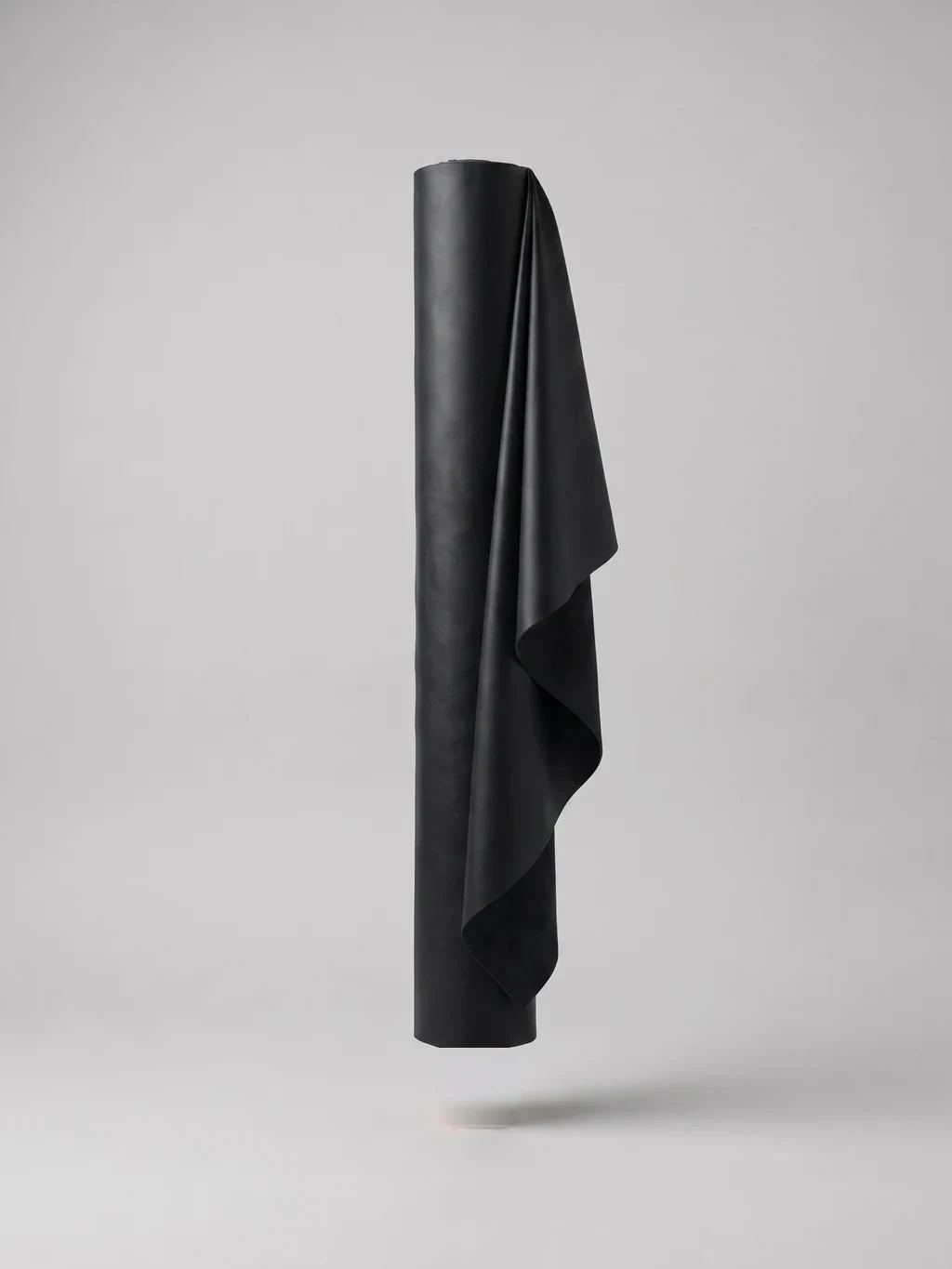
| Diego leather | Matt, smooth | Soft drape, wide colour range | Everyday wear, jackets, skirts |
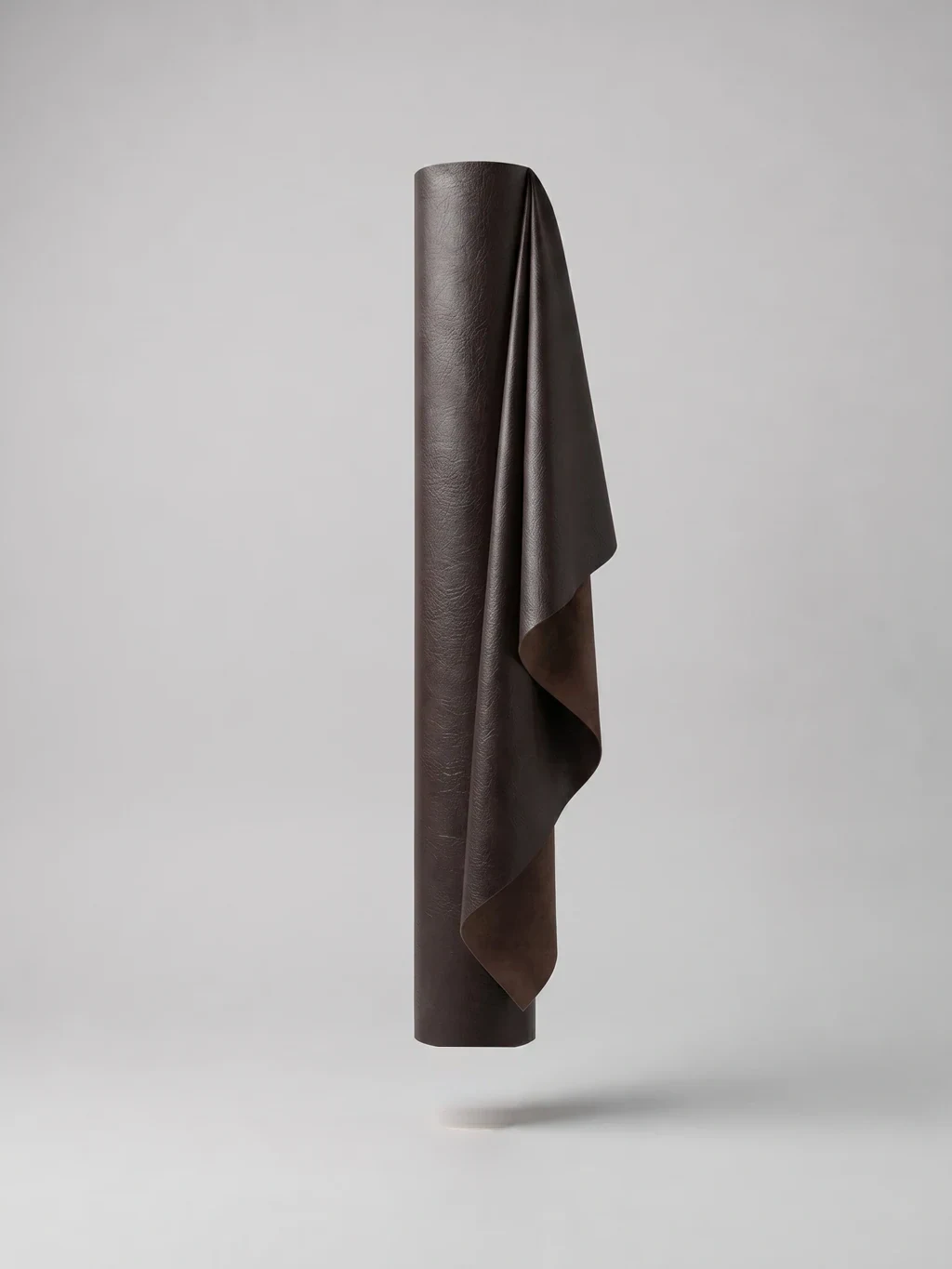
| Yağmur leather | Textured, slightly lustrous | Hides marks, deepens colour | Jackets, coats, accessories |
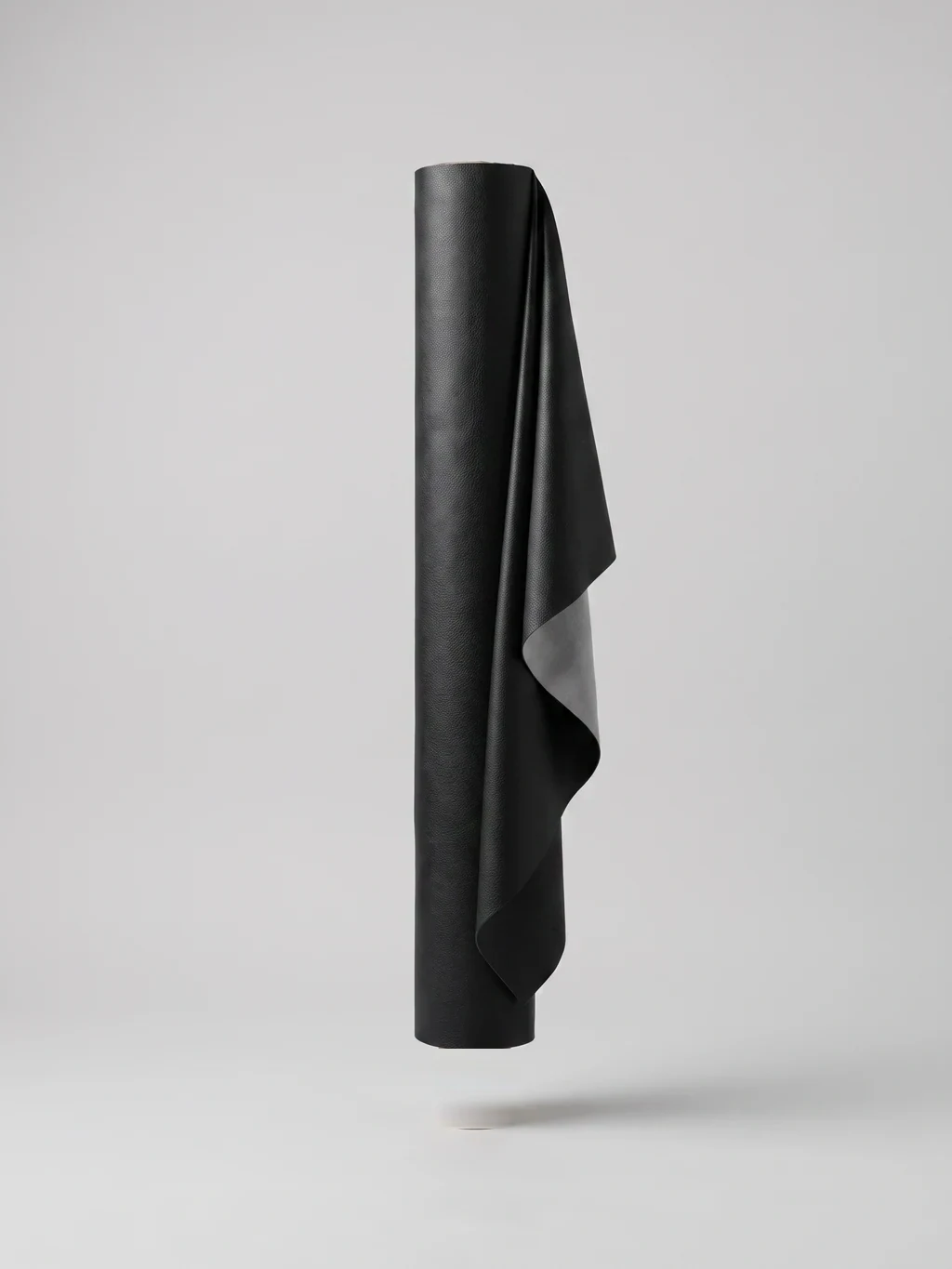
| Zara leather | Thin, soft | Drape that follows the body | Dresses, skirts, trousers |
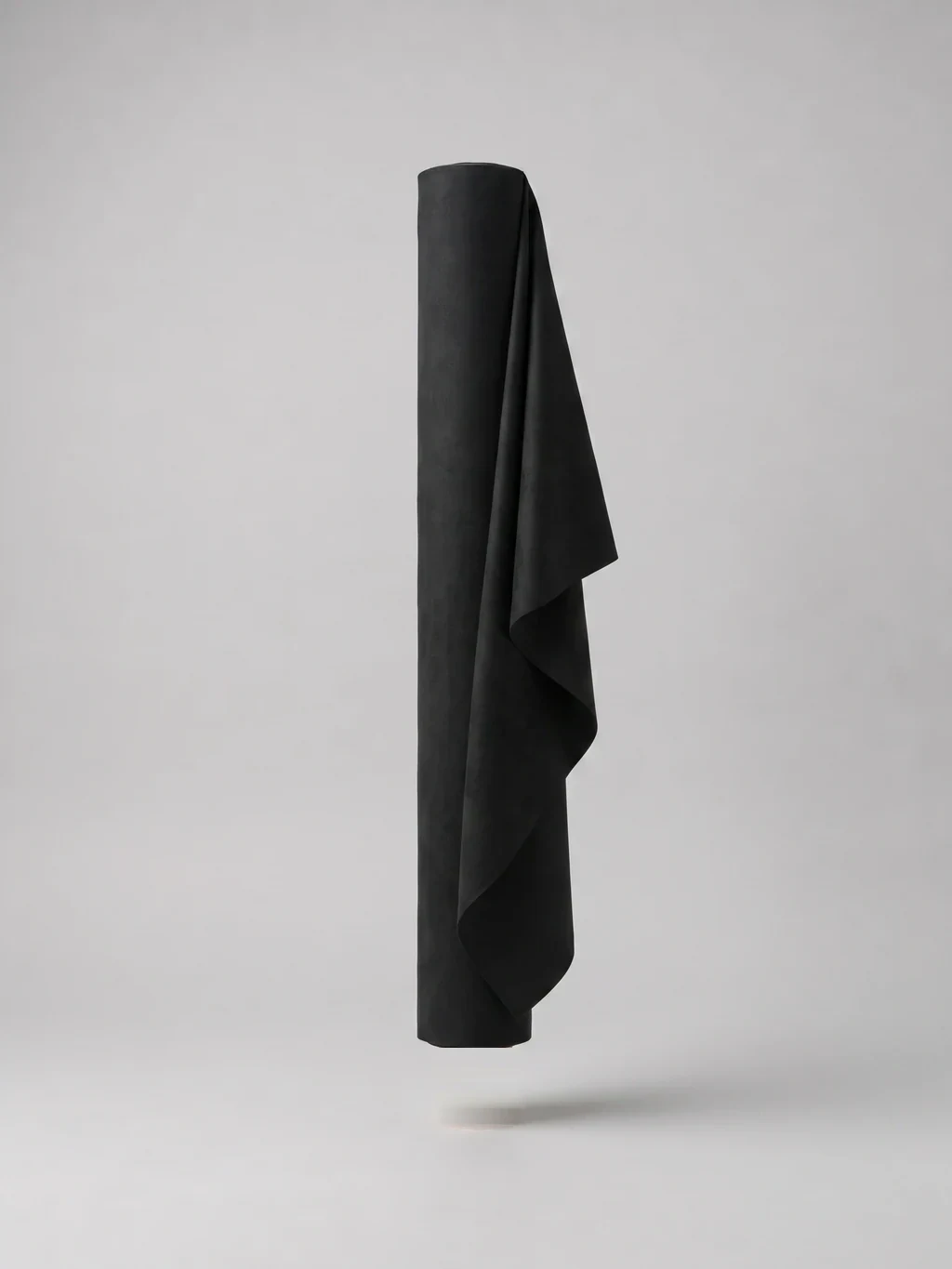
| Scuba suede | Matt face, suede back | Holds its shape, edge does not fray | Dresses, jackets, accessories |
The first three are coated cloths — synthetic leather in the real sense. The fourth stands apart: scuba suede is not coated but a double-faced knit. It sits in this group because it is used for the same jobs and shares the same advantage: the cut edge does not fray.
Thin or thick? This is not a measure of quality
The most common misunderstanding with synthetic leather is equating thickness with quality. Thickness is a choice of character: as it rises the garment stiffens and the drape disappears.
| Thin | Thick | |
|---|---|---|
| Drape | Follows the body | Holds its own shape |
| Seam bulk | Low; multi-layer points work easily | High; collar points read swollen |
| Pattern | A fabric pattern works | Needs allowance and adjustment |
| Where | Dresses, skirts, trousers | Coats, bags, structured jackets |
What a dress wants is almost never stiffness — there thin synthetic leather wins. In bags and structured products a thin cloth is not enough alone; you need either a thicker material or a support layer beneath, such as filling interlining or felt.
Smooth or textured?
In synthetic leather the surface texture does not come from the weave — it is embossed into the coating afterwards. While the coating can still take shape, a patterned roller passes over it and presses the design in.
Texture looks like a matter of appearance, but it has functional consequences:
- It hides scratches and marks. On a smooth face a single scratch reads directly; on a textured one it disappears into the pattern.
- It deepens the colour. The recesses read dark and the ridges light — a surface from one dye bath reads as two tones.
- It forgives small faults in the making. Slight puckering draws less attention on a textured face.
- It does not slip in the hand; a practical difference in bags and belts.
In return the recesses hold dust and dirt: where a smooth face wipes clean in one pass, a textured one needs the recesses thought about too. The decision follows how the product will be used — texture is a gain on something worn hard, while cleanability comes forward on something used lightly.
Using smooth and textured synthetic leather of the same tone in one product is a way of getting two surfaces from one colour. Put Diego and Yağmur side by side and the colour is identical while the texture is not.
Why scuba is different
Scuba suede belongs to this group but is not a coated cloth. It is a double-faced knit: there is a thin volume between two surfaces, which is why it feels full in the hand.
That structure gives it something coated cloths do not have: body of its own. Working with scuba, jackets and dresses often need no separate body interlining — the cloth supports itself. The number of layers and the production steps both drop.
What they share is the cut edge: in both synthetic leathers and scuba, the edge does not fray. Hems, cuffs and pocket openings can be left raw, and turning and binding steps drop out. The same freedom belongs to felt.
At the machine: five rules
Sewing synthetic leather is not difficult, but it is different from sewing cloth. The whole difference rests on one fact: every hole made is permanent. In cloth a needle mark closes; here it does not.
- Do not use pins. Every pin leaves a permanent hole. Use clips, pegs, or a single pin kept inside the seam allowance.
- Do not unpick. The holes stay and the piece has to be sewn again on the same line. Test seams always go on an offcut.
- Use a Teflon, roller or walking foot. A standard foot sticks to a coated surface and the cloth advances in jerks.
- Lengthen the stitch: 3 – 3.5 mm. A short stitch sets the holes too close and perforates the material — it then tears along the seam line.
- Needle: leather or microtex, 70/10 – 90/14. Do not go heavier than necessary on a thin cloth.
There is also backstitching: a backstitch at the start and finish puts three holes in the same place, and the material tears from exactly there. Instead, shorten the stitch for a few stitches or tie the thread ends off on the back.
No iron either — the coating melts and glazes. Seam allowances are pressed open with a finger or a roller and fixed with topstitching or adhesive. The topstitching on synthetic leather garments is not decoration; it is the only practical way to keep an allowance lying flat.
In cutting
- The face has a direction. Coated surfaces can reflect light directionally; hold two offcuts to the light with one turned round, and if a difference shows, lock the direction on the marker.
- Keep the ply count low. Coated surfaces cling to one another and lower plies can shift.
- Put marker under paper on the table; the back can stick to it.
- Keep the blade sharp; a dull blade melts the coating and hardens the edge.
- Do not use chalk or pencil, the marks do not come out. Mark inside the seam allowance or on the back.
Common mistakes
- Confusing thickness with quality. A thick synthetic leather is not better, only stiffer.
- Using pins or unpicking seams. The holes are permanent.
- A short stitch length and backstitching. The material tears along the seam.
- Trying to press seam allowances open with an iron. The coating melts and glazes.
- Not checking the texture direction. A piece cut the wrong way reads as a different tone once sewn.
When you order
Tell us what product it is for — garments and bags want different thicknesses, and a thin cloth is not enough in a bag without support.
Ask for a sample and look at the back. The softness of the carrier says more about how it will sit than the face does.
If you are using smooth and textured together in one product, ask for both in the same tone; tone matching is done by eye.
There can be batch variation on a repeat order — keep a piece from the first one.
Samples, stock and delivery are settled on the phone.
Frequently asked questions
What is synthetic leather made of?
Two bonded layers: a carrier cloth underneath (usually knitted or woven) and a polymer coating on top (mostly polyurethane on garment products). The coating decides the look, the cloth underneath the behaviour — which is why two synthetic leathers of the same thickness can behave completely differently.
Is thicker synthetic leather better quality?
No, only stiffer. Thickness is a choice of character: as it rises the garment stiffens and the drape disappears. What a dress wants is almost never stiffness. In bags and structured products you do need the thicker cloth, or a support layer beneath.
How do I choose between two synthetic leathers?
Turn the sample over and bend it. The face is the coating's work; how the cloth drapes is decided by the carrier underneath. A soft, flexible back means a cloth that drapes; a firm, papery back means one that holds its shape but reads stiff in a garment.
Can pins be used on synthetic leather?
They are not. Every pin leaves a permanent hole that does not close. Use clips, pegs, or a single pin kept entirely inside the seam allowance. For the same reason seams are not unpicked — test on an offcut.
Can synthetic leather be ironed?
In practice, no. The coating melts and glazes, and that does not come back out. Seam allowances are opened with a finger or a roller rather than an iron, then fixed with topstitching. That is why topstitching exists on these garments — necessity, not decoration.
What is the difference between scuba and synthetic leather?
Scuba is not coated but a double-faced knit. That gives it something coated cloths lack: body of its own, so jackets and dresses often need no separate interlining. What they share is the non-fraying cut edge — in both, hems and cuffs can be left raw.