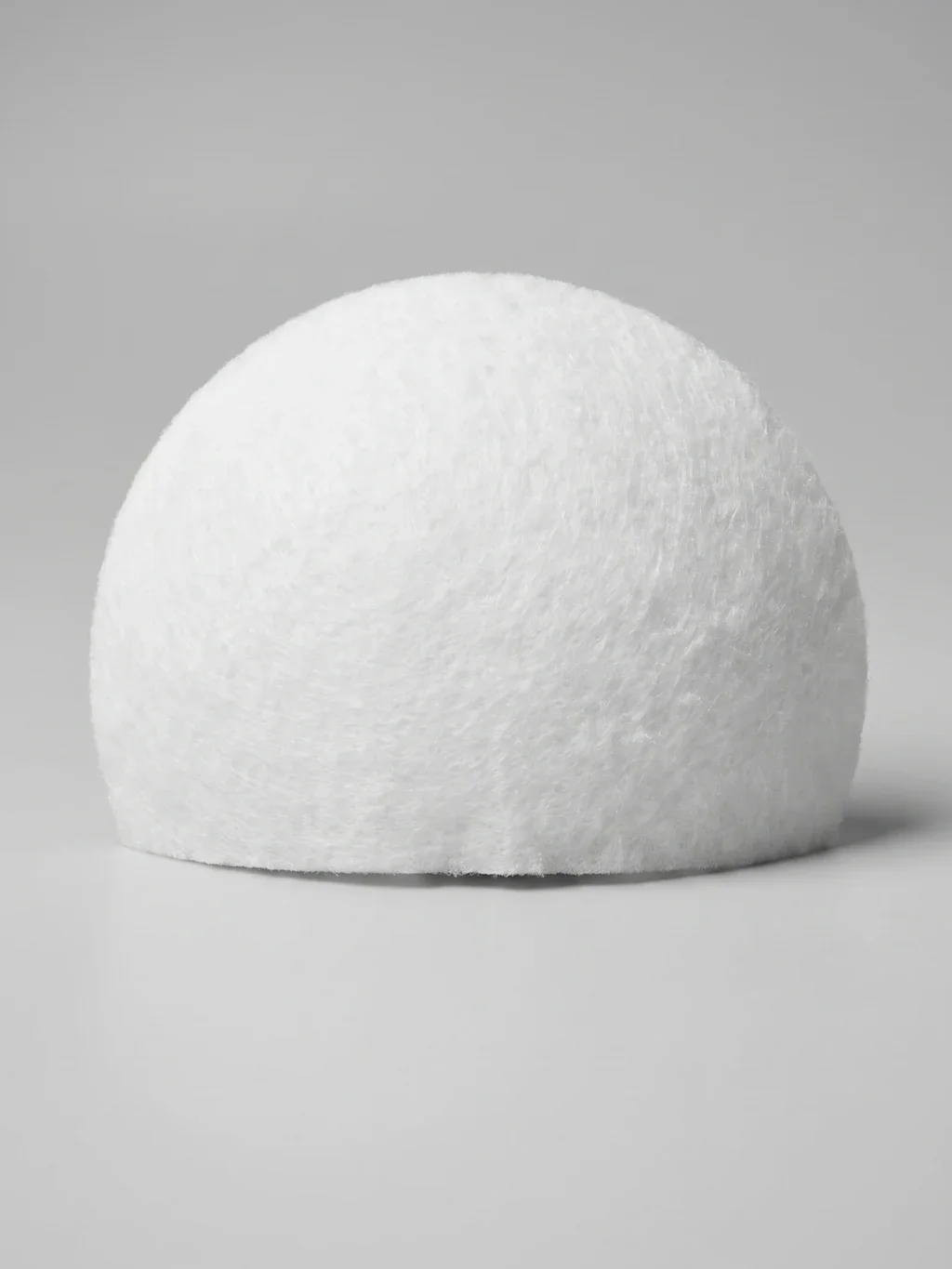
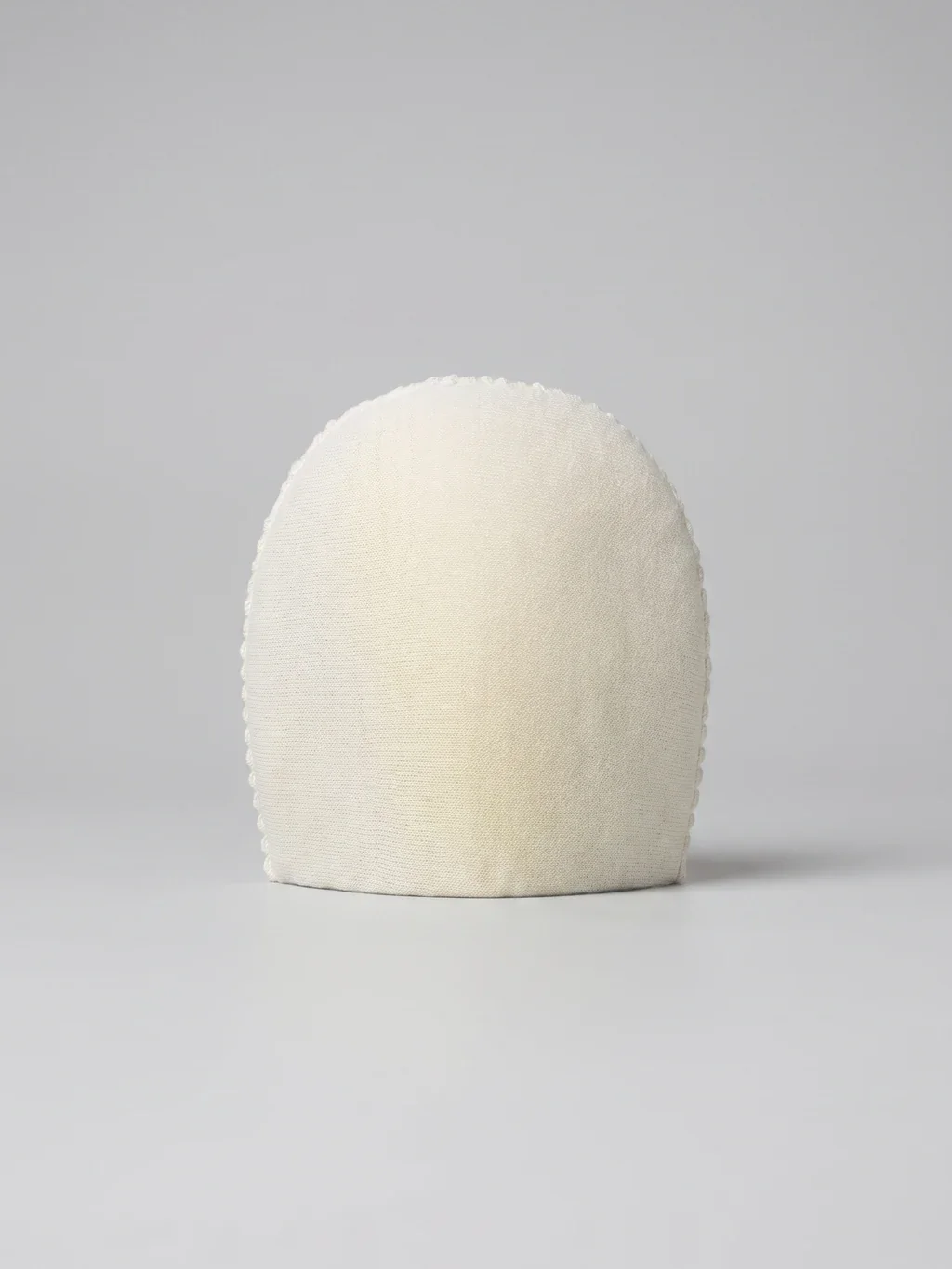
Sleeve heads: why a sleeve cap collapses, and how it stays round
A sleeve head is a thin wadding strip set into the armhole; it keeps the sleeve cap round and even. Here is why the cap collapses in the first place, how the strip fills that gap, and how far around the armhole it goes.
UB-FT100 Updated

Why does a sleeve cap collapse?
A jacket sleeve is cut wider than the armhole it goes into. That surplus is called sleeve ease, and it is deliberate: it is what lets the set sleeve form a round dome and lets the arm move comfortably.
But the surplus has to go somewhere when the sleeve is set. It gathers into the seam allowance and is compressed there. Compressed cloth does not form a clean dome — it creases, it caves inwards, or it puckers in places.
The result is one of the most visible faults in garment making: instead of an even roundness at the sleeve head, a creased and sunken line.
This fault is not about the quality of the cloth, it is about a missing layer. Set two sleeves from the same cloth, one with a sleeve head and one without — the difference is visible at a glance.
What a sleeve head does
A sleeve head is a thin wadding strip set inside the armhole seam, within the seam allowance. It does two things at once.
First: it gives the compressed ease somewhere to go. The cloth no longer has to fold back on itself; it spreads over the strip.
Second: it fills the underside of the dome. The sleeve cap is no longer hollow — it finds a soft support beneath it and takes the shape of that support, standing round.
- The sleeve cap stands round instead of caving in.
- The ease in the seam allowance no longer shows through as creasing.
- The sleeve-to-shoulder transition softens; no sharp break forms.
- Collapse over time is delayed; the cap holds its original form for longer.
Sleeve head or shoulder pad? Two different jobs
These two get confused, and one gets used in place of the other. They sit in different places and do different work.
| Sleeve head | [[UB-VT001|Shoulder pad]] | |
|---|---|---|
| Where | Along the armhole seam | On top of the shoulder line |
| What it does | Keeps the sleeve cap round | Gives the shoulder height and form |
| Shape | A thin, long strip | A piece with thickness and curve |
| Without it | The cap collapses and creases | The shoulder breaks downwards |
Thickening the pad to correct a sleeve cap does not work: the pad sits on top of the shoulder, not under the cap. Equally, a sleeve head gives no height to the shoulder line. They work together — most classic jackets have both.
How far around?
A sleeve head does not go all the way around the armhole. It only goes where the dome forms — the upper part of the sleeve cap.
- It usually runs either side of the shoulder seam, along the top of the cap.
- It reaches slightly less far to the front than the back; the forward movement of the arm calls for that.
- It does not come down to the underarm; volume is not wanted there, and it crowds the arm.
- It stays inside the seam allowance and never reaches the face of the garment.
- It is stitched in by hand; fixed by machine, the strip gathers the cloth.
How long the strip is and how far it runs depend on the style. On a structured classic jacket it goes further; on a soft-construction jacket it is kept shorter. Trying it on a prototype settles it faster than any description.
The bias question
An armhole seam is a curve, not a straight line. A strip cut on the straight will not follow that curve; it sits outside it and gathers the cloth.
That is why a sleeve head is set on the bias. A bias-cut strip gives a little and follows the curve. The same logic applies to Terfix tape: a straight strip will not go round a curved line.
- Lay the strip into the curve without forcing it; if it resists, the direction is wrong.
- Do not set it stretched; released, it pulls the sleeve cap inwards.
- Spread it evenly along the curve; volume bunched at one point makes a bump there.
How much, on which cloth?
How much sleeve head you need depends on the thickness of the outer cloth and the amount of sleeve ease.
| Outer fabric | Need | Note |
|---|---|---|
| Fine summer cloth | Low | Too much volume puffs the sleeve |
| Medium wool, gabardine | Medium | The most common case |
| Heavy melton, coating | High | The cloth's own thickness adds volume too |
| Knits, stretch fabrics | Low or none | The ease is absorbed by the stretch |
That last row matters: in knits and stretch fabrics the sleeve ease is taken up by the cloth's own give, and extra volume may not be needed at all. Sleeve heads are mainly a woven, structured-garment business.
Common mistakes
- Skipping the sleeve head and thickening the pad instead. The cap still collapses and the garment gets heavier.
- Cutting the strip straight and forcing it round the curve. The cloth gathers.
- Running it down to the underarm. The arm is crowded and movement is restricted.
- Setting the strip stretched. Released, it pulls the cap inwards.
- Fixing it by machine. The cloth gathers; a sleeve head is stitched in by hand.
When you order
100 cm wide, 100-metre rolls. Cutting it into strips is done in the workshop; the width decides how many strips you get.
Tell us which cloth and which style you are working on. A fine summer cloth and a heavy coating want different amounts of volume.
Try it on a prototype: setting one sleeve with and one without, side by side, is the fastest route to a decision.
Samples, stock and delivery are settled on the phone.
Frequently asked questions
What is the difference between a sleeve head and a shoulder pad?
Their place and their job. A sleeve head goes into the armhole seam and keeps the cap round; a shoulder pad sits on top of the shoulder and gives it height and form. You cannot correct a sleeve cap by thickening the pad — the pad is on top of the shoulder, not under the cap.
The sleeve cap creases. Will a sleeve head fix it?
Usually yes. The creasing comes from the sleeve ease being compressed in the seam allowance. A sleeve head gives that ease somewhere to spread and fills the underside of the dome. Set the strip on the bias and do not stretch it.
How far should the strip run?
Only where the dome forms — the upper part of the cap, either side of the shoulder seam. It does not come down to the underarm, where volume crowds the arm. It reaches slightly less far to the front than the back.
Is a sleeve head needed in knitwear?
Usually not, or very little. In knits and stretch fabrics the sleeve ease is absorbed by the cloth's own give. Sleeve heads are mainly for woven, structured garments.
How long is a roll?
100 metres, 100 cm wide. If you need a smaller quantity, let us talk it through on the phone.