Satin lining: what it is, how to choose it, and where it goes wrong
Satin lining is a woven lining with a glossy face and a slippery hand that covers the inside of a garment. Here is where the sheen comes from, which lining suits which job, and the mistakes that show up between spreading and pressing.
UB-SA150 Updated

What is satin lining?
Satin is not a raw material; it is the name of a weave. The warp thread passes over four, five, sometimes seven weft threads before it binds down. With so few interlacing points, the surface is left with long, unbroken floats of yarn. Light bounces off those flat floats without scattering — that is the sheen. Woven plain from the same yarn, the cloth would come out matt.
Satin lining used in garment production is almost always woven from polyester filament yarn. Sheen is only part of the reason: filament yarn is smooth, does not fuzz, and holds its length through washing. Silk satin exists, but it has no place as a production garment lining.
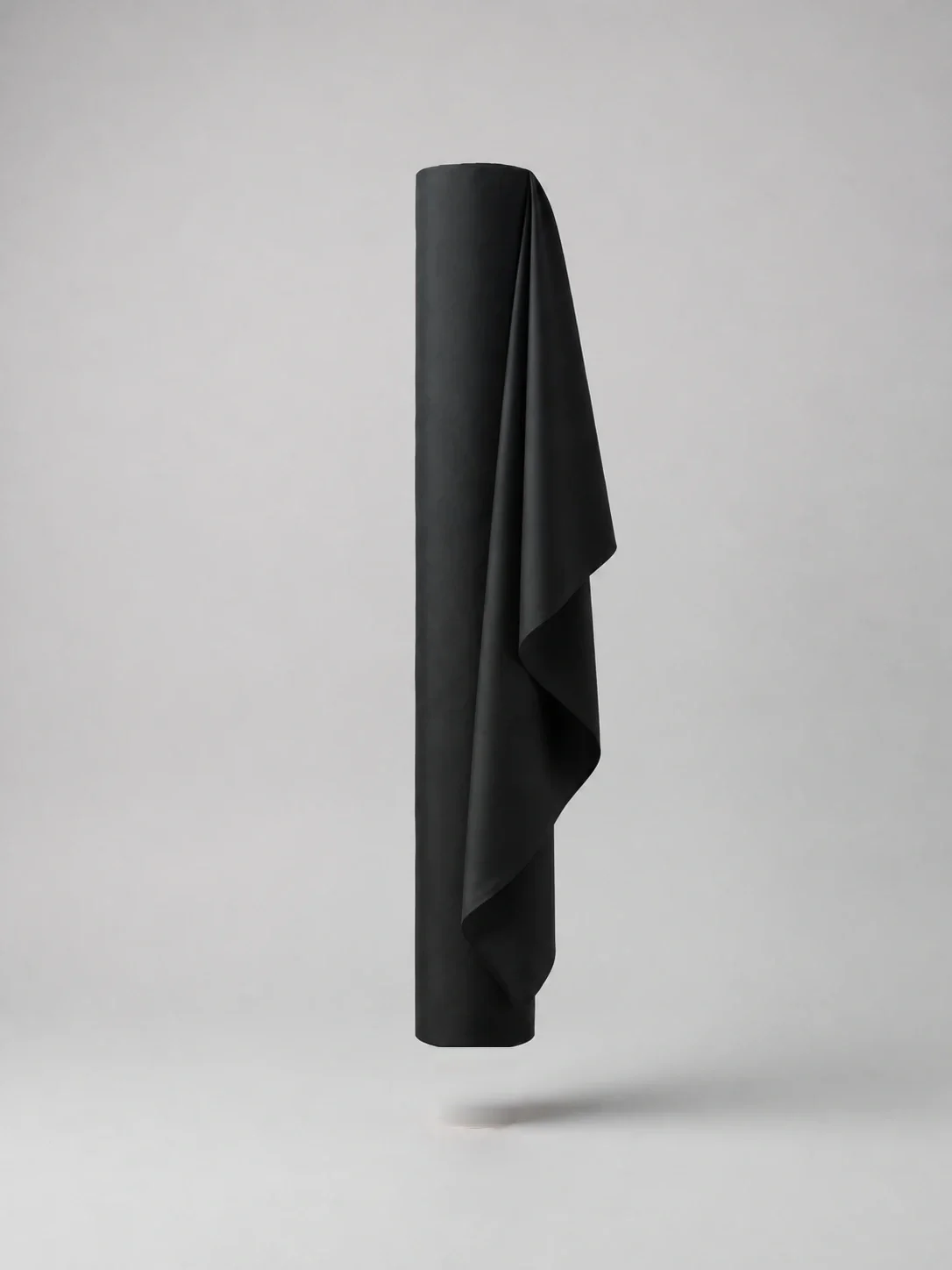
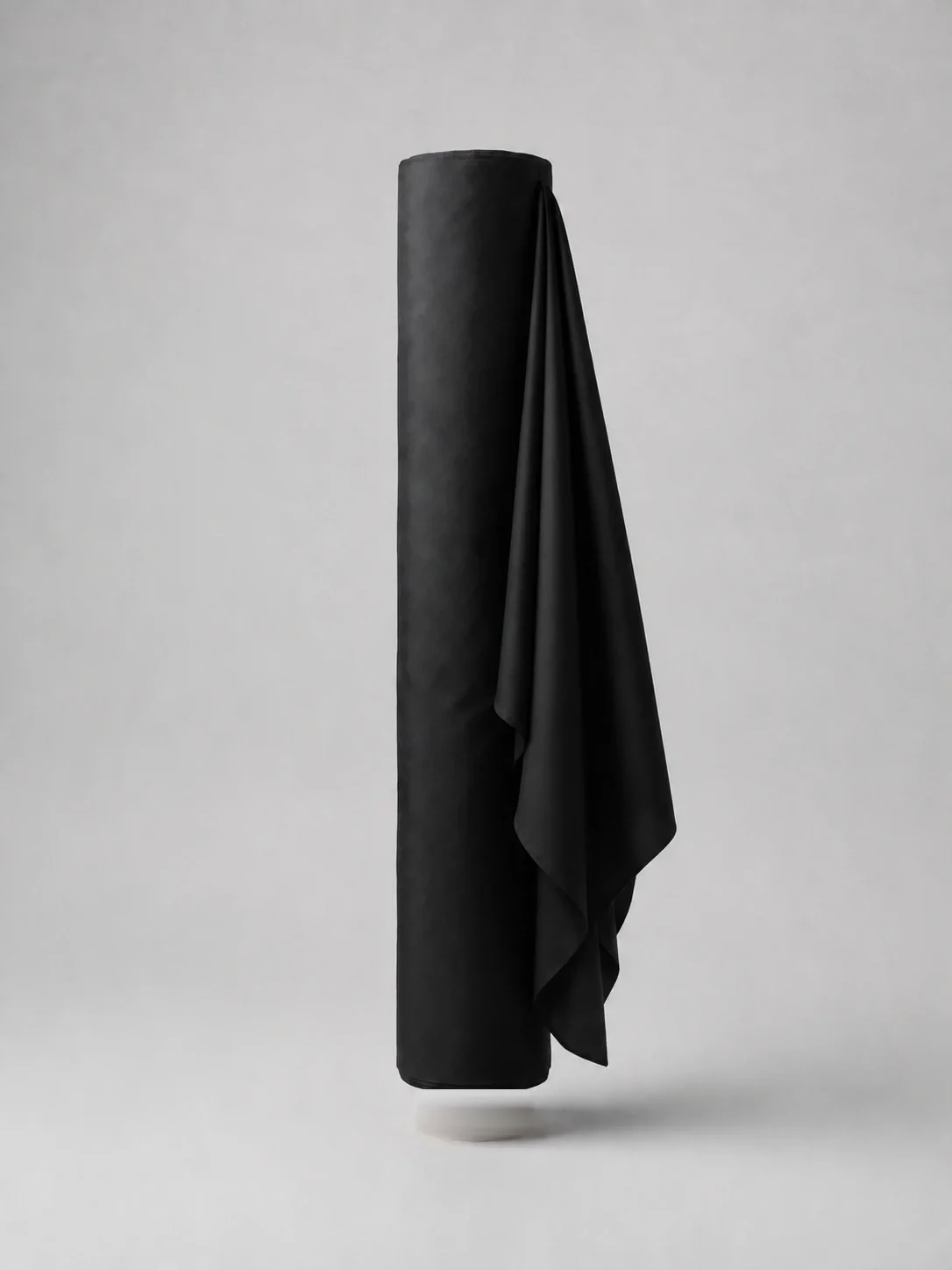
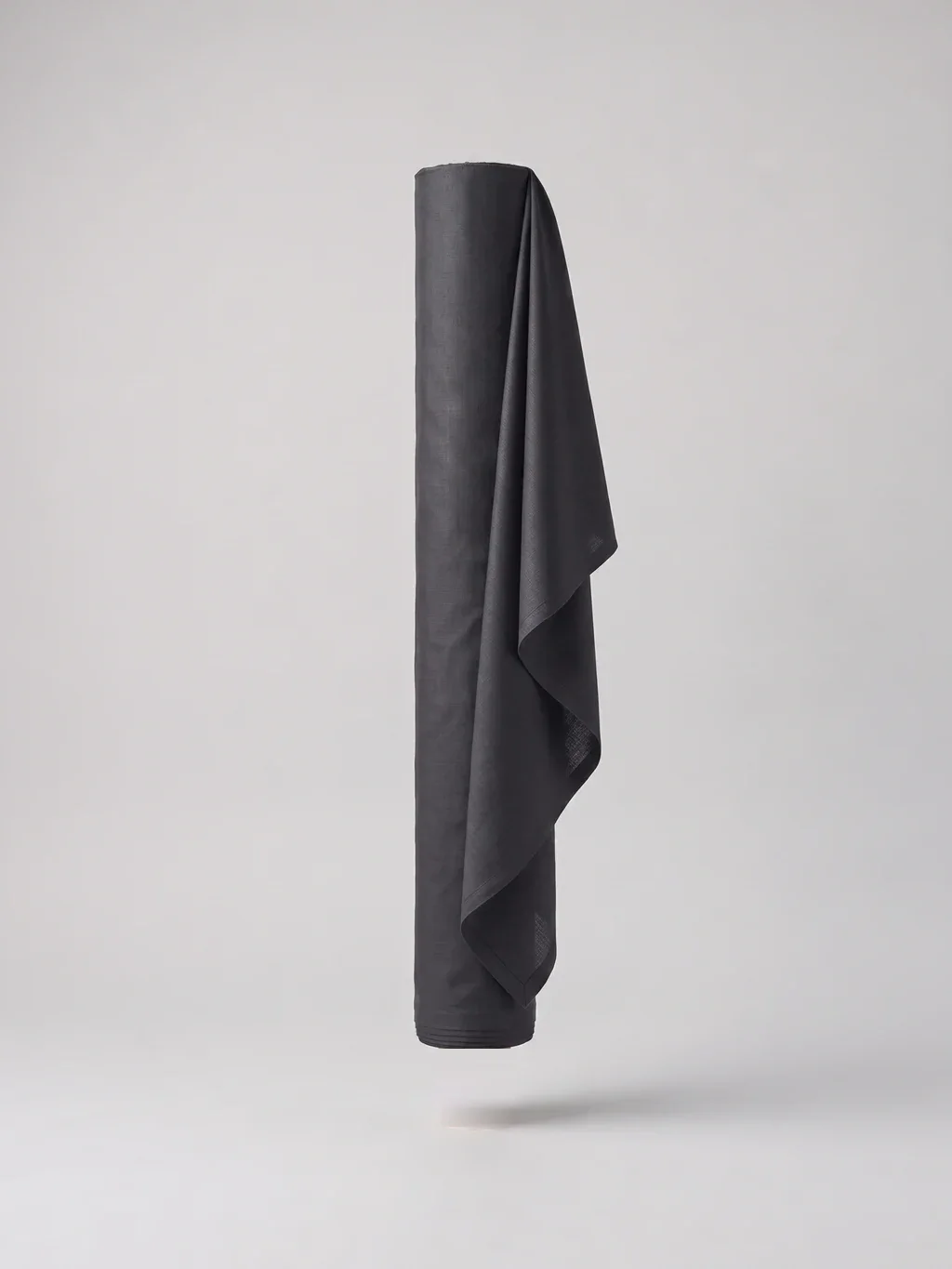
Ours is 150 cm wide and comes in 100-metre rolls. There is no limit on colour; it is dyed to the tone you ask for. The tones in the product photographs are examples — the full colour card is at the warehouse.
What a lining does, and what satin adds
A lining does three jobs, and none of them are visible from outside:
- It makes the garment easy to put on and take off. The sleeve slides past a knitted jumper instead of catching on it.
- It holds the shape of the outer fabric. The lining covers the inside as one surface, so seam allowances, interlining edges and shoulder pads do not press through.
- It closes the inside off. Seam allowances, fusible tape, shoulder pads and pocket bags all sit under the lining.
Satin earns its place on the first point. The slippery face cuts friction, and in a lined jacket or coat you feel it the moment you put the garment on. On the second and third points there is no meaningful gap between satin and polyester lining — both do the job. Satin is not an upgrade, it is a different surface.
Which job calls for satin?
Choosing a lining comes down to the weight of the outer fabric and how hard the garment will be used. A rough map:
| Garment | What the lining has to do | Product to look at |
|---|---|---|
| Jackets, blazers | Glossy inside, easy to slip on | Satin lining |
| Suits | Thin, fluid, holds the line | Satin lining or Jesica |
| Overcoats | Strength under a heavy outer cloth | Micro lining |
| Uniforms, workwear | Resistance to abrasion and tearing | 190T lining |
| Dresses, skirts | Light, thin hand | Satin or polyester lining |
| Bag interiors | Durable, cut edge that holds | Polyester lining |
Satin's strength is its surface, and so is its weakness: long floats snag on a fingernail and pull more easily than a plain weave. A garment that will take rough use should not be lined in satin.
Colour, sheen and matching tone
A satin face reflects light directionally. Turn the cloth through 180 degrees and the same colour reads a shade darker or lighter. That is not a dye difference — it is the angle at which light meets the floats.
On the marker this becomes a hard rule: every piece must be cut the same way up. Lay the front panel one way and the back panel the other, and once the garment is sewn the two panels look like two different colours. A good share of the linings that come back as "the dye did not hold" are simply pieces cut in opposite directions.
Drawing a direction arrow on the edge of the roll takes five seconds. A batch cut the wrong way round is the whole batch.
Spreading and cutting a slippery cloth
The most irritating thing about satin lining is how slippery it is. Spread in plies, the layers travel over one another; the bottom ply does not end up where the top ply is. The result is pieces that miss their measurements.
- Keep the lay low. The ply count you get away with on cotton causes trouble in satin.
- Put marker under paper on the table so the cloth meets paper, not the table top.
- Lay marker top paper over the top; the cutting line stays clean and the top ply stops lifting.
- Let the cloth rest before cutting. Lining just off the roll is under tension and settles after a few hours open.
- Keep the blade sharp. A dull blade does not cut satin, it drags it.
Needle, thread and stitch length
Satin lining is a tightly woven cloth made from fine yarn. Too heavy a needle punches the weave, and the hole does not close — unpick the seam and the mark stays.
- Needle: 70/10 or 80/12, sharp point. A ball point is the wrong choice here.
- Thread: polyester. Cotton thread tires before the lining does.
- Stitch length: 2 – 2.5 mm. A long stitch puckers a slippery cloth.
- Drop the presser foot pressure; use a walking foot if you have one.
- Do not leave the cut edge waiting — overlock it the same day.
There is also the question of ease. The lining sleeve is cut a touch fuller than the outer sleeve so that raising the arm does not pull the outer fabric inwards. The pleat down the centre back of a body lining does the same job. Cutting the lining to exactly the same measurements as the shell means tying the garment up from the inside.
Pressing and washing
Polyester satin is not heat tolerant. Too hot an iron melts the floats on the surface into a glaze, and that glaze does not come back out.
- Keep the iron low, and use a press cloth where you can.
- Do not put steam straight onto the face; work through a cloth.
- Test the setting on an offcut — one test saves a garment.
In the wash polyester satin behaves well: it does not shrink, it does not bleed, and it dries quickly. Dry cleaning is no problem either. When a lining does cause trouble in the wash it is usually not the lining itself but the shell and the lining reacting differently to the same cycle.
The four mistakes we see most
- Cutting pieces in opposite directions. It heads the list of lining complaints and is prevented by a five-second mark on the marker.
- Cutting the lining to the same measurements as the shell. Without ease, the lining pulls the garment in.
- Sewing with too heavy a needle. The holes leave marks and unpicking does not forgive.
- Leaving the cut edge open. A satin edge frays within a day.
What to settle when you order
Three things make a lining order straightforward: the colour, the metreage and what the garment actually is. The last one sounds like an afterthought but decides the most — a jacket lining and a bag lining are not the same cloth.
For colour, bring a piece of your outer fabric or send a photograph; tone matching is done by eye, not by code. Rolls are 100 metres; we can work out how many you need together, from the marker efficiency.
Stock, samples and delivery are settled on the phone. A call is enough.
Frequently asked questions
What is the difference between satin lining and polyester lining?
Both are polyester yarn. The difference is in the weave: satin leaves long floats on the surface, which is why it is glossy and slippery. Polyester lining is plain woven — more matt and a little tougher. If you want sheen inside a jacket, satin; if the garment will take rough use, the plain lining.
Does satin lining shrink?
Polyester satin does not shrink in a normal wash. Shrinkage usually comes not from the lining but from the shell and the lining behaving differently: washed together, one settles and the other does not. If in doubt, wash an offcut and measure it.
Which colours can we get?
There is no limit on colour; it is dyed to the tone you ask for. The tones that move often are held at the warehouse, and a special tone needs notice. Call and we will tell you how long it takes.
How long is a roll?
100 metres, 150 cm wide. If you need a smaller quantity, let us talk it through on the phone.
The satin lining slips while I sew. What helps?
Three things: drop the stitch length to 2–2.5 mm, reduce the presser foot pressure, and lay thin paper under the seam line (it tears away afterwards). If you have a walking foot, that is the cleanest fix.