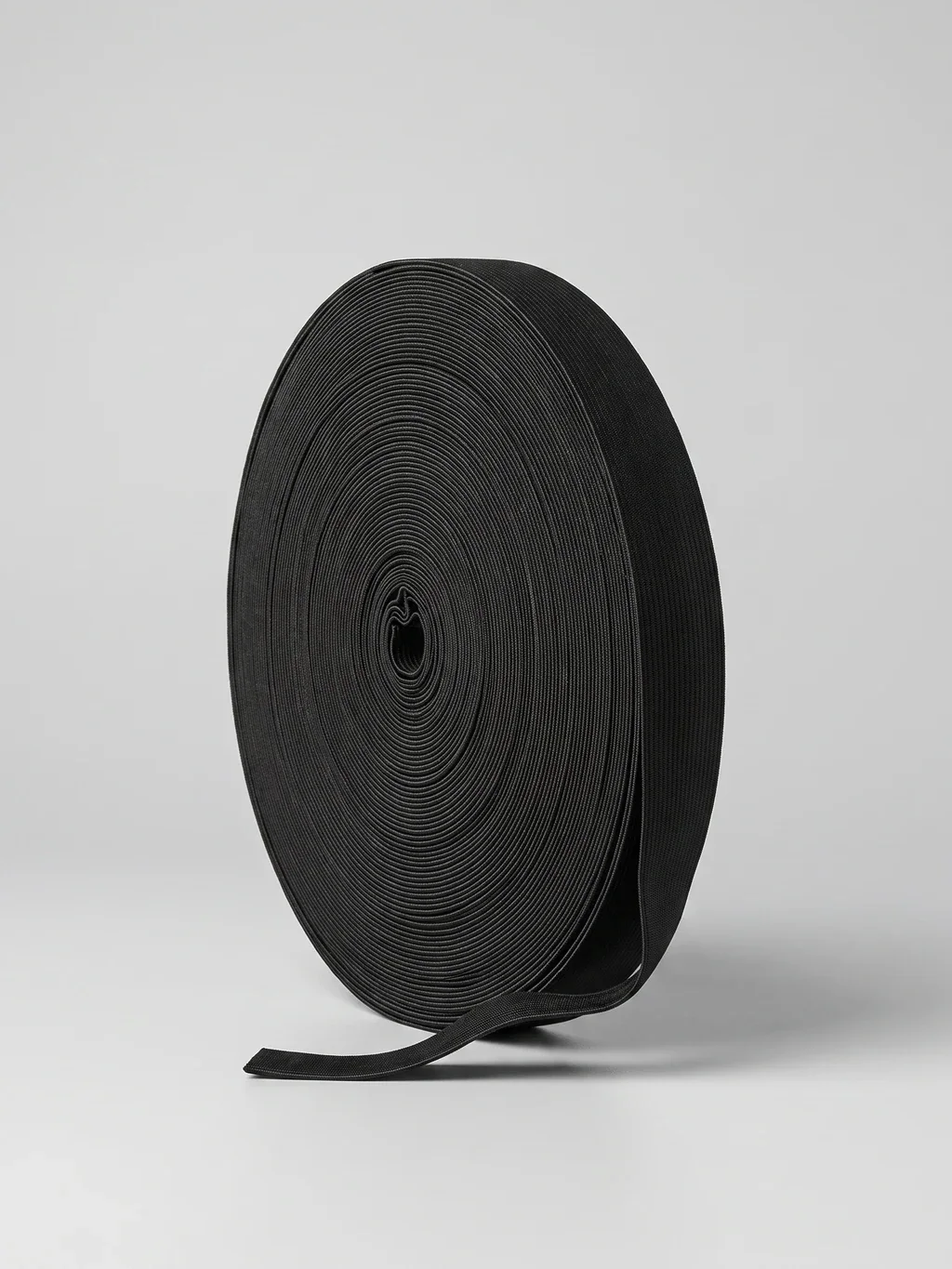
Cord elastic: where a flat elastic cannot go
Cord elastic is a fine round elastic in 0.5 and 0.7 mm, used for light gathering, straps and ties. Here is what the round section buys you, how to choose between the two diameters, and how shirring is actually done.
UB-ML001 Updated

What is cord elastic?
Cord elastic is a fine elastic cord with a round section. Its Turkish name comes from its size: it is spoken about in fractions of a millimetre, and it comes in 0.5 mm and 0.7 mm.
Its construction follows the same logic as garment elastic: a stretching core inside, yarn wrapped around it outside. The difference is the shape. A flat elastic is a tape; this is a cord. That single difference separates completely where the two materials go.
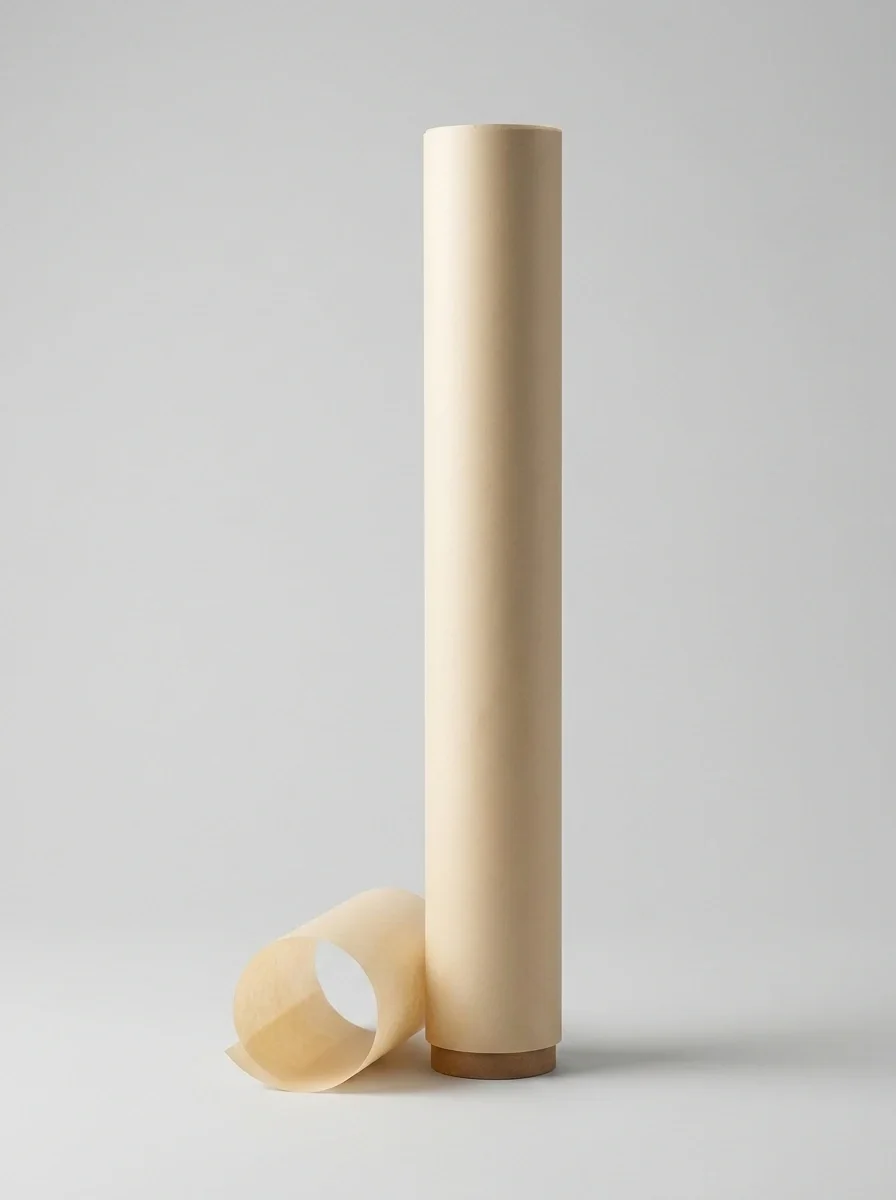
It comes in the tones shown plus black.
What the round section buys you
A flat elastic carries orientation: it has a face, a width, and a tendency to roll. A round section has none of those.
- It does not twist. With no "wrong side" to a cord, rolling inside a casing is not a problem.
- It passes through small openings. Eyelets, the end of a binding, a narrow channel — anywhere a flat elastic will not fit.
- It can be knotted. Ends can be tied without stitching, which is where adjustable ties and straps come from.
- It can be used on show. As a fine cord on the outside it does not read as clumsy.
- It follows curves. With no orientation, it bends the same way in every direction.
Flat elastic is for carrying load; round elastic is for changing direction. If a job needs the elastic to bend, twist or pass through something narrow, the answer is a round section.
0.5 mm or 0.7 mm?
The gap between the two looks small but is clear in the hand and on the job. The choice comes down to load and visibility.
| 0.5 mm | 0.7 mm | |
|---|---|---|
| Hand | Very fine, all but invisible | Definite, easy to hold |
| Load carried | Low | Medium |
| Where | Fine shirring, sheer fabrics, small accessories | Straps, ties, anywhere pulled repeatedly |
| Knots | Fine; can slip, needs a double knot | Holds |
If you cannot decide, ask one question: will the elastic be pulled repeatedly? A strap or a tie is pulled dozens of times a day, and 0.7 mm lasts longer there. In shirring the elastic is left at rest once it is in; 0.5 mm is both sufficient and less visible.
Cord elastic in shirring
The most common job for cord elastic is fine shirring — gathering an area of cloth and leaving it elastic: a sleeve opening, a neckline, a waist, the back of a dress.
There are two routes, and both are widely used:
- The channel method: fine parallel channels are stitched in the cloth and the elastic threaded through each. It looks clean, the elastic is protected, and it can be replaced.
- The bobbin method: the elastic is wound onto the machine bobbin and sewn with ordinary thread on top. As the stitching finishes, the cloth gathers by itself. On multi-row shirring it is the only practical route.
When winding the bobbin, do not stretch the elastic. Wound tight, it feeds unevenly and the gathering bunches on one side. Winding by hand under light tension is enough.
The closer the rows, the tighter the shirring reads. Before deciding, sew three rows on an offcut — a spacing worked out on paper almost never lands.
In straps and ties
The second common use is straps and ties. Here the elastic becomes a visible part, so both strength and appearance matter.
- If you are joining the ends with a knot, use a double knot; a single one works loose over time.
- Put the knot somewhere it will not be seen — inside a seam allowance or under a fold of cloth.
- If you are joining by stitching, overlap the ends and secure with a zigzag.
- On straps that are pulled constantly, reinforce the edge of the hole the cord passes through; the fabric tears from there.
- If you use eyelets, make the eyelet slightly larger than the cord; a cord that binds wears through from friction.
What to watch while working
- Needle: ball point. A sharp point cuts the elastic core.
- Do not sew the elastic under tension; released, the cloth gathers and loses its measurement.
- Cutting the ends with heat rather than scissors stops the outer wrapping unravelling — but do not overdo the heat, or the core melts.
- Over a long run, measure and mark the elastic first; stretching by eye comes out differently every time.
On the care side the rules are the same as for flat elastic: heat, chlorine and constant over-tension finish the elastane. It shows sooner in a cord elastic because the section is fine — the same degree of damage has a larger effect on a thin cord.
Common mistakes
- Winding the bobbin with the elastic stretched. The shirring comes out uneven.
- Using 0.5 mm on a strap that is pulled constantly. It tires quickly.
- Tying a single knot. It works loose over time.
- Sewing with a sharp needle. The core is cut.
- Deciding the row spacing without testing on an offcut. The calculation does not land.
When you order
Diameters are 0.5 mm and 0.7 mm, in the tones shown plus black.
Say what job it is for — shirring and straps want different diameters.
If you are shirring a wide area, the metreage depends on the number of rows; give us the row spacing and the total width and we will work it out together.
Samples, stock and delivery are settled on the phone.
Frequently asked questions
Should I take 0.5 mm or 0.7 mm?
If the elastic will be pulled repeatedly, 0.7 mm. Straps and ties are pulled dozens of times a day and a fine cord tires quickly there. In shirring the elastic rests once it is in place; 0.5 mm is both sufficient and less visible.
Why does the shirring bunch on one side?
Most often because the elastic was wound onto the bobbin under tension, so it feeds unevenly along the seam. Wind it by hand under light tension. The second cause is stretching by eye: over a long run, measure and mark the elastic first.
Can cord elastic replace flat elastic?
It depends on the job. In a load-bearing waistband, no — that needs flat elastic. But where the elastic has to pass through something narrow, bend, or be knotted, a round section is the only practical answer.
How should the ends be joined?
Two ways: a double knot, or overlapping the ends and securing with a zigzag. A single knot works loose over time. Put the knot somewhere it will not be seen — inside a seam allowance or under a fold of cloth.
How is it sold?
In 0.5 mm and 0.7 mm. Call about metreage and batch size, and we will work out what suits your job.