Polyester lining: why this is the one everybody uses
Polyester lining is a plain-woven, matt-faced, hard-wearing lining — the type that moves most in garment production. Here is why it is so common, what weight and thread density actually tell you, and what to watch in cutting and sewing.
UB-PA150 Updated
What is polyester lining?
Polyester lining is a lining cloth woven in plain weave from polyester filament yarn. Plain weave is the simplest structure there is: the warp goes over one, under one. Because there are so many interlacing points, no long floats are left on the surface — which is why the cloth reads matt and feels tighter in the hand than satin.
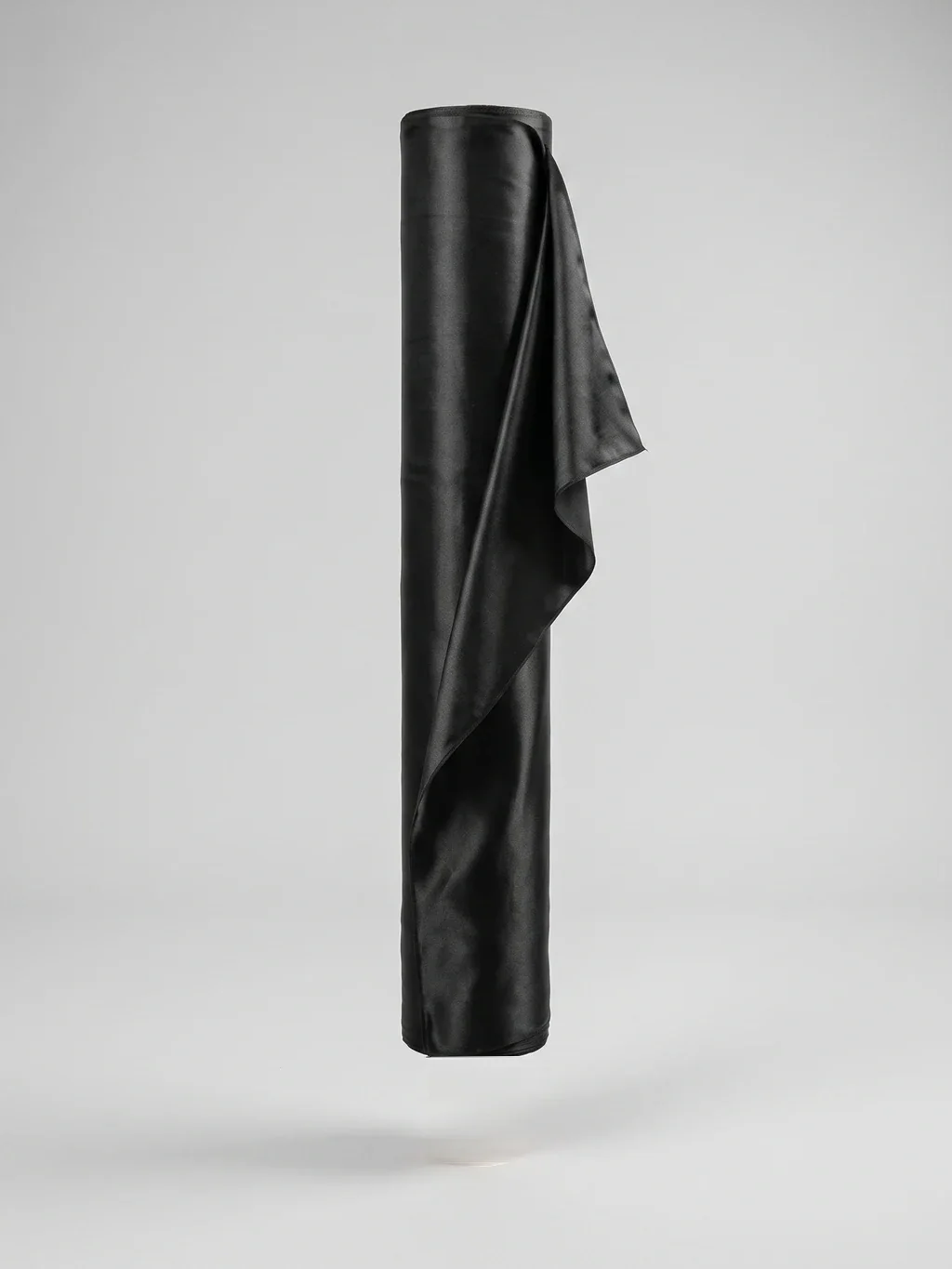
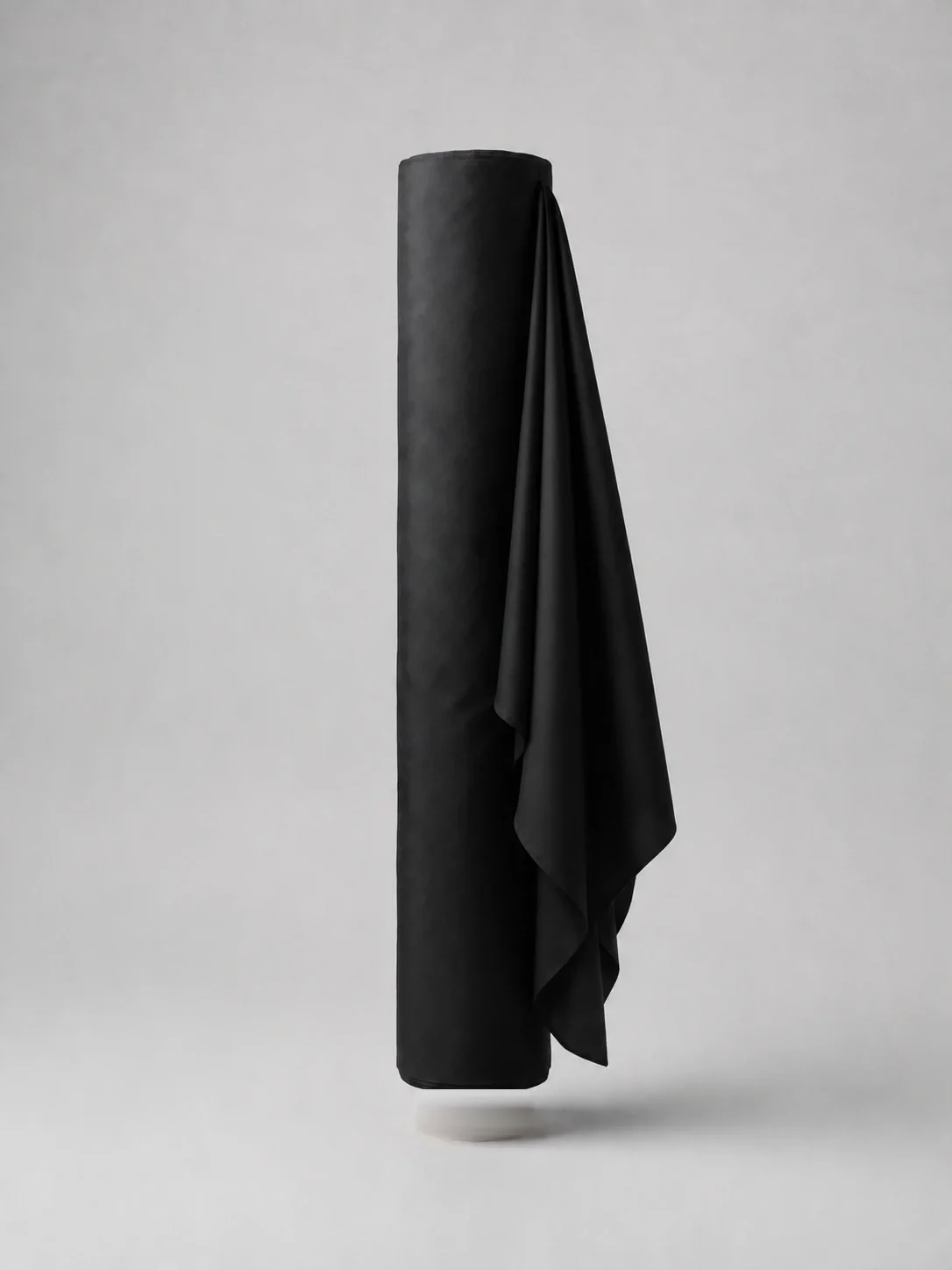
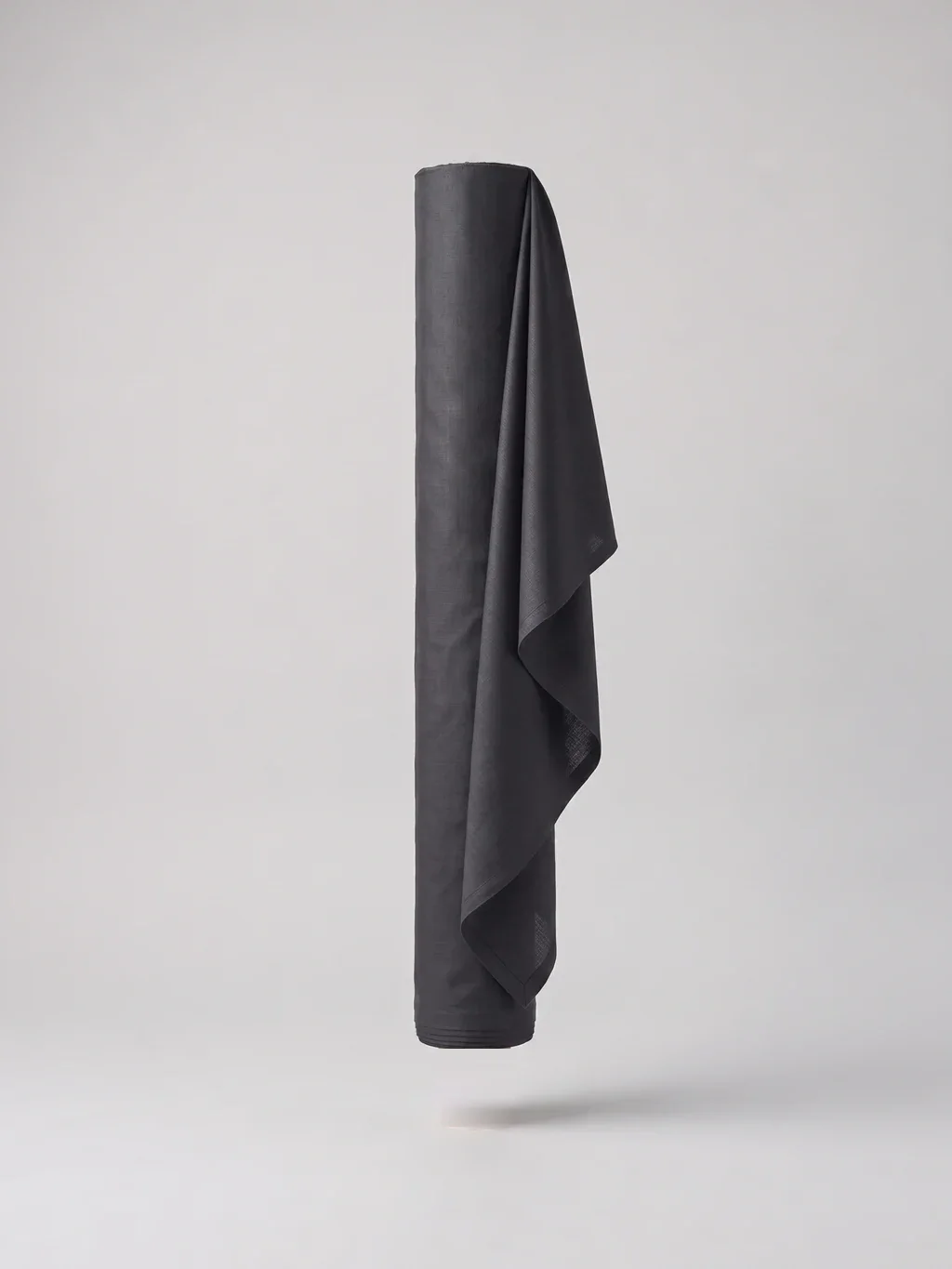
Ours is 150 cm wide in 100-metre rolls. There is no limit on colour; it is dyed to the tone you ask for. The tones in the product photographs are examples, and the full colour card is at the warehouse.
When somebody says "lining" in a workshop, this is usually the cloth they mean. Inside a jacket, inside a skirt, a bag lining, a pocket bag — the material underneath is generally polyester lining. It is common not because it is outstanding in one direction, but because it is not weak in any.
Why is it used more than anything else?
Four reasons, all pulling the same way:
- Strength. Polyester filament resists tearing and abrasion, and a lining is the most rubbed surface in a garment.
- Dimensional stability. It does not shrink in the wash or grow under the iron. A lining that shrinks gathers the garment from the inside; this cloth does not do that.
- It takes dye. Polyester goes into any tone with disperse dye, and repeats come back consistent.
- A matt face. It does not compete with the outer fabric. A lining is not something to be noticed — it is expected to do its job quietly.
There is a fifth reason, and it is not technical: familiarity. Workshops know this cloth. The needle, the thread, the stitch length, the overlock settings are all settled. A material being predictable is worth more on the floor than any single property on a spec sheet.
Polyester lining or satin lining?
Both are polyester; the difference is the weave. Which one you pick depends on how hard the garment will be used and whether you want sheen inside.
| Polyester lining | [[UB-SA150|Satin lining]] | |
|---|---|---|
| Weave | Plain | Satin |
| Face | Matt | Glossy |
| Hand | Tight, slightly dry | Slippery |
| Snagging | Hard to snag | Easier to snag |
| Sensitivity to cutting direction | Low | High — reversed pieces shift colour |
| Typical use | Bags, uniforms, skirts, pockets | Jackets, blazers, suits |
The most practical advantage of plain weave is that it has no direction. Turn a piece around and the colour does not change. In satin, five seconds of inattention can cost a batch; here that risk does not exist.
Weight and thread density: is a thicker lining a better lining?
The most common mistake in choosing a lining is confusing thickness with quality. A lining is not there to give body — that is the job of interlining. The lining has to stay thin so it does not disturb how the outer fabric falls.
Two separate things are worth looking at: weight (grams per square metre) and thread density (threads per unit area). They do not move together. A lining woven densely from fine yarn can be both lighter and stronger than one woven loosely from coarse yarn. Density is exactly what is being named in 190T lining — the number in the name is the count.
The practical test is simple: hold the lining up to the light. If the weave looks even, it will do the job. A weave that opens up and thins in places will give way in those same places, in the machine and in wear.
How colour matching works
Lining colour is chosen in one of two ways: matching the tone of the outer fabric, or deliberately contrasting with it. Either is fine, but the decision has to be made before cutting.
For a tone match there is only one reliable method, and that is the eye. Bring a piece of your outer fabric; colour codes read differently on different surfaces, and matching from a screen is nearly always a shade out. A woven cloth and a lustrous lining will look different to the eye even out of the same dye bath.
- Bring a piece of the outer fabric, or send a photograph.
- Check the tone in daylight; warehouse lighting can mislead.
- Take one order from one batch — batch variation shows most in pale tones.
- Think about marking with dark linings; under a pale outer fabric a dark lining can show through.
Spreading and cutting
Polyester lining is better behaved than satin, but it is still a lining: it slips. As the ply count rises, the layers travel over one another.
- Put marker under paper on the table.
- If the top ply lifts, hold it down with marker top paper.
- Let cloth straight off the roll rest for a few hours; a piece cut while the fabric is under tension relaxes afterwards and loses its measurement.
- Keep the blade sharp; a dull blade melts its way through and hardens the edge.
A cut edge in polyester can seal itself by melting. Sometimes that helps — the edge does not fray. Sometimes it does not: a hard edge leaves a mark in the seam. It comes down to blade temperature and speed.
Machine settings
- Needle: 70/10 – 80/12, sharp point.
- Thread: polyester. Staying in the same material means lining and thread behave the same way in the wash.
- Stitch length: 2 – 2.5 mm.
- Overlock: do not leave the cut edge waiting.
- Leave ease in sleeve and body linings, and put a pleat down the centre back.
Pocket bags are a separate question. Lining can be used for pockets, but because a hand goes in and out all day, pocketing is usually the better answer — a more tightly woven cloth built for abrasion.
Common mistakes
- Choosing too thick a lining. The garment swells from the inside and the drape goes.
- Leaving out the ease. Cut to exact measurement, the lining pulls the outer fabric in when the arm is raised.
- Pairing an outer fabric and a lining with different care requirements. If one shrinks in the wash, the garment puckers.
- Matching colour on a screen. The tone is nearly always a shade out.
- Making pocket bags from lining. It tires quickly there.
When you order
Rolls are 100 metres, 150 cm wide. We can work out how many you need together — the style, the size breakdown and the width all change the arithmetic.
For colour, bring a piece. There is a difference in waiting time between tones held at the warehouse and tones that have to be dyed; call and we will tell you which one yours is.
Samples, stock and delivery are settled on the phone.
Frequently asked questions
Does polyester lining shrink?
Not in a normal wash. When a garment puckers it is usually not the lining but the shell and the lining reacting differently to the same cycle. If in doubt, wash an offcut and measure it.
How thin should a lining be?
Thin enough not to disturb how the outer fabric falls. A lining is not there to give body — body comes from interlining. A thick lining swells the garment from the inside.
Can we match the same tone on a repeat order?
Usually yes, but there can be batch variation, and it shows most in pale tones. Taking the whole run of a style in one go is the safest route.
Can this lining be used for pocket bags?
It can, but it is not a long-lived answer. A pocket takes a hand in and out all day; pocketing is the right cloth there — woven tighter and built for abrasion.
How long is a roll?
100 metres, 150 cm wide. If you need a smaller quantity, let us talk it through on the phone.