Micro lining: why a finer filament is soft and strong at once
Micro lining is densely woven from microfibre yarn; its soft hand and high strength put it under heavy outer fabrics. Here is when a filament counts as "micro", what that fineness actually changes, and where it earns its place in coats and raincoats.
UB-MK150 Updated
What does "micro" mean?
Microfibre means a single filament that falls below a certain fineness threshold. The measure looks at the individual filament, not the yarn as a whole. A rough comparison: a human hair runs 50–70 microns across, while a microfibre filament sits at something like a tenth of that.
The consequence is this: to build a yarn of the same thickness, many more filaments have to lie side by side. Three hundred filaments in a yarn instead of thirty, and the cloth behaves like a different material.
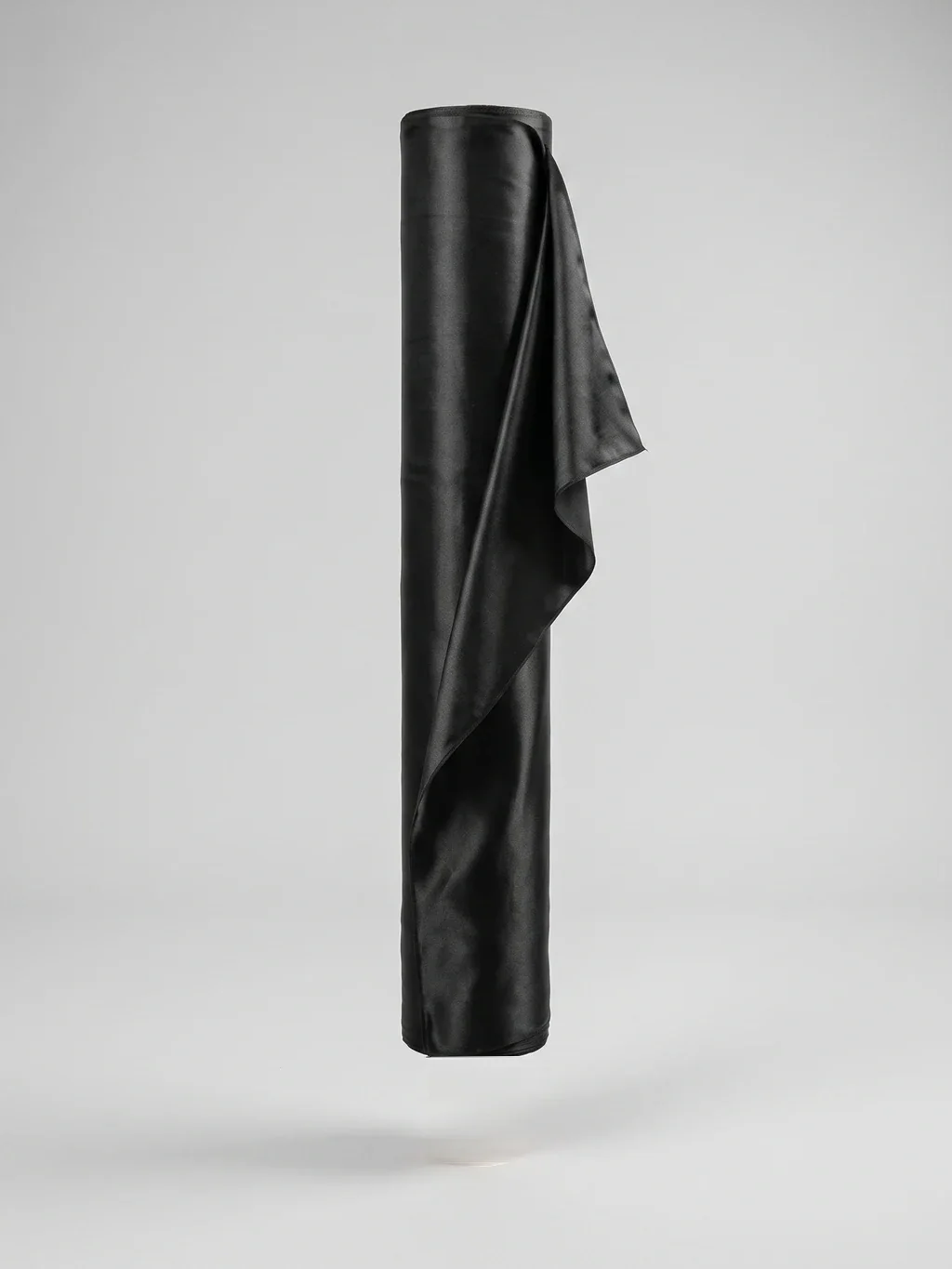
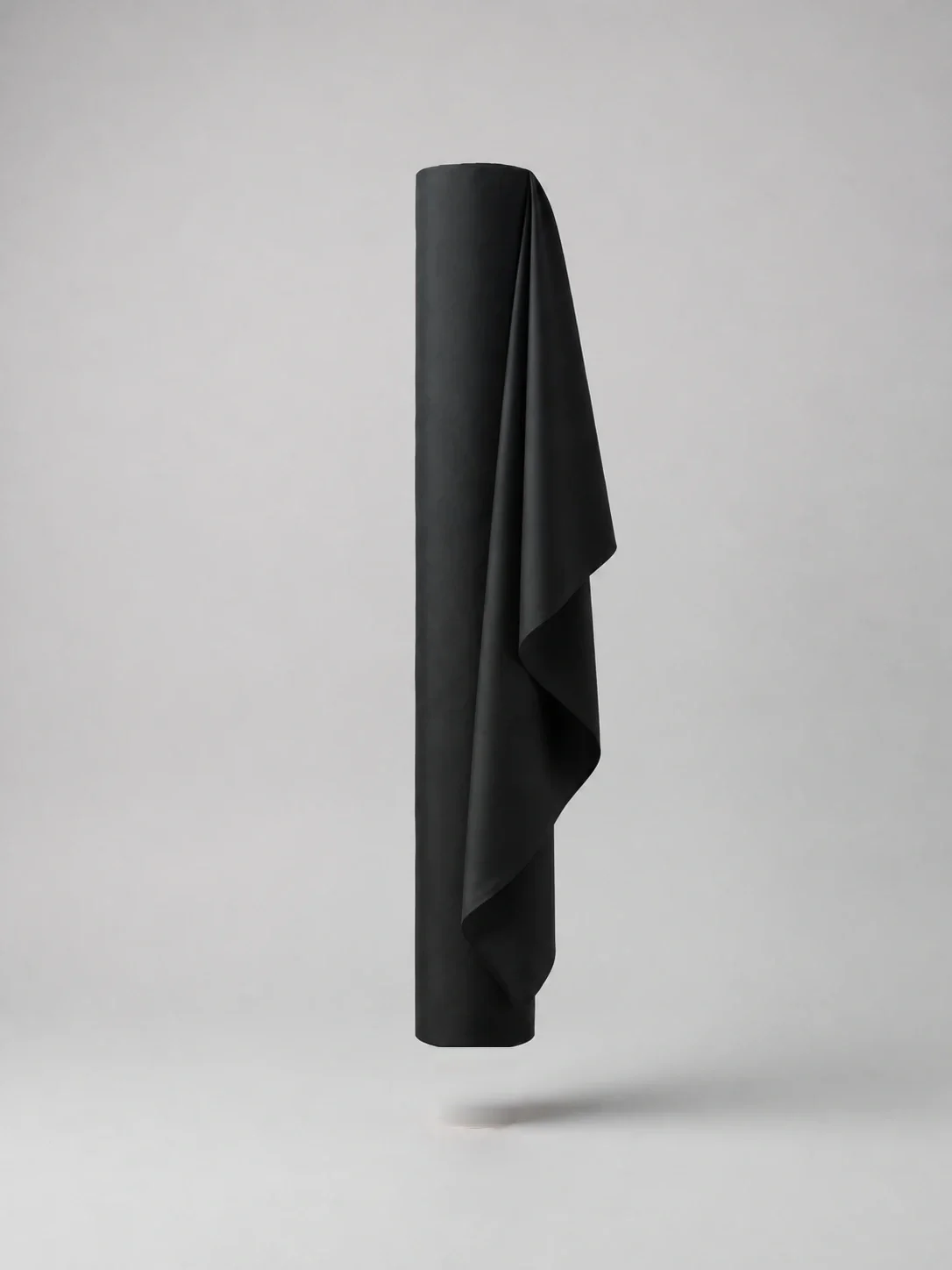
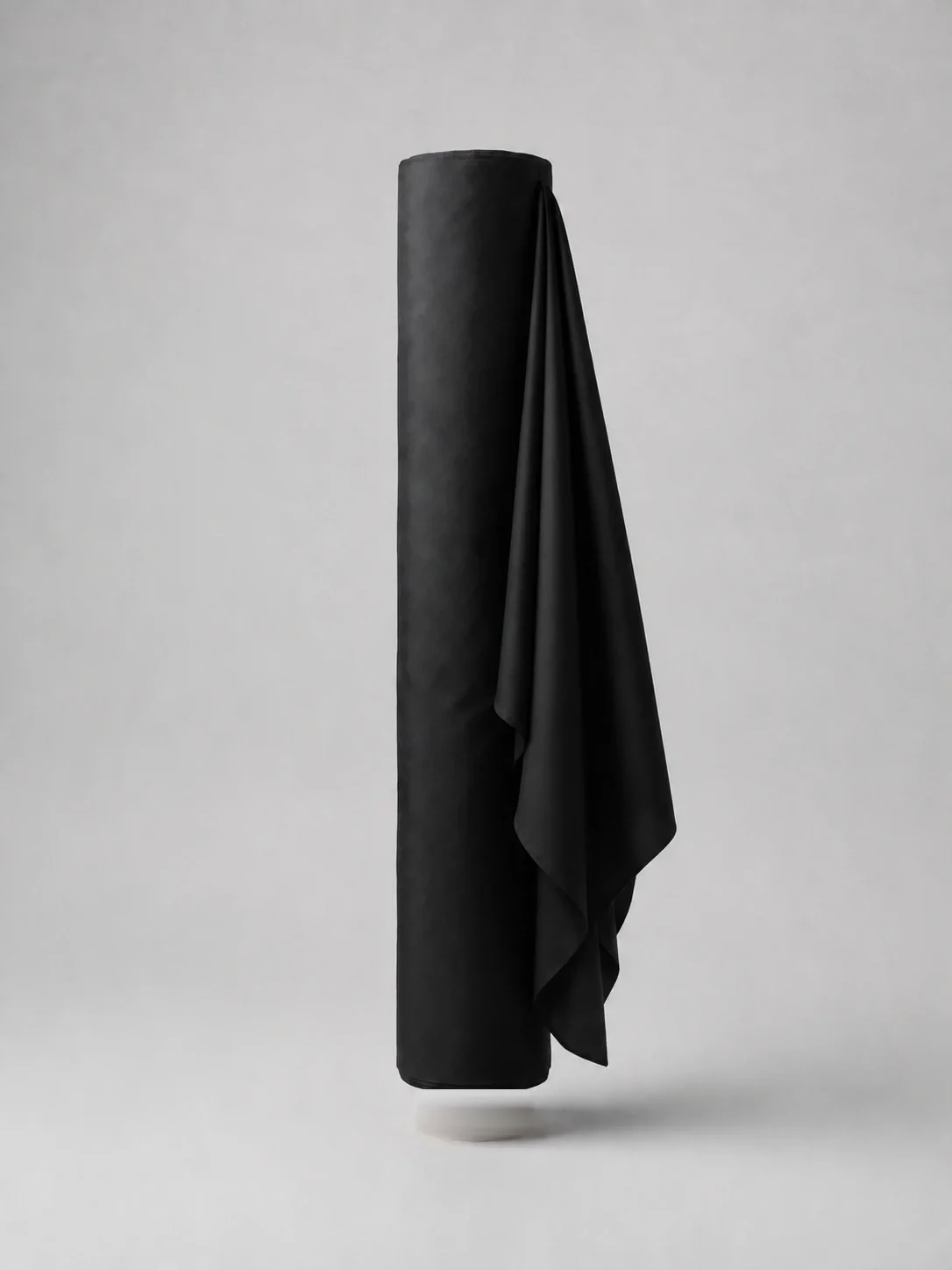
Ours is 150 cm wide, in 100-metre rolls. Structurally it belongs to the same family as polyester lining, but the filament fineness and the weave density are different.
What the finer filament changes
As the filament gets finer, four things happen at once in the cloth — and all four serve a lining:
- The hand softens. Fine filaments bend more easily, so the cloth does not stand up stiff in the hand; it falls.
- Cover improves. More filaments occupy the same area, the weave closes up, and less air passes through.
- Strength rises. Load is not carried by one thick filament but spread across hundreds of fine ones.
- The face gets smoother. Fuzzing and pilling under friction start later.
There is a gain you cannot see, too: cloth of fine filaments shows dye deeper. Out of the same dye bath, dark tones read fuller than they do on a coarse-filament cloth. In coat production, which runs heavily on dark linings, that difference is noticeable.
Fine yarn is not a luxury detail, it is a functional choice: it is the only way to get softness and strength at the same time. With coarse yarn you can have one or the other.
Where micro lining is used
Its place is clear: garments where the outer fabric is heavy and the lining has to be both soft and tough.
| Garment | What the lining must do | Why micro |
|---|---|---|
| Overcoats | Soft inner face under heavy wool | It lasts without going stiff |
| Raincoats | Dense weave, smooth face | Fine filaments improve cover |
| Jackets | Easy to put on, long life | Slow to fuzz |
| Winter coats | Inner face in a layered build | Reduces fibre migration |
The heavy-outer-fabric point matters. Put a stiff lining under a thick wool coat and the two layers work against each other: the outer cloth wants to fall, the lining holds it. The garment does not run cleanly down from the shoulder. The softness of a micro lining is a technical requirement here, not a comfort detail.
How it differs from the other linings
| Product | Hand | What stands out |
|---|---|---|
| Micro lining | Soft, fluid | Softness and strength together |
| 190T lining | Tight, thin | Abrasion resistance |
| Polyester lining | Balanced | Works anywhere |
| Satin lining | Slippery, glossy | Easy to slip on |
| Jesica | Full, matt | Classic look |
What to watch in cutting and sewing
Micro lining is a densely woven cloth, and that cuts two ways. It behaves better in the lay; it asks more of the needle.
- Needle: 70/10, sharp point. A heavy needle leaves a visible mark in this cloth.
- Change needles on time; a worn needle pushes threads aside in a dense weave.
- Stitch length: 2 – 2.5 mm.
- Drop the presser foot pressure; a soft cloth stretches as it feeds under too much pressure.
- Keep the blade sharp; a dull blade melts and hardens the edge of a fine-filament cloth.
Ease matters a little more than usual in a coat lining. A heavy outer fabric works the lining every time it moves; without ease, the seams give in the first months under the arm and down the centre back. That is why the centre-back pleat is treated as compulsory in practice.
Pressing and washing
Polyester microfibre is not heat tolerant, and a fine filament reacts to heat faster. Too hot an iron glazes the surface, and the glaze does not come back out.
- Low heat and a press cloth.
- Do not put steam straight onto the face.
- Test the setting on an offcut.
- It does not shrink in the wash and dries quickly; dry cleaning is fine too.
Common mistakes
- Putting a stiff lining under a heavy coat. The two layers work against each other and the drape goes.
- Treating micro lining as a raincoat shell. This is a lining; waterproofing is the job of a coated shell fabric.
- Sewing with a heavy or worn needle. On a fine-filament cloth the mark reads immediately.
- Skipping the ease in a coat lining. The seams give within months.
- A hot iron. The glazing is permanent.
When you order
Rolls are 100 metres, 150 cm wide. Call about colours: there can be a difference in waiting time between tones held in stock and tones dyed to order.
If you have a lining you want to compare against, bring a piece. The difference between microfibre and standard polyester is settled by hand in a second.
Samples, stock and delivery are settled on the phone.
Frequently asked questions
What is the difference between micro lining and ordinary polyester lining?
Filament fineness. In micro lining the filaments making up the yarn are far finer, so a yarn of the same thickness contains many more of them. The result is a softer hand, closer cover and higher strength. Polyester lining is enough for general work; micro lining comes into its own under a heavy outer fabric.
Is micro lining waterproof?
No. A dense weave cuts wind and fibre migration, but waterproofing is the job of a coated or membrane shell fabric. In a raincoat, micro lining stays in the lining layer.
Why is it preferred in overcoats in particular?
A heavy outer cloth wants to fall, and a stiff lining stops it, so the garment does not run cleanly down from the shoulder. A micro lining is soft enough not to fight the outer fabric, and strong enough to last as long as the coat.
Does it fuzz?
Every cloth marks eventually under friction, but a dense weave of fine filaments keeps the face smooth, so fuzzing starts later than it does on an ordinary lining.
How long is a roll?
100 metres, 150 cm wide. If you need a smaller quantity, let us talk it through on the phone.