Tulle
Tulle is a mesh whose threads knot into hexagonal holes; most of the material is air, which is what makes it light and transparent. Here is where soft, crisp and stretch tulle diverge, how volume is actually built, and the rules for working with a mesh.
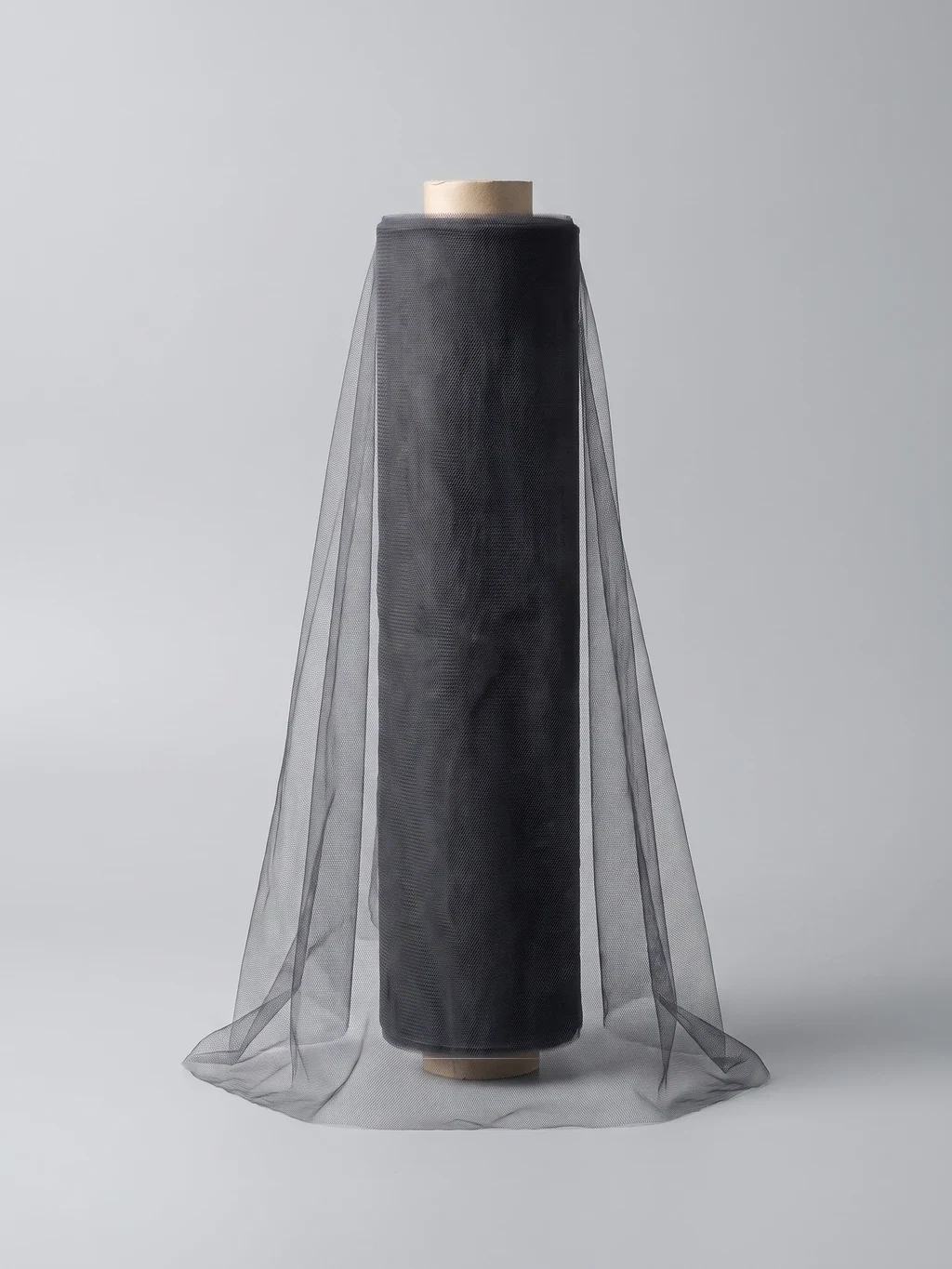
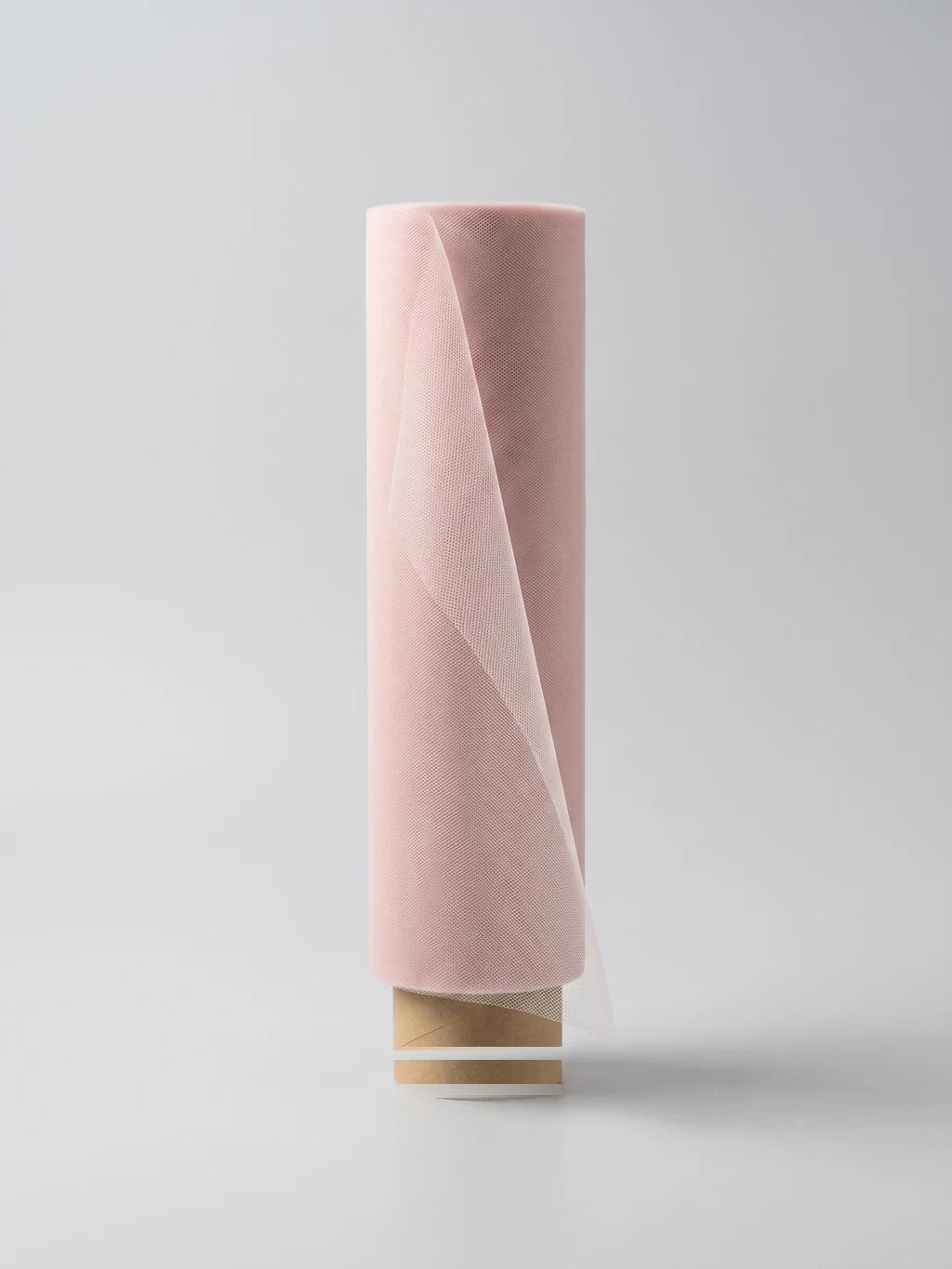
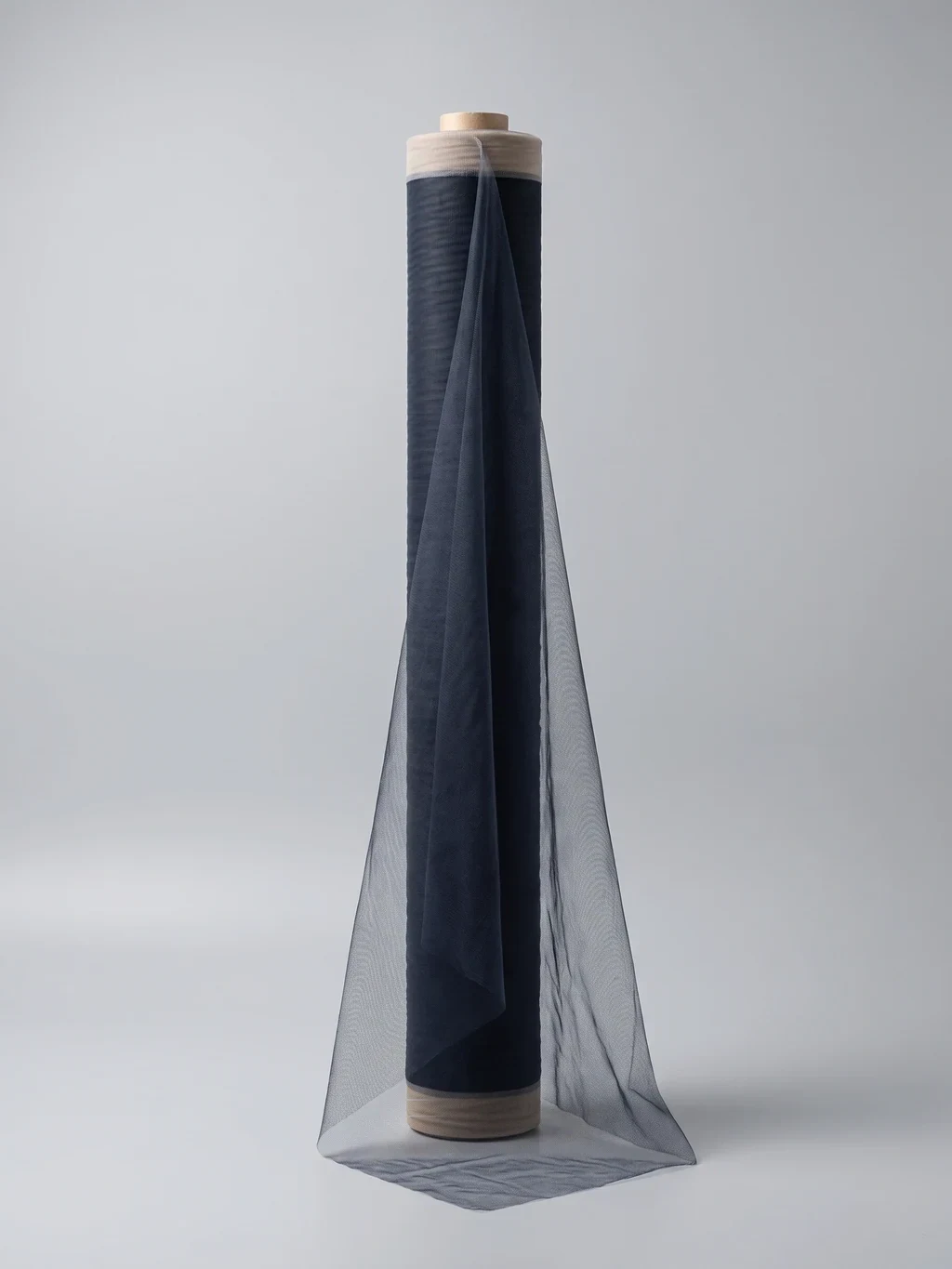
What is tulle and what types are there? Volume and layering
What is tulle?
Tulle is not a woven cloth but a mesh. The threads knot into one another to form hexagonal holes, and most of the material is in fact air. Its lightness, its transparency and its ability to hold volume all come from that.
The same mesh can have very different characters. Two things decide it: the fineness of the yarn and the finish applied to the cloth. Two tulles built on the same hole can behave completely differently — one flows in the hand, the other stands up on the table.
Its most practical property, though, comes not from the structure but from the cut: the edge does not fray. It stays exactly as cut. Hems, veil edges and layer ends are usually left completely raw.
Three tulles, three different jobs
The real decision in choosing tulle is the type. The rest is colour and metreage. The three we hold do not substitute for one another:
| Tulle | Stance | What it does | Where |
|---|---|---|---|
| Hayal tulle | Soft, falls downwards | Volume through layers, a soft look | Skirt layers, veils, sleeves |
| Crystal tulle | Crisp, stands outwards | Volume in one layer, carries form | Underskirts, full skirts, trims |
| Stretch tulle | Gives and recovers | Fits the body, joins lace | Lingerie, activewear, invisible joins |
The gap between the first two is not a question of which is better but two different decisions. The third is a separate class: it has elastane in its structure and recovers when released. Hayal and crystal tulle, pulled hard, open up and stay open — which is why only stretch tulle can be used on close-fitting panels.
How volume is built
A skirt standing full is not about how much cloth is in it. However much soft cloth you add, it comes down under its own weight. For fullness, the cloth has to push outwards.
That is why bridal and eveningwear combine two tulles as layers:
- The bottom layer is crystal tulle — it builds the volume, pushes the skirt out and carries the form.
- The visible upper layers are Hayal tulle — they give the soft look and take the hardness off.
- The layer against skin is satin or polyester lining — it stops the crisp tulle prickling.
The result: from outside the skirt looks soft, but its form is carried by a crisp layer underneath. Build the same volume from soft tulle alone and you would need far more layers, and the skirt would collapse over the course of the day. One layer of crisp tulle gives more volume than five of soft — and stays far lighter doing it.
Cut the layers to different lengths. When they all finish at the same point the hem closes in a single hard line and reads as artificial. Finishing each layer a few centimetres off the one before softens the transition.
Cutting and sewing tulle
Cutting tulle is nothing like cutting cloth. The mesh slides, it lifts, and it folds back over itself as the blade advances. Crisp tulle behaves; soft tulle does not.
- Keep the ply count low. Stacked up, tulle clings to itself and the cutting line goes.
- Put marker under paper on the table; tulle slides less on paper. With top paper over it, the top ply stops lifting too.
- Needle: 70/10 – 80/12 sharp point on soft and crisp tulle, ball point on stretch tulle.
- Stitch length: 2 – 2.5 mm. A long stitch gathers the mesh.
- Drop the presser foot pressure; lay thin paper under the seam line if you need to and tear it away afterwards.
- Do not finish the cut edge — there is no need, tulle does not fray.
When gathering, do not force the tulle. Pulled hard, the mesh opens up and does not close again. Running a long basting stitch and drawing it up slowly gives a far cleaner result than gathering in one pull.
On stretch tulle the needle choice alone can decide a batch: a sharp point cuts the elastane and a ladder starts from the cut. Once a ladder has started there is no stopping it.
Colour: how tone reads in tulle
Colour behaves differently in tulle than in cloth, and that leads to two separate surprises.
The first is transparency: the tulle's colour blends with whatever lies under it. A blush tulle over a white lining and the same tulle over skin are not the same colour. Always check the tone over the fabric that will sit beneath it.
The second is the layer effect: colour deepens as layers build. A tone that reads pale in one layer is pronounced in five. Before deciding, stack as many layers as you intend to use and look at that — a colour decision made on a single layer nearly always comes out too dark.
Do not mix whites in bridal. Two different whites side by side make one of them read grey, and that gets mistaken for a fabric quality problem.
Where each one is used
| Job | Which tulle | Why |
|---|---|---|
| Bridal skirt | Crystal below, Hayal above | Volume underneath, look on top |
| Veil | Hayal tulle | Does not prickle the face, moves with the wearer |
| Evening layers | Hayal tulle | Soft transitions, a cloudy look |
| Underskirt | Crystal tulle | Carries the form, stays light |
| Trims and bows | Crystal tulle | Keeps its shape in a single layer |
| Lingerie, lace joins | Stretch tulle | Gives, transparent, seam does not show |
Common mistakes with tulle
- Trying to build all the volume from soft tulle. The weight climbs and the skirt still collapses during the day.
- Cutting every layer to the same length. The hem finishes in a hard line.
- Choosing the colour from a single layer. The tone deepens as layers build.
- Letting crisp tulle touch skin directly. In a garment worn for hours it irritates; a lining goes underneath.
- Using a sharp needle on stretch tulle. The elastane is cut, a ladder starts and runs.
When you order
Settle the type first: is volume being built, a look being created, or does it need to stretch? Answer that and the product picks itself.
Tell us how many layers you are planning — the metreage depends on the layer count and the skirt length, and working it out together is the healthiest route.
For colour, bring a piece of the fabric that will sit underneath. Tulle is never judged on its own, only with what is behind it.
Samples, stock and delivery are settled on the phone.
Frequently asked questions
What is tulle?
A mesh whose threads knot into hexagonal holes. Most of it is air, which makes it light and transparent. Its most practical property is that the cut edge does not fray — it stays exactly as cut, which is why hems and veil edges are usually left completely raw.
Which tulle should I choose?
One question settles it: what will the tulle do? Building volume — crystal tulle (crisp, gives volume in a single layer). A soft look and drape — Hayal tulle. Fitting the body or joining lace — stretch tulle, the only one that gives.
How many layers make a full skirt?
Working with soft tulle alone, 3–4 layers for everyday eveningwear and 5–8 for bridal. Past eight the weight becomes a problem. The right answer is to build the volume underneath with crystal tulle: one crisp layer gives more volume than five soft ones and stays far lighter.
Does the cut edge need finishing?
No. Tulle does not fray and stays as cut. That is the most practical thing about working with it — turning, binding and overlocking all drop out, and you do not even need a seam allowance.
Can tulle be ironed?
A soleplate melts a synthetic mesh in seconds, with no way back. If you must, use very low heat and always a press cloth. For crease lines, hanging the tulle and steaming from a distance is usually enough.
How do I choose the colour?
Stack as many layers as you intend to use and look at them over the fabric that will sit beneath. Tulle is transparent, so its colour blends with what is behind it and deepens as layers build. A decision made on one layer nearly always comes out too dark.