Marker under paper: what happens beneath the lay
Marker under paper is laid beneath the fabric plies; it stops them shifting and protects the table. Here is what that invisible bottom layer actually solves, how the width is chosen, and how consumption is worked out.
UB-PL152 Updated
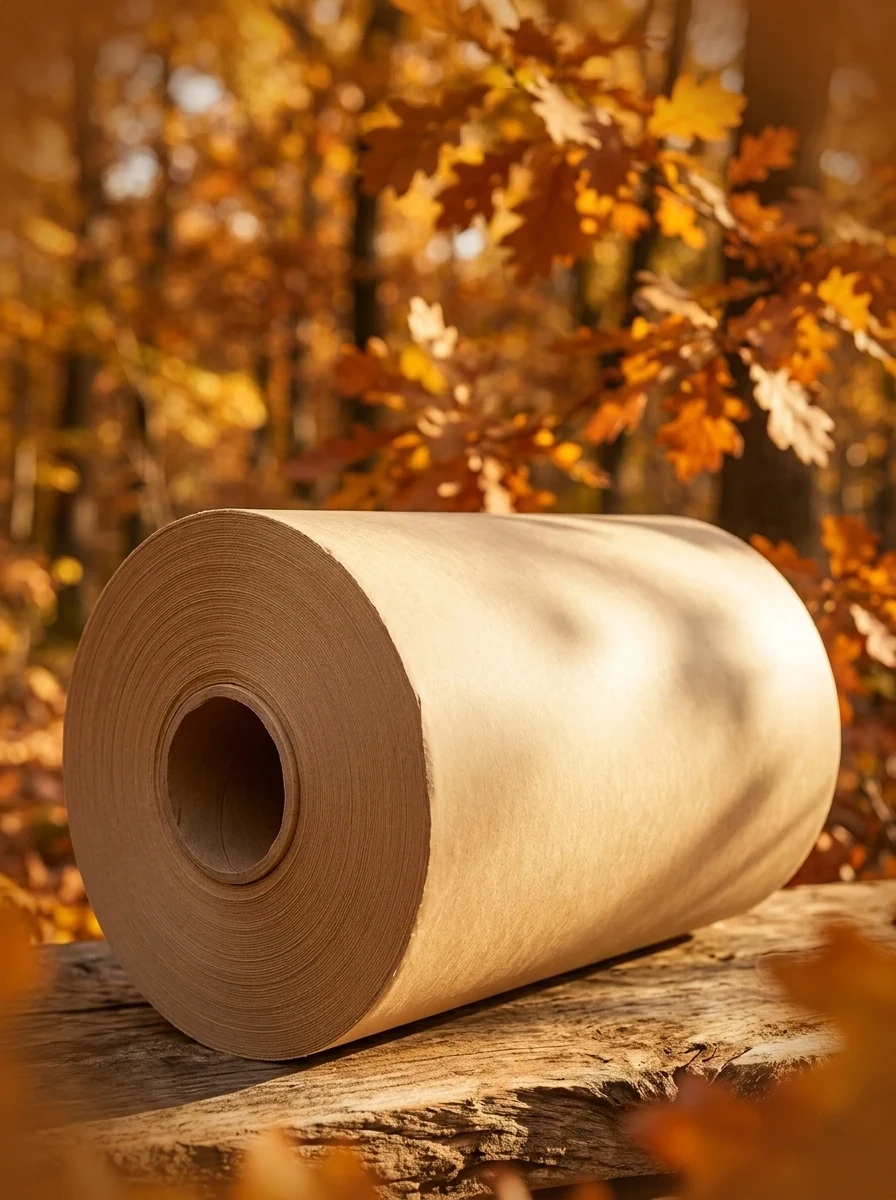
What does under paper do?
Fabric can be spread straight onto the table — but it is not. A sheet of paper goes in between, and although nobody sees it, it decides the quality of the cut directly.
It does four separate jobs, and all four support one another:
- It stops the bottom fabric ply travelling on the table. The paper surface grips more than the table does.
- It protects the table from the blade. Coming out of the bottom ply, the knife enters paper rather than the table.
- It makes the whole lay movable. Because the paper forms a base, the lay can be slid as one piece.
- It comes between the fabric and any dirt, damp or dust on the table.
Ours comes in 152, 162 and 182 cm widths. The layer that goes on top is marker top paper; the two are usually used together and do different jobs.
The real issue: the bottom ply sliding
As plies build up in a lay, the friction between each ply and the one below is accounted for. But one ply is a special case: the bottom one. Under it there is no fabric, only table.
A table surface is usually smooth and slippery. As the spreader travels, or as the lay is tensioned afterwards, the bottom ply walks on the table. The result: the pieces in the bottom plies come out a few millimetres off the rest.
A few millimetres sounds like nothing. But it is enough for two front panels not to match, or for a collar to lose its symmetry. Worse, because the fault is only in the bottom plies rather than the whole batch, it is noticed late in production.
Shifted plies are hard to find: opened out, the lay looks perfectly fine. The problem only appears when the pieces are sewn — and at that point the cut cloth does not come back.
On which fabrics does it become compulsory?
Under paper helps on any lay, but on some fabrics it stops being a preference and becomes a requirement.
| Fabric | Risk | Note |
|---|---|---|
| Satin lining | Very high | Slippery face; plies walk over one another |
| Polyester lining | High | Same problem, a little better behaved |
| Tulle | High | Light and lifting; behaves better on paper |
| Synthetic leather | Medium | The back can cling to the table |
| Woven cotton | Low | Still used for table protection |
In the lining and tulle group, spreading without under paper means accepting the loss of measurement from the start. On cottons and wools the slippage risk is low, but table protection and being able to move the lay are still gains.
152, 162 or 182: which width?
Width follows one rule: the paper has to be wider than the fabric. Where the fabric edge falls outside the paper, the under paper does nothing along that edge.
- 150 cm fabric → 152 cm paper. That leaves 1 cm at each side.
- 160 cm fabric → 162 cm paper.
- 180 cm fabric → 182 cm paper.
- If you use fabrics of different widths, choose for the widest; excess on a narrower cloth causes no problem.
The widths are set against fabric widths: 152, 162 and 182 are not arbitrary numbers, they sit over 150, 160 and 180 cm cloths respectively. When you order, telling us the width of the fabric you work with is enough.
Buying paper narrower than the fabric is one of those choices that looks like a saving and turns out to be a loss. The pieces at the edges are left unprotected, and the most critical pieces usually get nested at the edges.
On automatic cutters
On automatic cutting tables the job changes slightly. The cutting surface there is usually a bristle bed or similar that the blade can enter, so protecting a table surface is less of an issue.
But two jobs remain: stopping the bottom ply shifting, and letting the lay be moved as one. On vacuum systems the air permeability of the bottom layer also comes into it — for the vacuum to compress the whole lay, the layer beneath has to allow it.
What kind of bottom layer your machine works with is set by the manufacturer's instructions. If you work with an automatic cutter, say so before ordering; a paper that does not suit the machine lowers the quality of the cut.
Working out consumption
Under paper consumption is simple arithmetic: one layer per lay, as long as the lay. In practice two points change it.
- Add an allowance at both ends of the lay length. The paper has to run past the fabric; 10 – 15 cm at each end is usually enough.
- The paper is not single-use. On short lays and light fabrics the same sheet can be used several times — until the blade marks weaken it.
- Areas where blade marks concentrate decide the paper's life. A sheet used for dense cutting is thrown away after one use.
- Keep the allowance generous on a first run; the real ratio appears in the second batch.
The order of work on the table
- Clean the table. Dust and crumbs left under the paper telegraph to the surface all the way through the lay.
- Spread the under paper flat, without tension. Paper spread tight relaxes afterwards and gathers the fabric.
- Fix the paper to the table with clamps or weights at the edges.
- Spread the fabric.
- Lay marker top paper over the top.
- After cutting, move the lay together with the under paper; the pieces stay where they are.
That last point is the least-discussed benefit: because the cut pieces sit on the under paper, the whole lay can be carried like a tray. Collecting them piece by piece takes time and risks mixing them up.
Common mistakes
- Buying paper narrower than the fabric. The pieces at the edges are left unprotected.
- Spreading the paper under tension. It gathers the fabric as it relaxes.
- Spreading without cleaning the table. Dust and crumbs telegraph to the surface.
- Reusing paper that has been densely cut. The blade marks weaken it and slippage starts.
- Using a paper that does not suit an automatic cutter. Vacuum and cut quality both drop.
When you order
Widths are 152, 162 and 182 cm. Tell us the width of the fabric you work with and we will settle the paper width together.
Say whether you cut by hand or with an automatic cutter; automatic tables can call for different properties.
It is commonly bought together with top paper; the two do different jobs and are usually used on the same lay.
Metreage, samples, stock and delivery are settled on the phone.
Frequently asked questions
Can you spread without under paper?
You can, but the bottom fabric ply travels on the table and the pieces in that ply come out a few millimetres off. On slippery cloths like lining and tulle that is close to unavoidable. You also lose table protection and the ability to move the lay as one.
Which width should I take?
One wider than your fabric: 152 cm for 150 cm cloth, 162 for 160, 182 for 180. The widths are already set against fabric widths. If you use fabrics of different widths, choose for the widest.
Can under paper be reused?
On short lays and light fabrics it can be used several times. The limit is set by the blade marks: where they concentrate the paper weakens and slippage starts there. A sheet used for dense cutting is thrown away after one use.
What is the difference between under paper and top paper?
Their jobs. Under paper goes beneath the fabric: it stops the bottom ply shifting, protects the table and lets the lay be moved. Top paper goes over the fabric: it keeps the cutting line clean and stops the top ply lifting. The two are usually used together on the same lay.
Is it needed on an automatic cutter?
It is, though the job shifts. Table protection matters less; stopping the bottom ply shifting and moving the lay still apply. On vacuum systems the air permeability of the paper also comes in — tell us what your machine needs before ordering.