Zara leather: when a thin synthetic leather beats a thick one
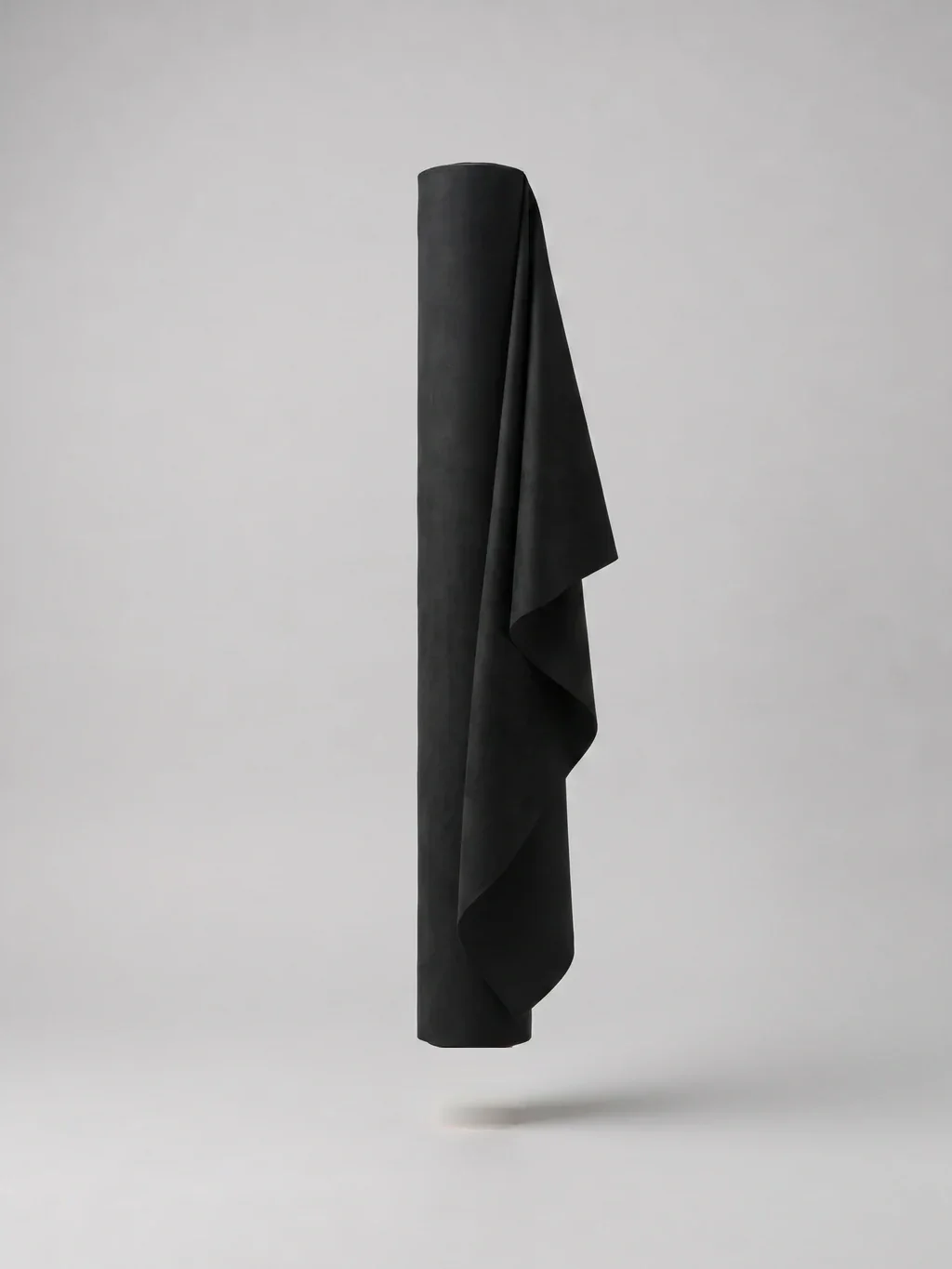
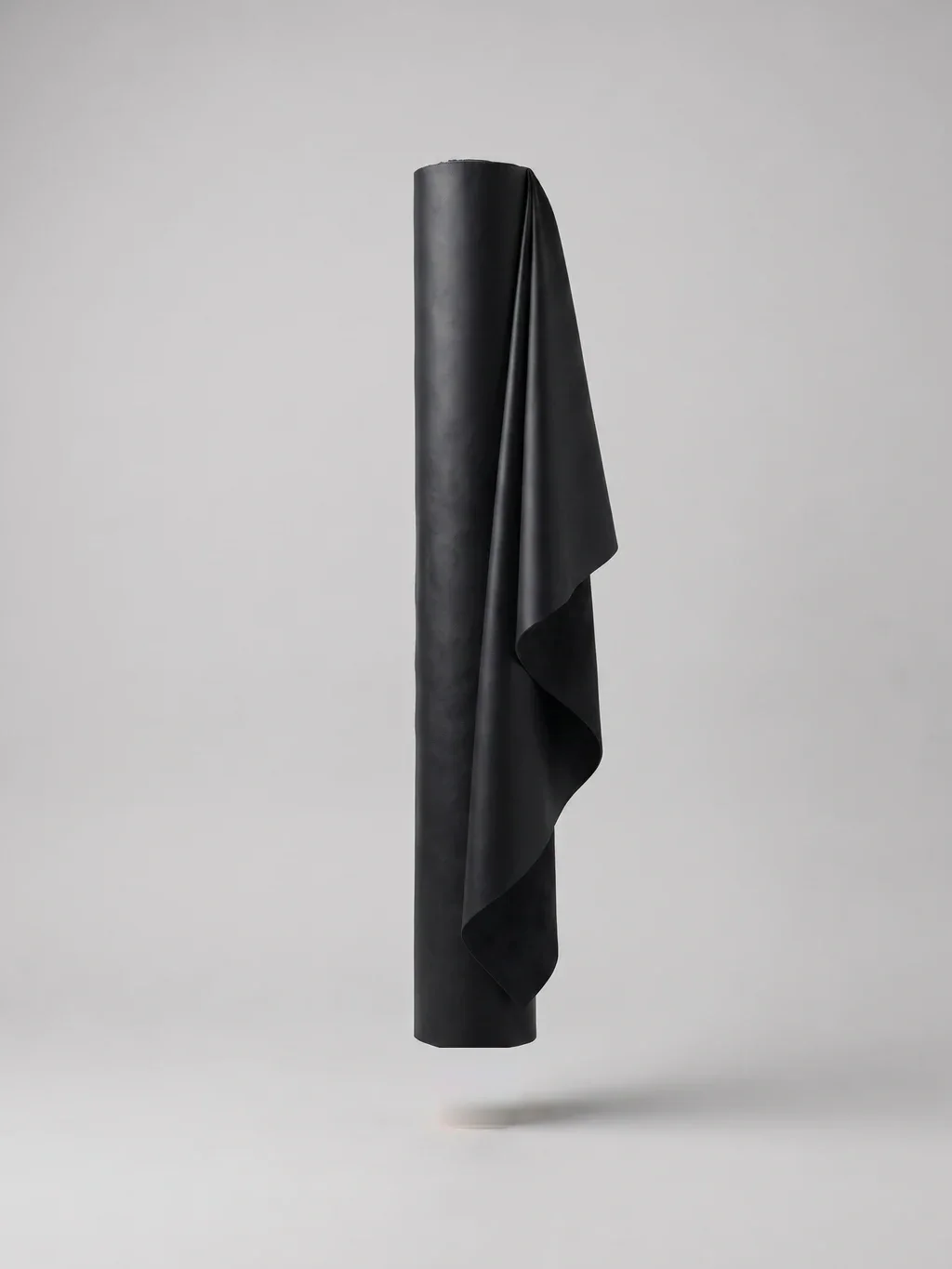
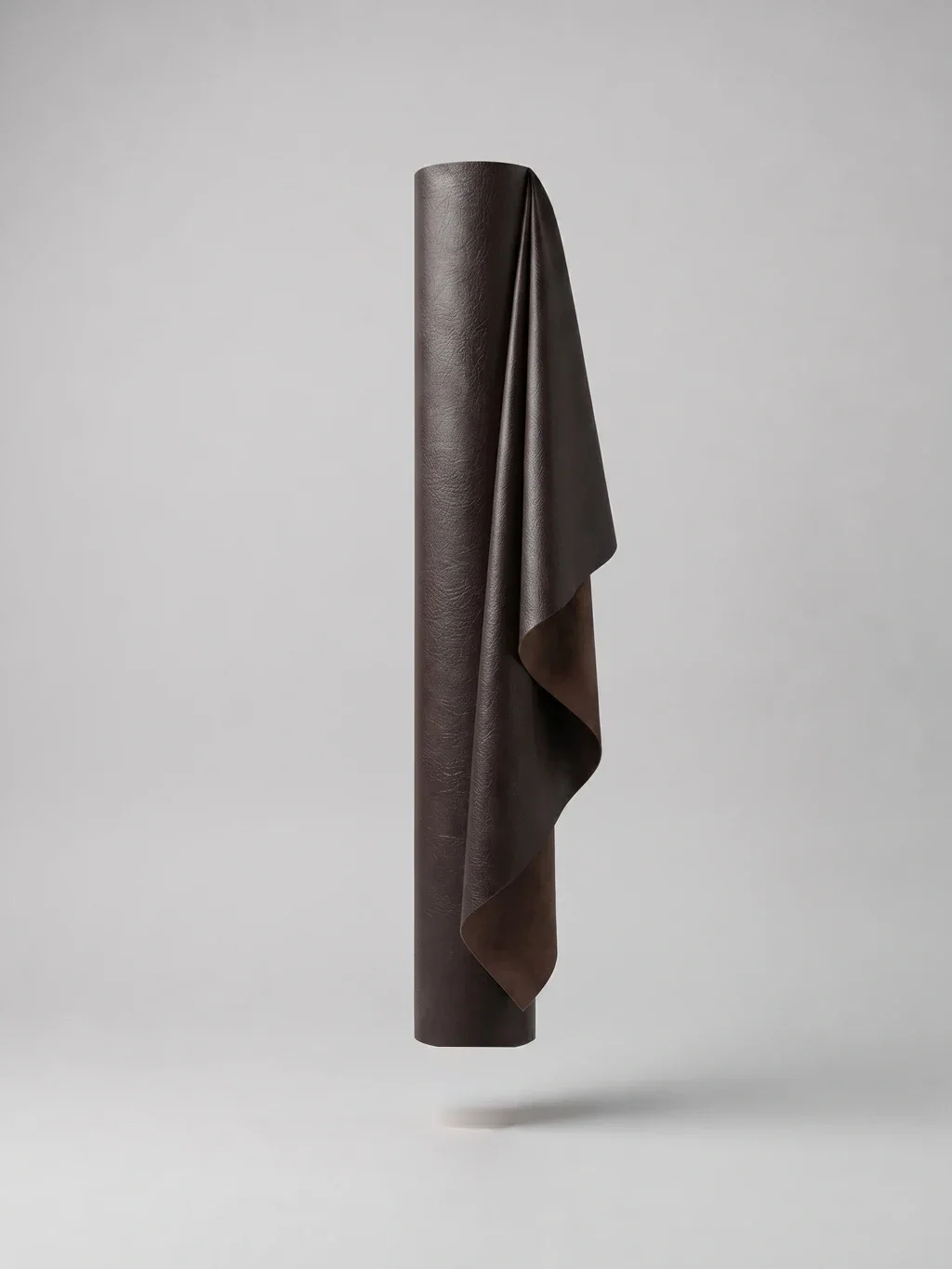
Zara is a thin, soft synthetic leather; its drape follows the body, which makes it suitable for garment production. Here is where thinness is a gain and where it is a limit, how the pattern is adapted, and how bulk is managed at the seams.
UB-ZD145 Updated

What is Zara leather?
Zara is a synthetic leather whose carrier cloth is thin and soft. It belongs to the same family as Diego leather — both are coated fabrics — but it is built for a different job.
In a synthetic leather, what decides the behaviour is not the coating but the carrier underneath. In Zara that carrier is thin and flexible, and the result is a drape that follows the body. The cloth settles onto the figure rather than imposing a shape of its own.
Ours is 145 cm wide, in 50-metre rolls, in 20 – 25 base colours.
Thin or thick? What decides
In synthetic leather, thickness is not a measure of quality but a choice of character. Which is right depends on what the garment has to do.
| Thin (Zara) | Thicker synthetic leather | |
|---|---|---|
| Drape | Follows the body | Holds its own shape |
| Silhouette | Soft, fluid | Structured, upright |
| Seam bulk | Low; layers can sit over one another | High; joins build up |
| Where | Dresses, skirts, trousers, light jackets | Coats, bags, structured jackets |
| Pattern | Works like a fabric pattern | Needs extra allowance and adjustment |
In garment production the thin side has a clear advantage: less pattern adaptation. With a thick synthetic leather you have to add allowance, soften curves and rethink the seam junctions. With a thin one, an existing fabric pattern usually works with small corrections.
"Thicker is better quality" is wrong in synthetic leather. As thickness rises the garment stiffens and the drape disappears — and what a dress wants is almost never stiffness.
Bulk at the seams: where thinness pays
The biggest practical problem in sewing synthetic leather is bulk. Every layer adds thickness where the cloth folds over itself, and the junctions build up.
Think of a collar point: four layers of cloth, the seam allowances and any interlining all meet there. In a thick synthetic leather that point struggles to pass under the machine and reads swollen when it is sewn. The same point in a thin one is no trouble at all.
- Multi-layer points like collar points, cuff corners and pocket openings work comfortably.
- Seam allowances lie flat without building bulk.
- Topstitching does not wave; stitching over thick allowances wanders.
- Zips and buttons are easier to apply.
- With a lining added, the total thickness stays acceptable.
What those points share: each of them needs extra work in a thick synthetic leather — thinning allowances, trimming corners, pressing separately. In a thin one those steps either disappear or shrink. The difference looks small and grows at batch scale.
Where thinness runs out
Thin is not a gain everywhere. The jobs Zara does not suit are equally clear:
- Bags and accessories. On products that carry load and have to hold a shape, a thin cloth is not enough alone; either a thicker material or a support layer such as filling interlining is needed.
- Structured jackets and coats. If the shoulder and body have to stand upright, a thin cloth will not deliver that by itself.
- Pieces exposed to heavy friction. A thin coating shows wear sooner.
- Designs where the cut edge is meant to read thick and defined.
There is a middle route on the first point: using a thin synthetic leather together with a support layer. The surface stays thin and fluid while the form is built underneath. In bag production that is a common solution.
Adapting the pattern
Zara can work with a fabric pattern, but a few points need checking. A synthetic leather is still a coated cloth and does not behave like a woven.
- Check the direction of stretch. If the carrier is knitted, the cloth gives in one direction; lay the pattern accordingly.
- Check darts and curves. A thin synthetic leather takes curves, but sharp dart points can pucker.
- Gathers and pleats are limited. The cloth folds, but the fold has to be fixed without an iron — by stitching or adhesive.
- The seam allowance can be a shade narrower than on a fabric pattern; with no fraying there is no need for a wide one.
- Always sew the first sample in the real cloth. A toile does not predict how synthetic leather behaves.
The shared machine rules
The machine rules for synthetic leather apply here too — all of them coming from one fact: a hole made is permanent.
- No pins; clips or pegs.
- No unpicking; test on an offcut.
- Teflon, roller or walking foot.
- Stitch length 3 – 3.5 mm.
- Needle: leather or microtex; on a thin cloth 70/10 – 80/12 is enough.
- No backstitching at the start and finish.
One addition for thin synthetic leather: do not go up in needle size for no reason. Where 90/14 makes sense on a thick cloth, here it makes a needlessly large hole, and a thin coating is more prone to tearing from those holes. Starting at 70/10 and going up only if needed is the right order.
Still no iron. Seam allowances are pressed open with a finger or a roller and fixed with topstitching or adhesive. On a thin cloth that is easier: the allowance does not resist with its own thickness.
What 145 cm buys
Zara is 145 cm wide — a step wider than the other products in the leather group. On the marker that turns straight into yield.
The difference shows most on long, straight pieces: a trouser leg, a skirt panel, a dress front. A piece that will not sit twice side by side at 135 cm may fit at 145 — and where it does, the metreage drops noticeably.
A simple check before ordering: measure the width of your longest piece and divide it into 145. If it comes out close to a whole number, the width suits you. If there is a large remainder, look for the gain by rotating the piece or changing the nesting.
Common mistakes
- Using a thin cloth unsupported in a load-bearing product. It does not hold its shape.
- Using a needle heavier than necessary. A thin coating tears from the oversized holes.
- Trusting a toile. How synthetic leather behaves can only be seen in the real cloth.
- Laying the pattern without checking the direction of stretch. The garment gives in the wrong direction.
- Trying to press seam allowances open with an iron. The coating melts and glazes.
When you order
145 cm wide, 50-metre rolls, in 20 – 25 base colours.
Tell us what product it is for. Garments and bags want different thicknesses; a thin cloth is not enough in a bag without support.
Ask for a sample and look at the back; the softness of the carrier says more about how it will sit in a garment than the face does.
Samples, stock and delivery are settled on the phone.
Frequently asked questions
Is a thin synthetic leather lower quality?
No, it is a different character. As thickness rises the garment stiffens and the drape disappears, and stiffness is almost never what a dress wants. Where a thin synthetic leather beats a thick one is garment production; in bags and structured products you need the thicker cloth or a support layer.
Will my existing fabric pattern work?
Usually with small corrections — that is the biggest advantage of a thin synthetic leather in garment production. Even so, check the direction of stretch, look at sharp dart points, and always sew the first sample in the real cloth. A toile does not show how synthetic leather behaves.
Can it be used for bags?
Not on its own. On a product that carries load and has to hold a shape, a thin cloth needs a support layer beneath it — filling interlining or felt. That way the surface stays thin and fluid while the form is built underneath; it is a common solution in bag production.
Which needle should I use?
A leather or microtex needle, 70/10 – 80/12. Do not go heavier than necessary on a thin cloth: it makes a needlessly large hole, and a thin coating is more prone to tearing from those holes. Start at 70/10 and go up only if you need to.
How long is a roll?
50 metres, 145 cm wide. If you need a smaller quantity, let us talk it through on the phone.