Elastic, Tape & Paper
This group is not fabric but the things you need in order to work with fabric: elastic and hook and loop tape that go into the garment, and marker papers that are consumed during production. Here is what each does and what the choice depends on.
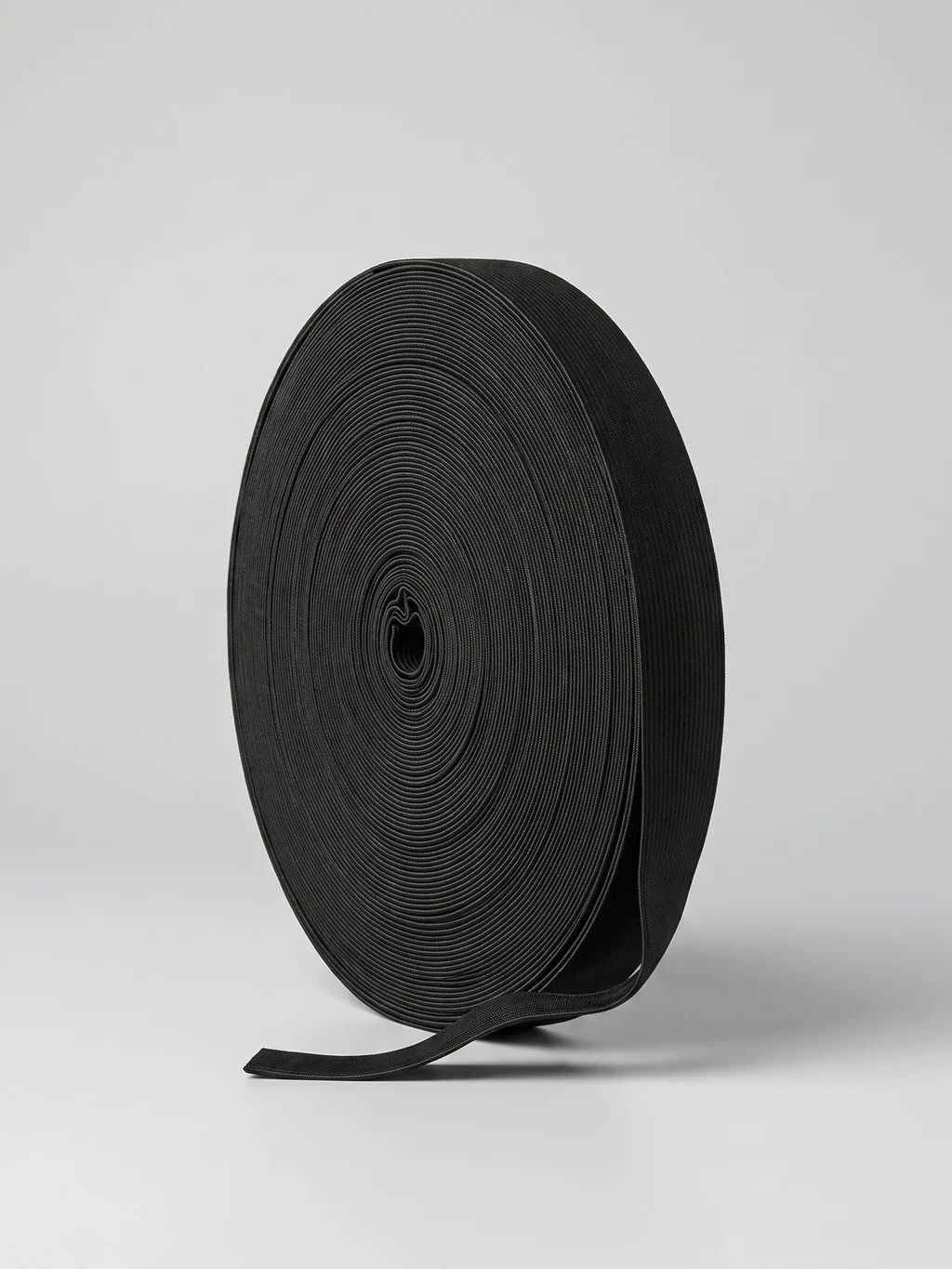
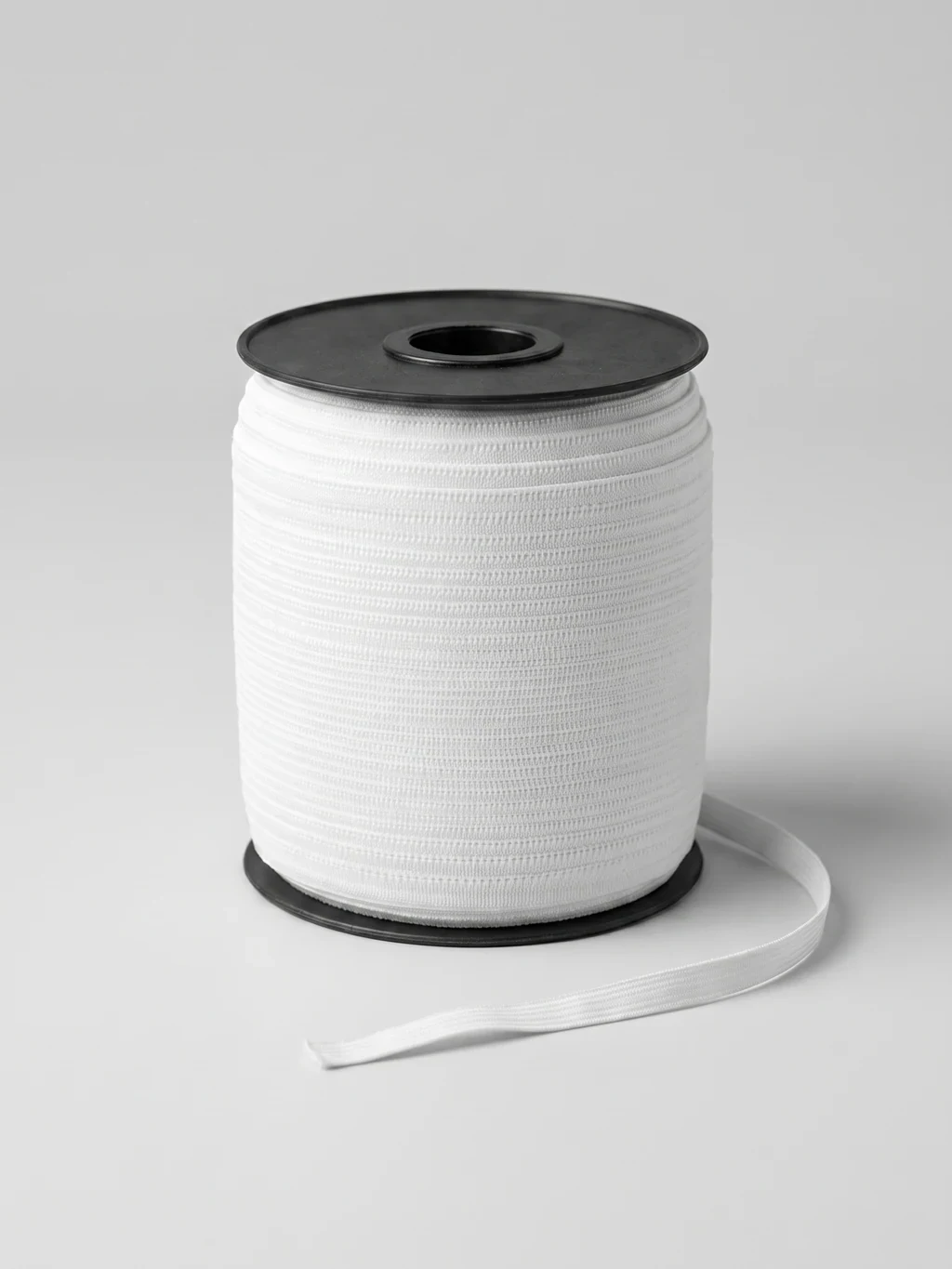
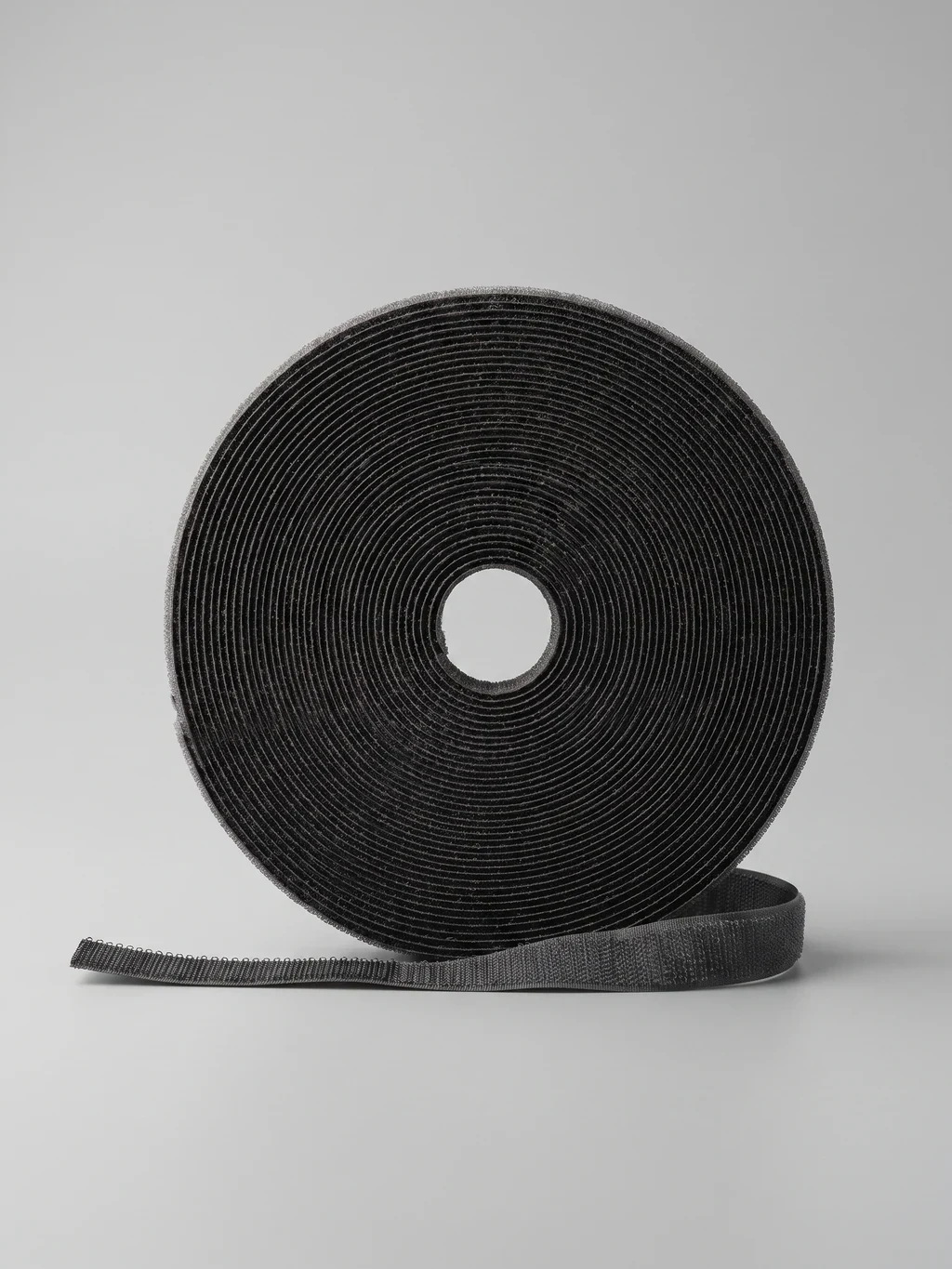

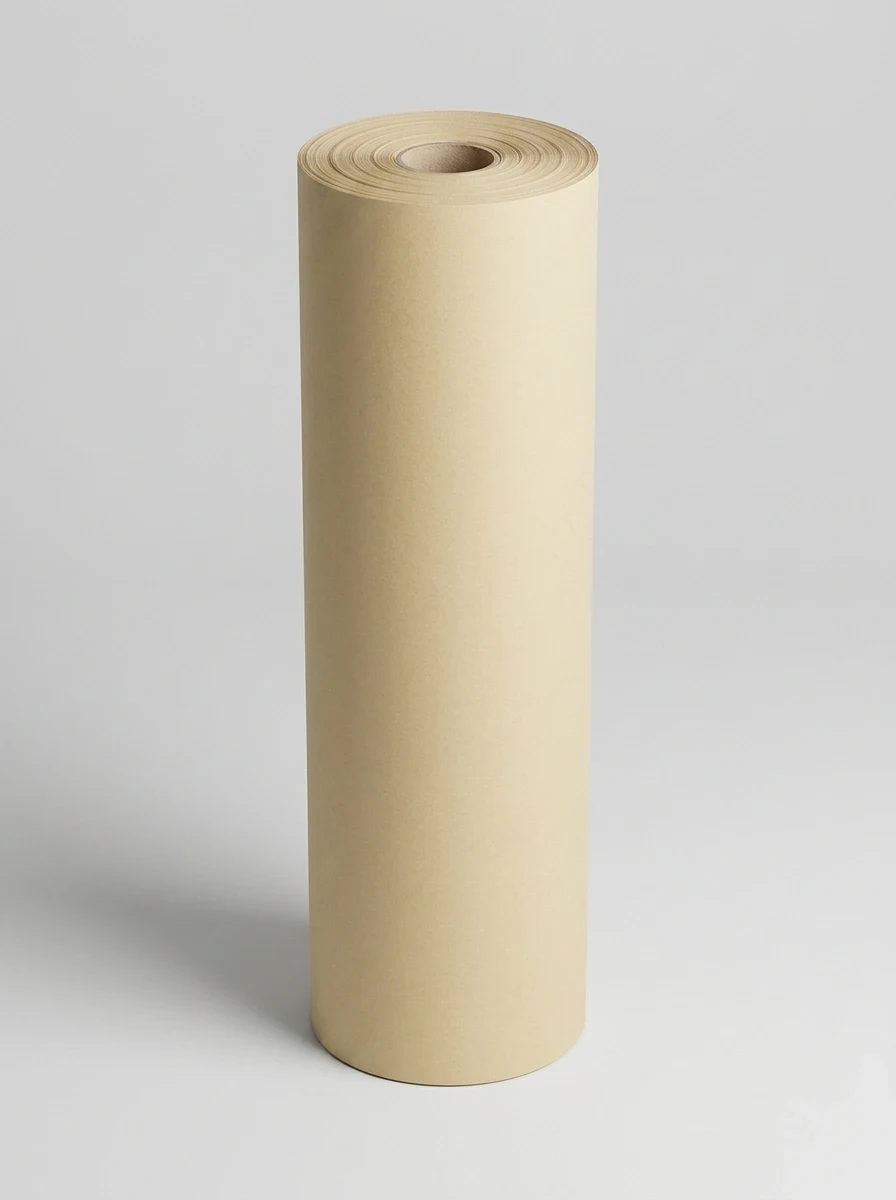
Elastic, tape and paper: the workshop's supporting materials
Why are these together?
The rest of the catalogue is fabric: lining, interlining, tulle, leather. This group is not. What is here is what you need in order to work with fabric.
There are two separate families inside it, and knowing the difference makes order planning easier:
- Materials that go into the garment: elastic, cord elastic, hook and loop tape. These stay in the product, go to the customer, and share the product's life.
- Materials consumed in production: marker top paper, marker under paper. These never enter the product; they stay on the spreading table and their job ends when the cutting does.
Because the second family is a consumable, its arithmetic works differently: per lay rather than per unit. So although they sit in the same group, their ordering logic is separate.
Elastic: flat or round?
There are two elastics, and the difference between them is not thickness but the shape of the section. That single difference completely separates where each one goes.
| [[UB-LS025|Elastic]] (flat) | [[UB-ML001|Cord elastic]] (round) | |
|---|---|---|
| Shape | Tape, 1 – 6 cm wide | Cord, 0.5 – 0.7 mm |
| For what | Carrying load | Changing direction |
| Where | Waistbands, hems, cuffs | Shirring, straps, ties |
| Can it be stitched | Woven types can | Usually threaded or knotted |
| Twisting | Can roll inside a casing | None — it has no orientation |
The rule in short: flat if load is being carried, round if something narrow has to be passed through or knotted. A waistband wants flat elastic; a strap going through an eyelet wants round.
There is one more distinction in flat elastic, and skipping it is expensive: a woven elastic does not narrow under tension and can be stitched through. On a braided elastic the stitch cuts the core and the elastic dies along that line. Any job where it is stitched directly to a waistband calls for a woven one.
How to choose the width
Width comes down to two things: the load being carried and the comfort wanted. A narrow elastic digs in; a wide one rolls when the wearer sits. The right answer is between the two:
- 1 – 1.5 cm: cuffs and hems, lingerie, childrenswear.
- 2 – 2.5 cm: skirt and dress waists, pyjamas. The most common range.
- 3 – 3.5 cm: sweatpants and trouser waists. Spreads the load without rolling.
- 4 – 6 cm: wide waistbands, activewear. Shaping, but prone to rolling when seated.
There is no single figure for the cut length: for the same waist measurement, a firm and a soft elastic get cut differently. The method — wrap the elastic around the waist, bring it to the tension where it sits comfortably without sliding, measure that length, and add 1 – 1.5 cm at each end for joining.
Hook and loop: which part goes where?
Hook and loop tape is not one piece but two complementary tapes: hook and loop. Which goes where is the most important decision with this product and the one most often skipped.
The rule: the hook side goes where it will not rub against anything. The loop side stays outside, on the surface that makes contact.
- The hook side should not touch skin — the surface irritates.
- The hook side should not face knitwear; a hook pulls a loop of yarn and starts a ladder.
- Whichever part is exposed when the fastening is open should be the loop side; an exposed hook side catches on everything around it.
One further distinction: the sew-on and adhesive types are different products and do not substitute. Trying to sew adhesive-backed tape gums up the machine, and on cloth it is not a permanent answer either — it lifts at the edges after repeated washing. On a fastening that is pulled constantly, stitching is essential.
In short: hooks in, loops out. Leave a fastening open and run your hand over it — the side that catches is in the wrong place.
Marker papers: below and above the lay
There are two papers and their names describe their jobs: one goes under the fabric plies, the other over them. Both are used on the same lay but they solve different problems.
| [[UB-PL152|Under paper]] | [[UB-PU152|Top paper]] | |
|---|---|---|
| Where | Between table and cloth | Over the cloth |
| What it does | Stops the bottom ply shifting | Holds the top ply down |
| Also | Protects the table, makes the lay movable | Keeps the cutting line clean, carries the marker |
| On automatic cutters | The vacuum's bottom layer | The vacuum's lid — left open, the suction is lost |
Width follows the same rule for both: the paper has to be wider than the fabric. The widths are already set against fabric widths — 152 cm for 150 cm cloth, 162 for 160, 182 for 180. Buying under and top paper in the same width prevents confusion in the store.
Skipping the top layer on a vacuum cutting table means switching off the machine's most decisive feature. Left open, the air passes over the lay rather than through it; the plies do not compress and the precision drops to hand-cutting level.
The products in this group
| Product | What it is for | Sizes |
|---|---|---|
| Elastic | Waists, hems, cuffs | 1 – 6 cm, 25 m rolls |
| Cord elastic | Shirring, straps, ties | 0.5 – 0.7 mm |
| Hook and loop tape | Fastenings, removable parts | Navy, white, black |
| Marker top paper | Holds the top ply down | 152 · 162 · 182 cm |
| Marker under paper | Stabilises the bottom ply | 152 · 162 · 182 cm |
Common mistakes
- Stitching directly through a braided elastic. The stitch cuts the core and the elastic dies along that line.
- Sewing elastic with a straight stitch. The thread breaks when the cloth stretches; you need a zigzag or three-step zigzag.
- Pressing an elasticated area or putting it in a tumble dryer. The elastane is permanently damaged — that is usually what a "gone loose" waistband means.
- Leaving the hook side of the tape exposed. It catches on everything and ladders knitwear.
- Buying marker paper narrower than the fabric. The pieces at the edges are left unprotected — and the critical pieces usually get nested at the edges.
When you order
For elastic, say the width and where it is going: an elastic for a casing and one to be stitched directly want different structures.
For hook and loop, say up front whether you need the sew-on or the adhesive type — they are different products.
For marker paper, tell us your fabric width and whether you cut by hand or with an automatic cutter; automatic tables can call for different properties.
Samples, stock and delivery are settled on the phone.
Frequently asked questions
Why are elastic and paper in the same group?
Neither is fabric — both are what you need in order to work with fabric. But there are two families inside: elastic and hook and loop go into the garment and travel to the customer; marker papers are consumed in production and stay on the table. Their arithmetic differs too: one is per unit, the other per lay.
Flat elastic or cord elastic?
Flat if load is being carried, round if something narrow has to be passed through or knotted. A waistband wants flat elastic; a strap going through an eyelet or fine shirring wants cord elastic. The advantage of a round section is having no orientation: it does not twist or roll in a casing.
Can you stitch through elastic?
Through a woven one, yes — it does not narrow under tension and the stitch does not cut the core. Through a braided one, no: the stitch cuts the core and the elastic loses its function along that line. Any job where it is stitched directly to a waistband calls for a woven elastic.
Which side of the tape goes on the outside?
The loop side. The hook side goes where it will not rub against anything. If the exposed part is the hook side it catches on everything around it, ladders knitwear, and irritates skin on contact. In short: hooks in, loops out.
Which width of marker paper should I take?
One wider than your fabric: 152 cm for 150 cm cloth, 162 for 160, 182 for 180. The widths are already set against fabric widths. Buying under and top paper in the same width is the most practical route — tracking two widths causes confusion in the store.
Is marker paper needed on an automatic cutter?
It is, and the top layer is compulsory there: on a vacuum table, if the top of the lay is left open the air passes over it rather than through it, the plies do not compress and precision drops. Tell us what your machine needs before ordering.