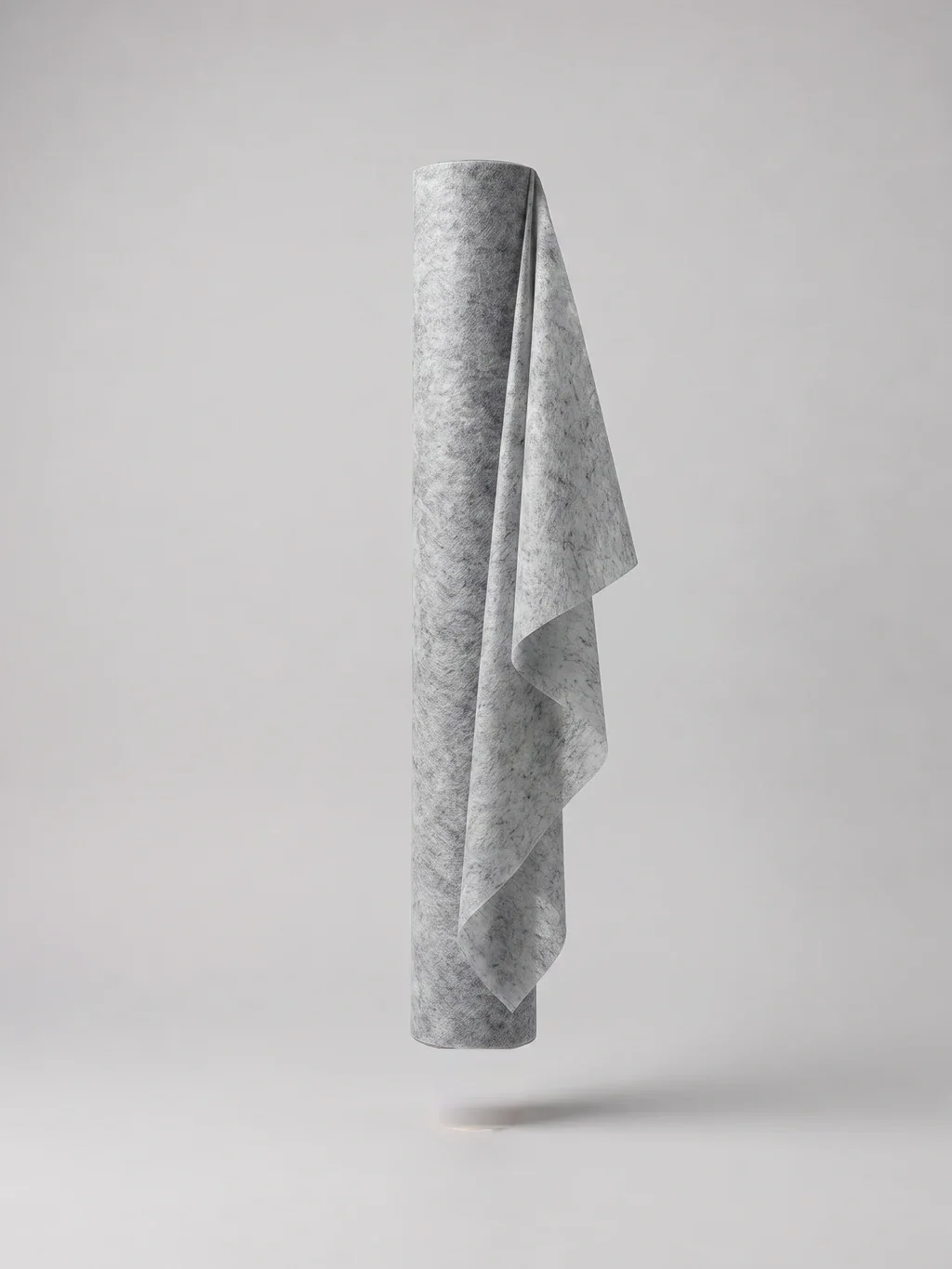
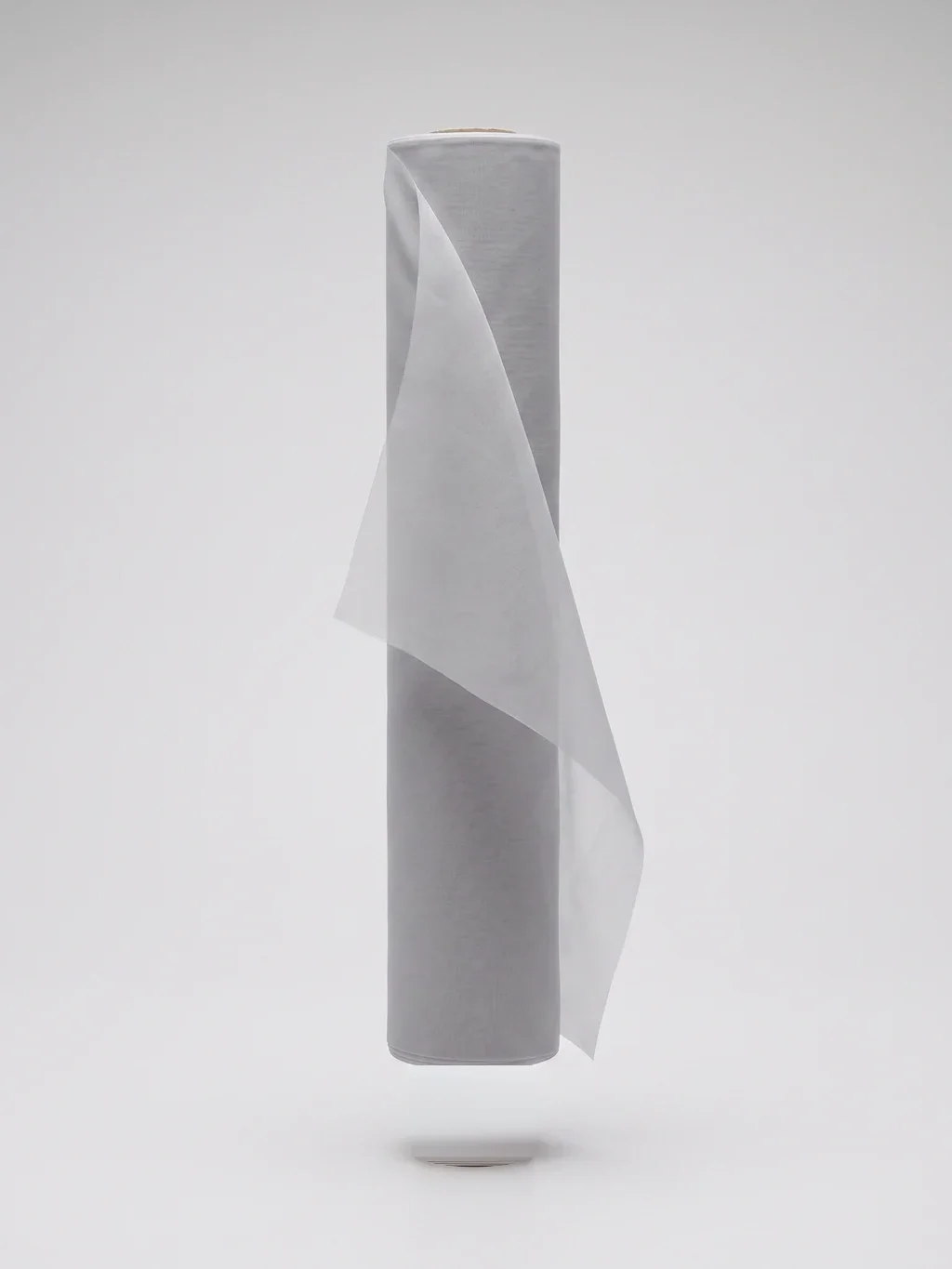
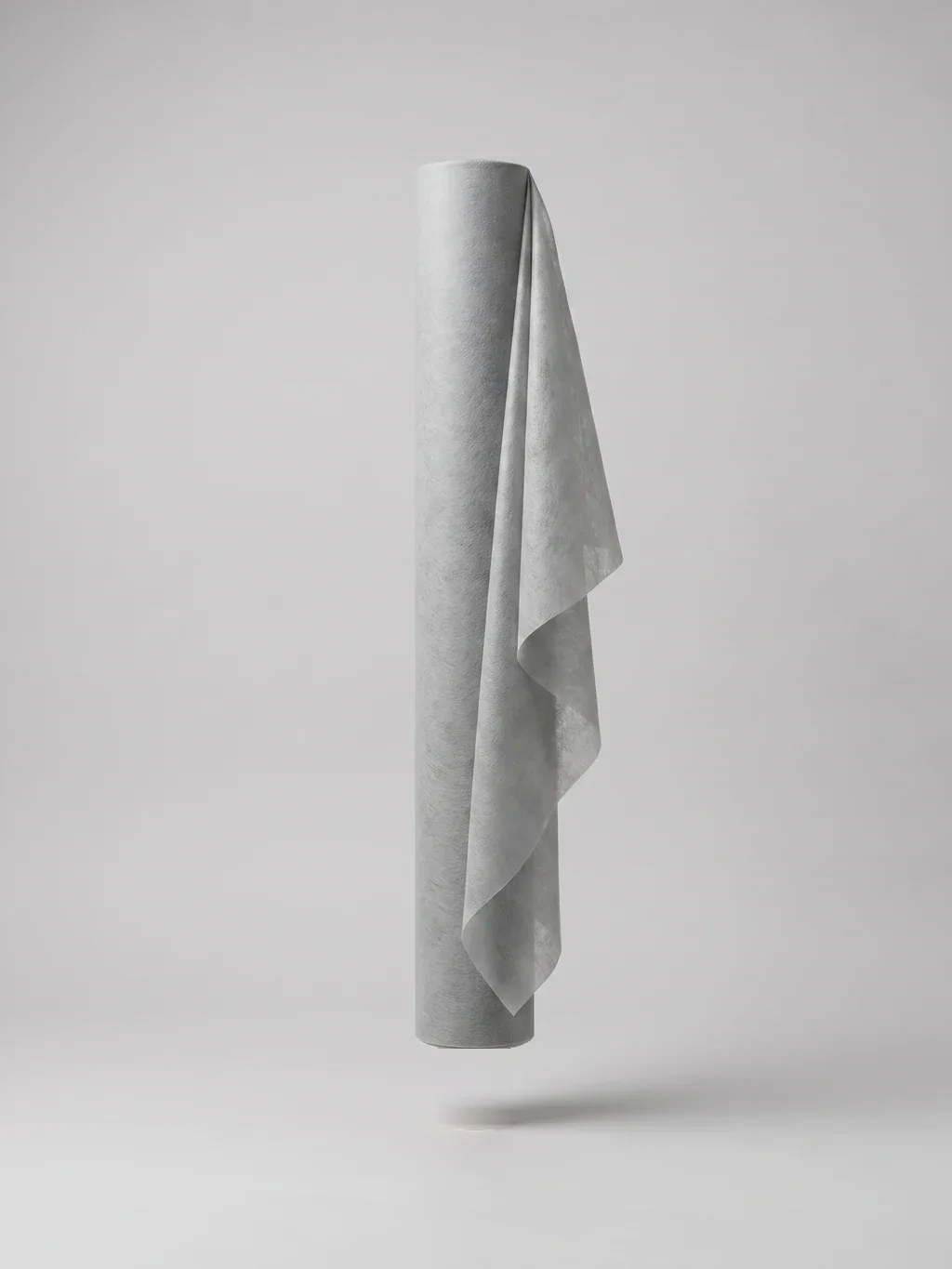
Full-width interlining: what holding a cloth in both directions means
Full-width interlining holds the fabric in both directions, along the length and across the width; it goes on panels that have to keep their shape. Here is the difference between one-way and two-way stability, what it changes in a jacket or coat, and when it is the wrong choice.
UB-ET150 Updated

What is full-width interlining?
The Turkish name is built from two words — en and boy, width and length — meaning the two main directions of a cloth. This interlining stabilises the fabric in both of them at once, which is what separates it from interlinings that hold one direction and leave the other free.
Why does that matter? Because a woven cloth does not behave the same way in both directions. The warp (the length) generally gives less; the weft (the width) gives more. And then there is the bias between them, which stretches most of all. A garment "dropping" over time comes largely from those directions behaving differently.
Full-width interlining closes that gap: once fused, the cloth starts behaving the same way in both directions. The result is a panel that keeps its shape.
One-way and two-way stability
Interlinings divide roughly three ways by the direction they hold, and which one you pick depends on what the panel has to do.
| Stability | What the cloth does | Where it is wanted |
|---|---|---|
| Free (stretch) | Gives in both directions | Knitwear, with corded jersey interlining |
| One-way | Holds one direction, gives in the other | Sleeves, roll lines, panels that move |
| Full-width (two-way) | Holds both directions | Fronts, coat bodies, uniforms |
The logic is this: a panel that will move has to give, and a panel that has to hold its shape must not. A jacket sleeve moves; a jacket front is a surface that has to stay put. Two panels of the same jacket can therefore want different interlinings.
Using one interlining everywhere is quicker and produces a worse garment. Working the front with a full-width interlining and the sleeve and roll line with something more flexible gets a noticeably better-standing jacket out of the same cloth.
Where it is used
Its place is on the panels that would lose their shape over time if the cloth were left to itself:
- Jacket fronts — the surface that decides how the garment carries itself.
- Coat bodies — stopping a heavy cloth stretching under its own weight.
- Uniforms — in garments worn and washed constantly, loss of shape shows fastest here.
- Pocket flaps and large collars — big pieces expected to stay flat.
- Load-bearing strips like straps and waistbands.
Sleeves are not on the list. The armhole and the sleeve length are a moving zone, and locking that in both directions makes the garment uncomfortable. The roundness of the sleeve head is built with a sleeve head in any case, not with interlining.
What "keeping its shape" means in practice
Think of the difference between a jacket on day one and the same jacket six months later. What has changed is usually not the cloth itself — the cloth has stretched. The front drops, the buttonhole line shifts, the pocket opening gapes, the roll line loses its place.
All of that comes from one cause: the cloth is under load and stretches in the direction of that load over time. Because full-width interlining stabilises both directions, it stops the stretch.
- The buttonhole line stays put; the buttons stay in line.
- The pocket opening does not gape.
- The front hem stays straight instead of waving.
- The roll line keeps the line it had on day one.
That difference is hard to demonstrate, because it only appears over time. For a customer who judges a garment by how it looks second-hand, it is one of the most decisive properties there is.
When it is the wrong choice
Full-width interlining is not the answer to every job. Holding both directions where that is not needed does nothing except stiffen the garment.
- In garments where the drape is the point. Locking the front of a fluid dress turns it into a different garment.
- On knitted cloths. Where the stretch has to survive, corded jersey interlining is the right answer.
- On fine, sheer cloths. There the issue is visibility rather than shape; chiffon interlining is the conversation.
- When only a line needs stabilising. A strip of Terfix tape intervenes far less than an interlining spread across the surface.
What to watch when fusing
Because it covers a wide area, the rules here are the same as for body interlining:
- Starting on a new fabric, wash a fused offcut and measure it. Differential shrinkage causes more trouble over a wide area than anywhere else.
- Do not fuse while the cloth is under tension; let it lie open for a few hours off the roll.
- Use a press if you can; an iron cannot deliver even pressure across a panel.
- Let the piece cool completely on a flat surface after fusing.
- Test after cooling; if a corner lifts easily, the heat or the pressure is short.
There is also the question of direction. Because this interlining holds both ways, how the piece is oriented matters more than it does with a paper interlining. Lay the interlining the same way as the cloth on the marker — that is what makes the two layers behave together.
Common mistakes
- Using the same interlining on every panel. Moving panels and shape-holding panels want different things.
- Fusing the sleeve with a full-width interlining. The garment becomes uncomfortable and arm movement is restricted.
- Skipping the shrinkage test. Puckering over a wide area cannot be undone.
- Laying the interlining in a different direction from the cloth. The two layers work against one another.
- Using it in a garment built on drape. The character of the garment disappears.
When you order
The width and roll length for this product are being confirmed, so please call before ordering. We will give you the current measurements and the colour options on the phone.
Say which fabric and which panel you are working on. Full-width interlining does not suit every panel, and in conversation we can work out which panel takes which interlining.
You can ask for a small piece to test with. Fusing one front panel and washing it settles the decision.
Samples, stock and delivery are settled on the phone.
Frequently asked questions
Is full-width interlining the same as body interlining?
Not the same, though the jobs overlap. Body interlining spreads support across the body and is spoken about by weight. What distinguishes full-width interlining is the direction of hold: it stabilises the cloth along the length and across the width. On panels that have to keep their shape, that difference matters.
Is it used in sleeves?
Generally not. A sleeve is a moving zone, and locking it in both directions makes the garment uncomfortable. A round sleeve head is achieved with a sleeve head, not with interlining.
Can it be used on knitted fabric?
It is not suitable. Knitwear needs its stretch to survive, and an interlining that holds both directions kills it. For knits, corded jersey interlining is the right answer.
Should the interlining be laid the same way as the cloth?
Yes. Because it holds in both directions, orientation matters. Laid the same way, the two layers behave together; laid the other way, they can work against each other.
What are the width and roll length?
The measurements for this product are being confirmed. Call and we will give you the current width and roll length along with the colour options.