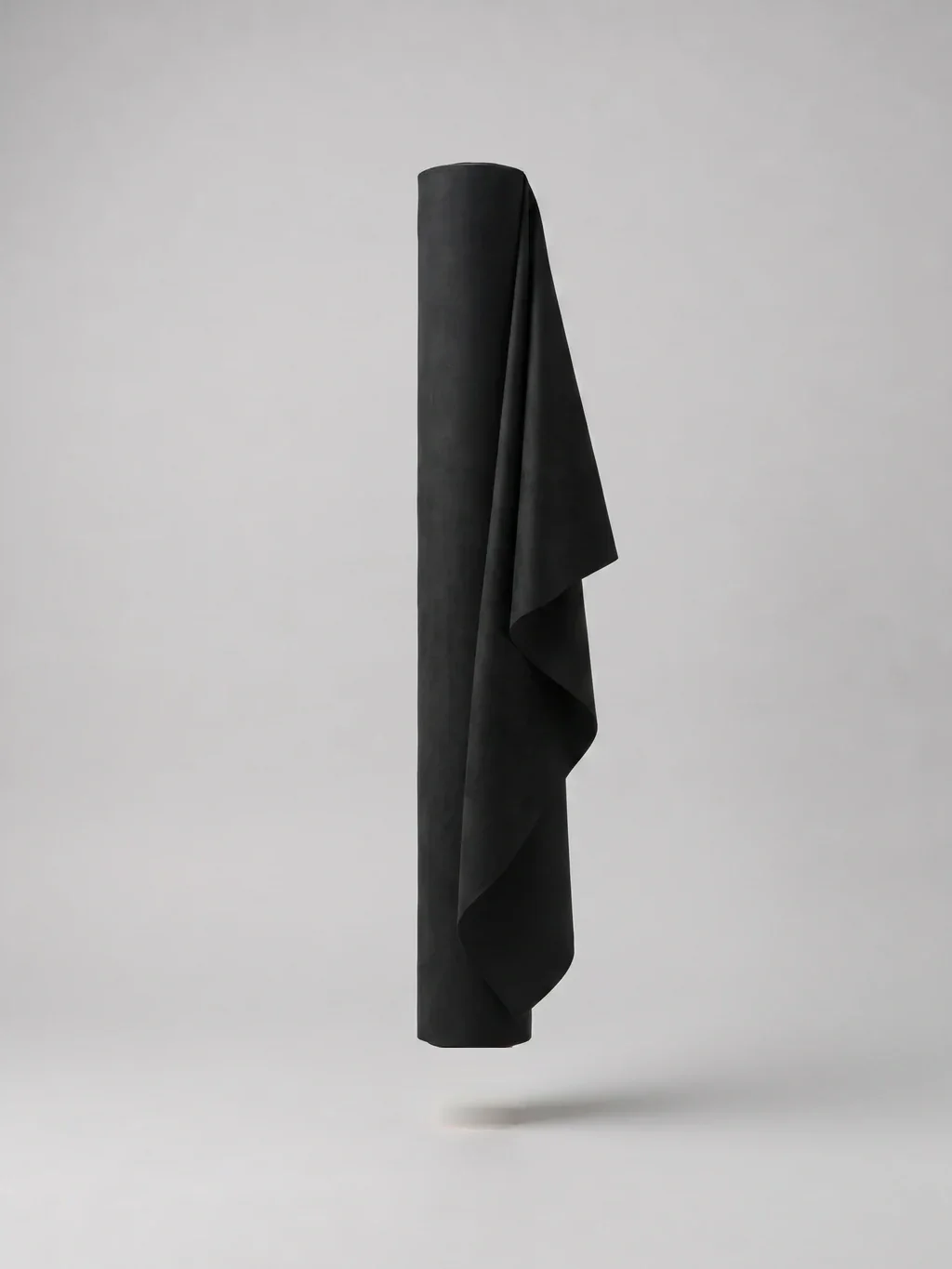
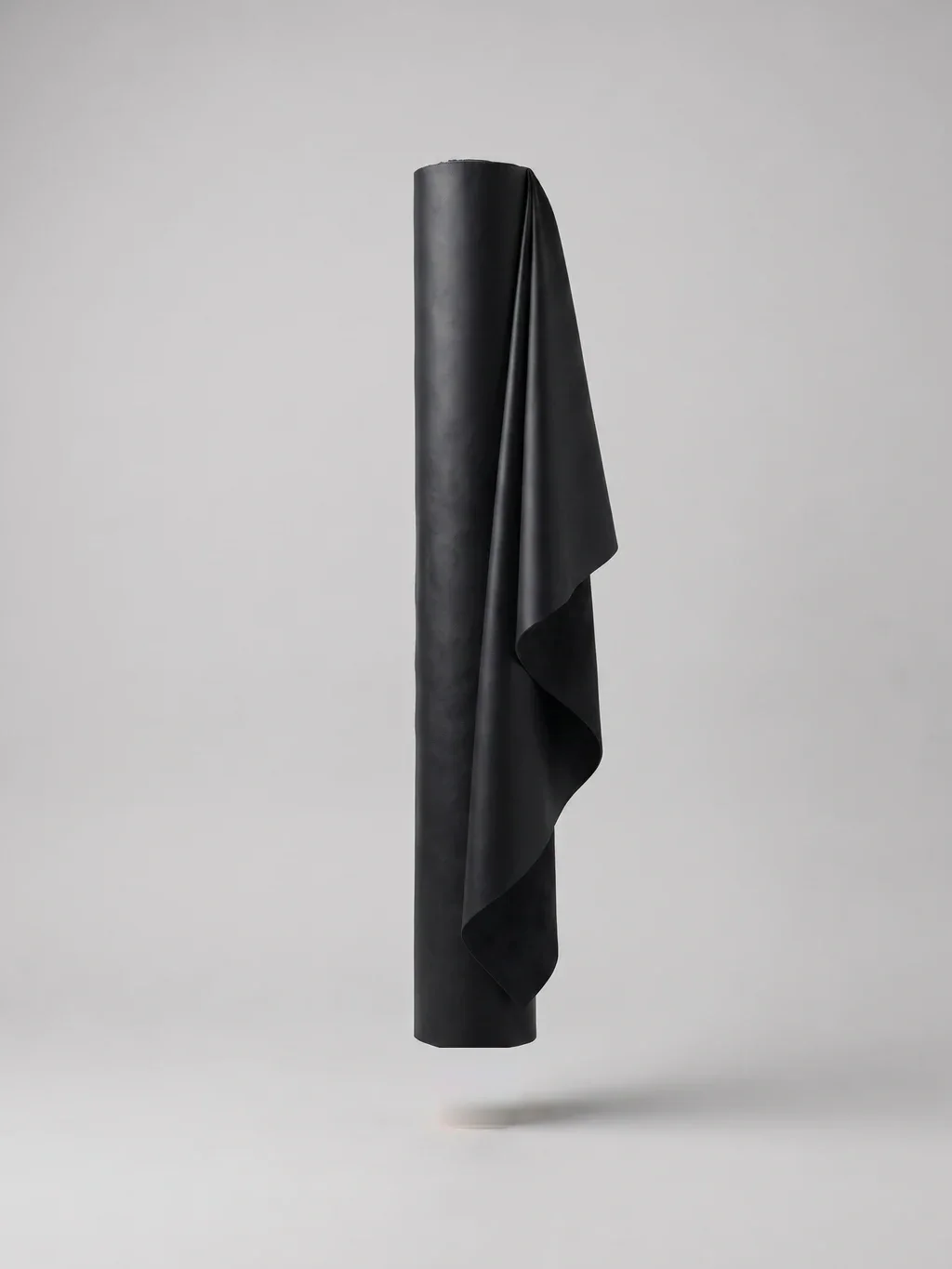
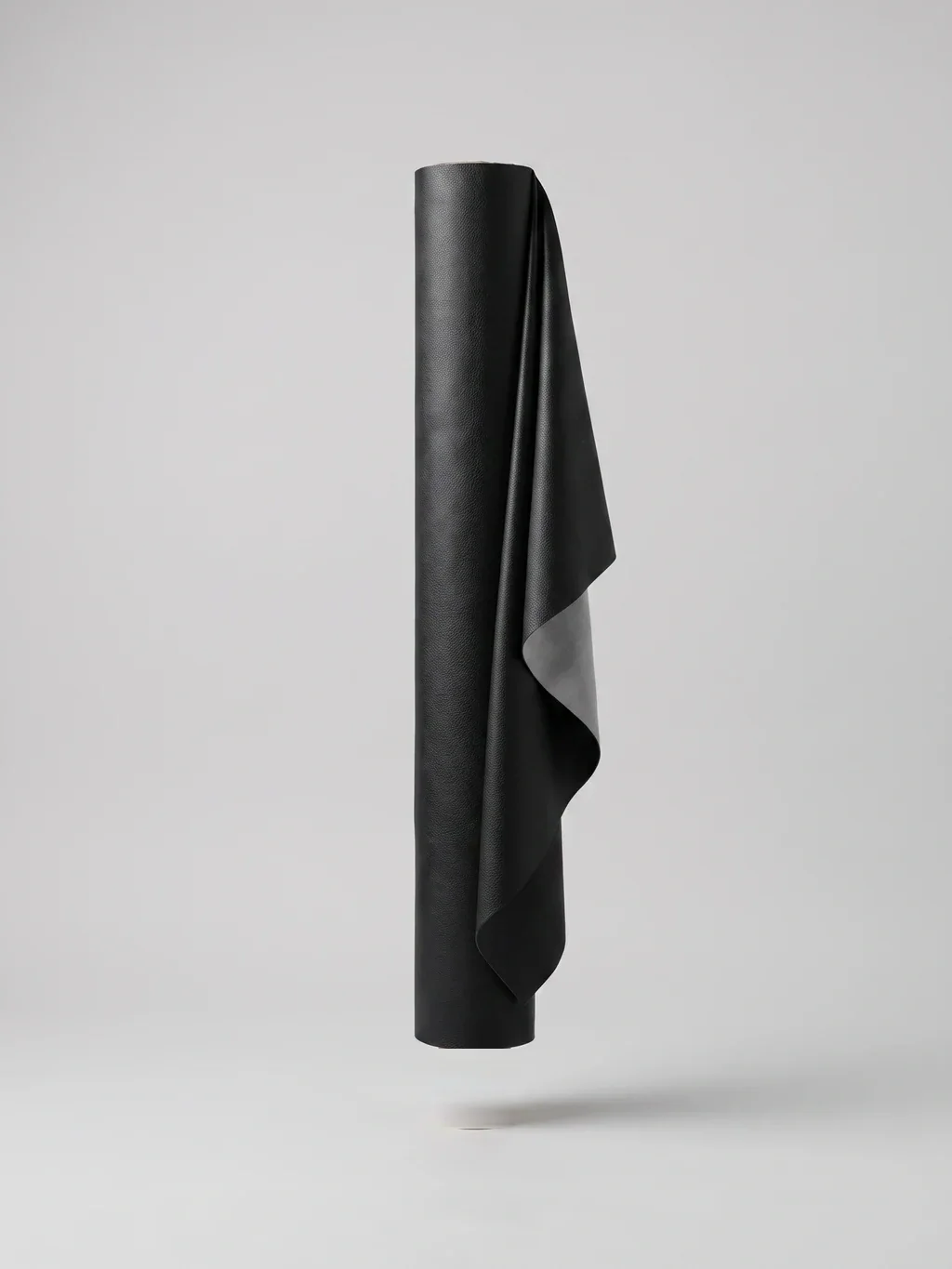
Yağmur leather: what a textured surface is actually for
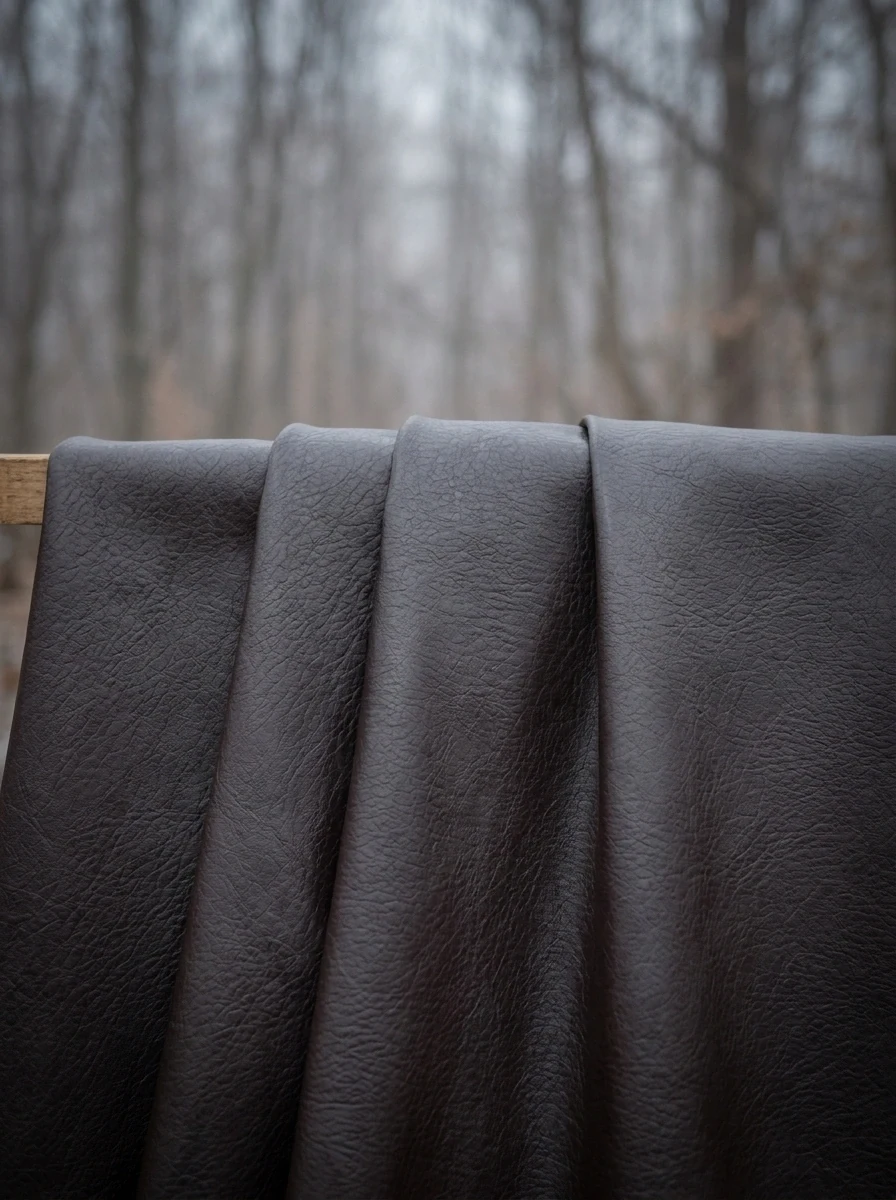
Yağmur is a synthetic leather with a raindrop texture; it is slightly lustrous and comes in a wide colour range led by dark brown. Here is how the texture is made, what it buys over a smooth face, and why the texture has to be tracked when cutting.
UB-YD135 Updated
Where does the texture come from?
In a synthetic leather the surface texture does not come from the weave — it is embossed into the coating afterwards. While the coating can still take shape, a patterned roller passes over it and presses the design into the surface. Once the process is finished the texture is permanent.
This is where synthetic leather departs from real leather and at the same time gets closer to it. Real leather has a natural, irregular surface texture; every piece is different. An embossed texture is a repeating, controllable pattern.
The design embossed into Yağmur is a fine, dense pattern of drops. Ours is 135 cm wide, in 50-metre rolls, in 25 – 30 base colours led by dark brown.
What a textured face buys over a smooth one
Texture looks like a matter of appearance, but it has functional consequences — all of them coming out of how the surface deals with light.
- It hides scratches and marks. On a smooth face a single scratch reads directly; on a textured one it disappears into the pattern.
- It scatters the light it reflects. Instead of shining as one surface it catches light in points, and a slight depth appears.
- It deepens the colour. The same dye reads as one tone on a smooth face and as two on a textured one — the recesses read dark, the raised parts light.
- It forgives faults in the making. Slight puckering or uneven stitching draws less attention on a textured face.
- It improves grip. It does not slip in the hand, which is a practical difference in bags and accessories.
You give something up in return: cleaning. The recesses of a textured face hold dust and dirt; where a smooth face wipes clean in one pass, here the recesses have to be thought about too. On pale colours that difference is more marked.
Smooth or textured is a decision about how the product will be used. On something worn daily and hard, texture is a gain; on something that will sit on a shelf and be used lightly, the cleanability of a smooth face comes forward.
Why dark brown leads the range
Dark brown is named first in Yağmur's colour range, and that is not an accident. On a textured face, dark brown reads differently from dark brown on a smooth one.
The reason is the third point above: texture splits the colour into two tones. In dark brown the recesses come close to black while the raised parts shift towards a warm tone. What comes out is a surface from a single dye bath that reads as two tones — the effect that comes closest to the natural tonal variation of real leather.
The same effect works in black but is noticed less: there the difference between recess and ridge stays too small for the eye to separate. The tones where texture shows most are the mid-dark ones.
Texture direction in cutting
An embossed texture is a pattern, and like any pattern it has a direction and a repeat. That calls for two separate checks when cutting.
- Direction: if the texture is embossed directionally, every piece must be cut the same way up. A piece cut the other way reads as a different texture and a different tone once it is sewn.
- Repeat: if the repeat interval is large, the pattern has to line up where pieces join. In Yağmur the design is fine and dense, so this rarely causes trouble — but it is worth checking on large pieces.
- Surface sheen can itself be directional: turn the cloth both ways under the light, and if the tone changes, direction is critical.
The check is simple: lay two offcuts side by side with one turned round and hold them to the light. If a difference shows, lock the direction on the marker. That check takes thirty seconds and is one of the most expensive steps to skip on a textured face.
The same rule applies to satin lining and to the brushed face of scuba suede. On directional surfaces the marker rule is always the same: all one way.
At the machine
The sewing rules run in the same frame as Diego leather — the shared rules of synthetic leather:
- No pins; the holes are permanent. Clips or pegs instead.
- No unpicking; test seams go on an offcut.
- Use a Teflon, roller or walking foot.
- Stitch length 3 – 3.5 mm; a short stitch perforates.
- Needle: leather or microtex, 80/12 – 90/14.
- No backstitching at the start and finish.
One detail is added on a textured face: the presser foot can crush the texture. Under high pressure the line the foot travels flattens out, and that mark can be permanent. Drop the pressure, and where you can, sew a test line on an offcut first.
Cleaning and care
Cleaning a textured face differs slightly from a smooth one: dirt collects in the recesses and a flat wipe does not reach it.
- Wipe with a soft damp cloth. Run flat, the cloth only cleans the ridges.
- Use a soft brush for the recesses; a stiff brush scratches the coating.
- Do not use solvents or alcohol; they damage the coating and the texture can flatten.
- Do not iron. Heat both glazes the coating and crushes the texture — an embossed pattern can be undone by heat.
- Do not store folded; the texture is crushed along a crease and that area shines.
Because the texture was pressed in with heat, heat also takes it out. That is why a textured synthetic leather is more sensitive to the iron than a smooth one.
Where it is used
| Product | Why textured | Note |
|---|---|---|
| Jackets and coats | Hides marks under hard wear | The most common use |
| Dresses | Deepens the colour | Most effective in mid-dark tones |
| Accessories | Grip and texture | Does not slip in the hand on bags and belts |
| Detail pieces | Contrast against a smooth cloth | Collars, pocket flaps, sleeve bands |
That last row is interesting: using textured and smooth synthetic leather in the same product is a way of getting two different surfaces from one colour. Put Diego leather and Yağmur side by side in the same tone and the colour is identical while the texture is not.
Common mistakes
- Not checking the texture direction. A piece cut the wrong way reads as a different tone.
- Sewing with high presser foot pressure. The texture flattens along the line of the foot.
- Using an iron. Heat crushes the texture and it does not come back.
- Not cleaning the recesses. Dirt collects and shows quickly on pale colours.
- Cleaning with solvent. The coating is damaged and the texture flattens.
When you order
135 cm wide, 50-metre rolls, in 25 – 30 base colours led by dark brown.
Ask for a sample and turn it both ways under the light; how directional the texture is can only be seen by hand.
If you are using smooth and textured together in one product, ask for both in the same tone; tone matching is done by eye.
Samples, stock and delivery are settled on the phone.
Frequently asked questions
How is the texture made, and is it permanent?
While the coating can still take shape, a patterned roller passes over it and presses the design in. Once the process is finished the texture is permanent. But because it was pressed in with heat it can also be undone by heat — which is why a textured synthetic leather is more sensitive to the iron than a smooth one.
What is the advantage of a textured face?
It hides scratches and marks, deepens the colour by scattering the light it reflects, and forgives small faults in the making. It also improves grip, which is a practical difference in bags and accessories. In return the recesses hold dust, so cleaning takes a little more effort than on a smooth face.
Do I have to track the texture direction when cutting?
You have to check it. Lay two offcuts side by side with one turned round and hold them to the light. If a difference shows, lock the direction on the marker — a piece cut the other way reads as a different tone once it is sewn. The check takes thirty seconds.
Why does dark brown lead the range?
Texture splits the colour into two tones: the recesses read dark, the ridges light. In dark brown that effect is at its most pronounced — a surface from one dye bath reads as two tones and comes close to the natural tonal variation of real leather. The same effect exists in black but stays too small for the eye to separate.
How long is a roll?
50 metres, 135 cm wide. If you need a smaller quantity, let us talk it through on the phone.