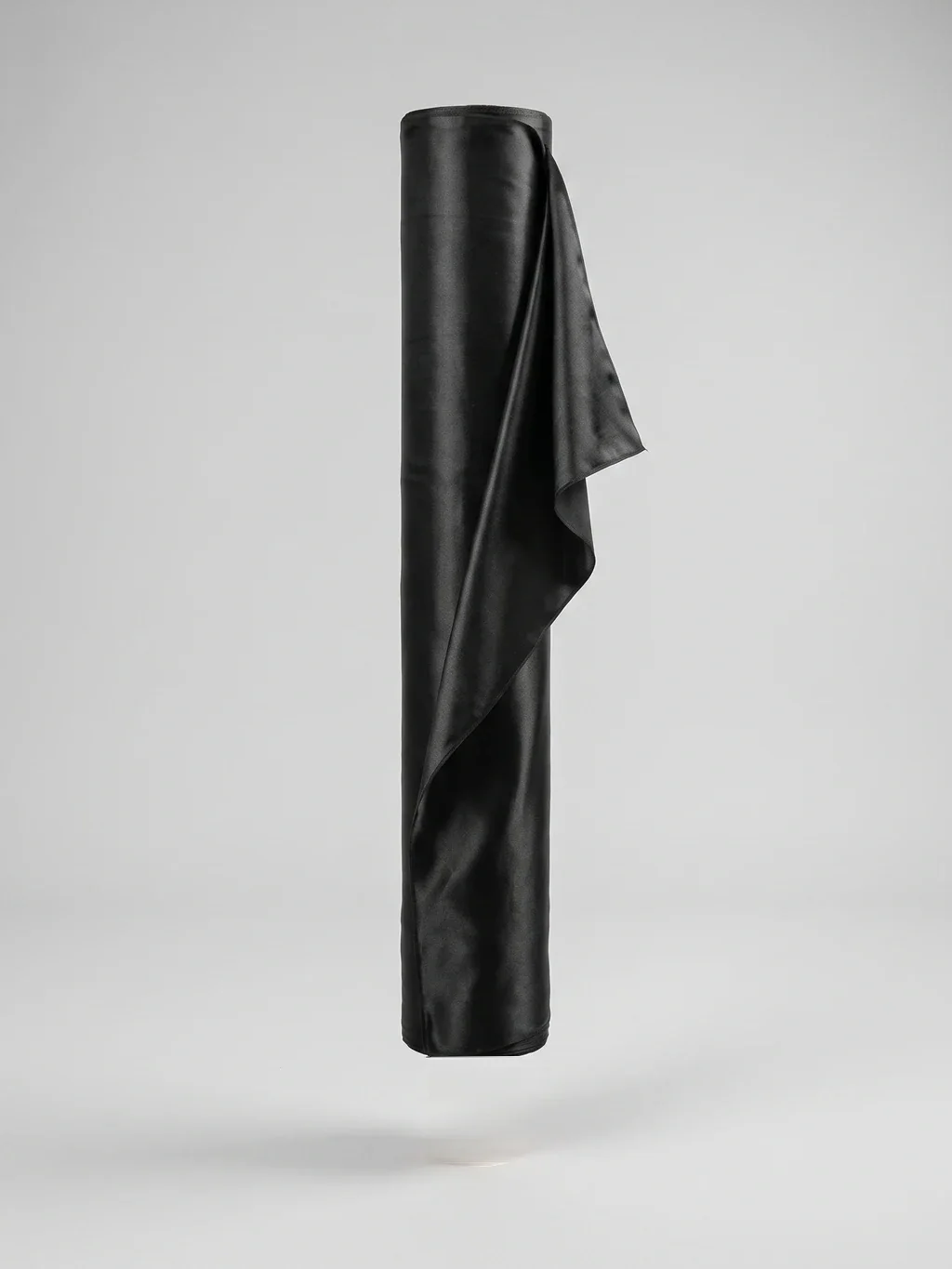
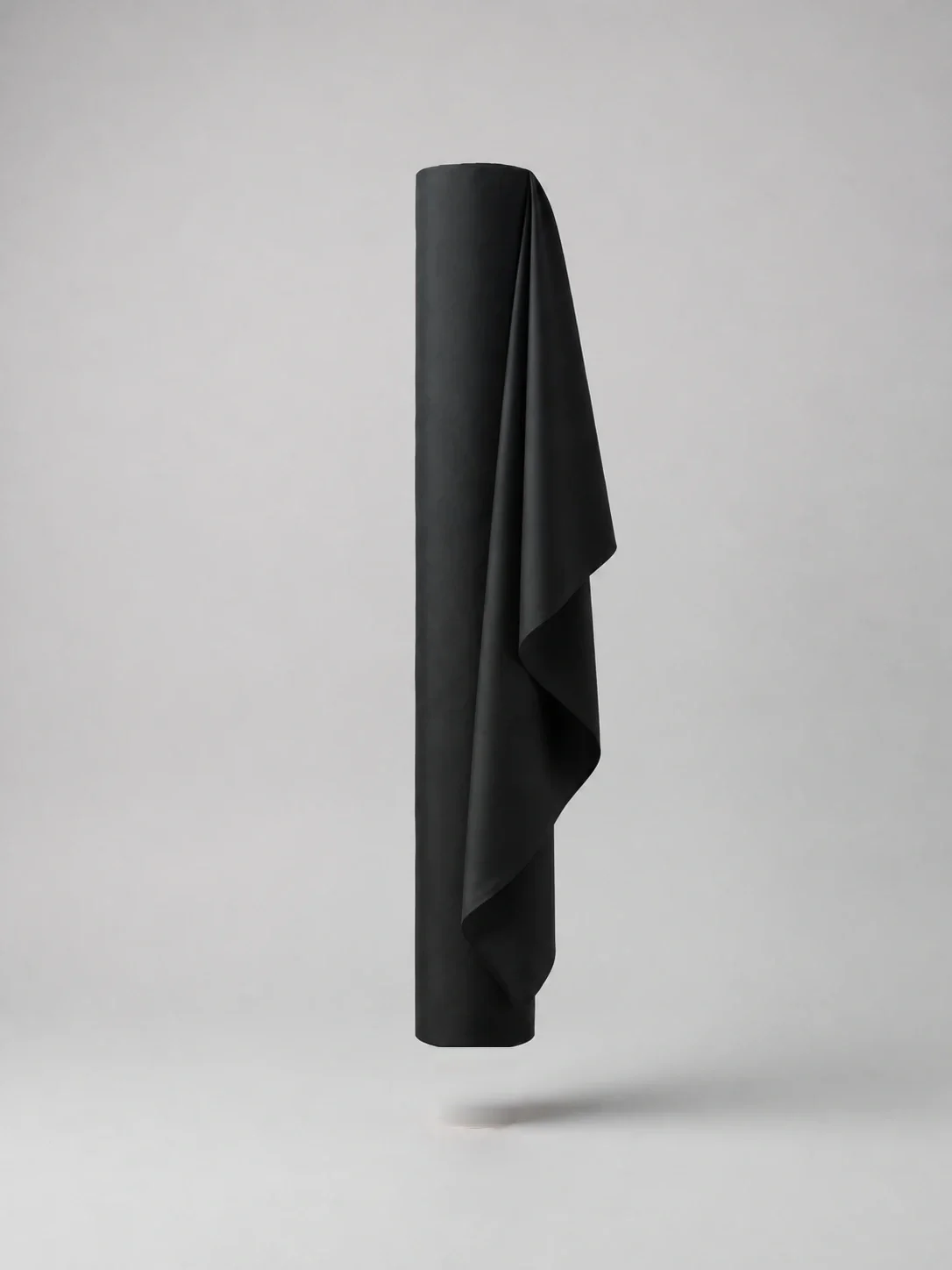
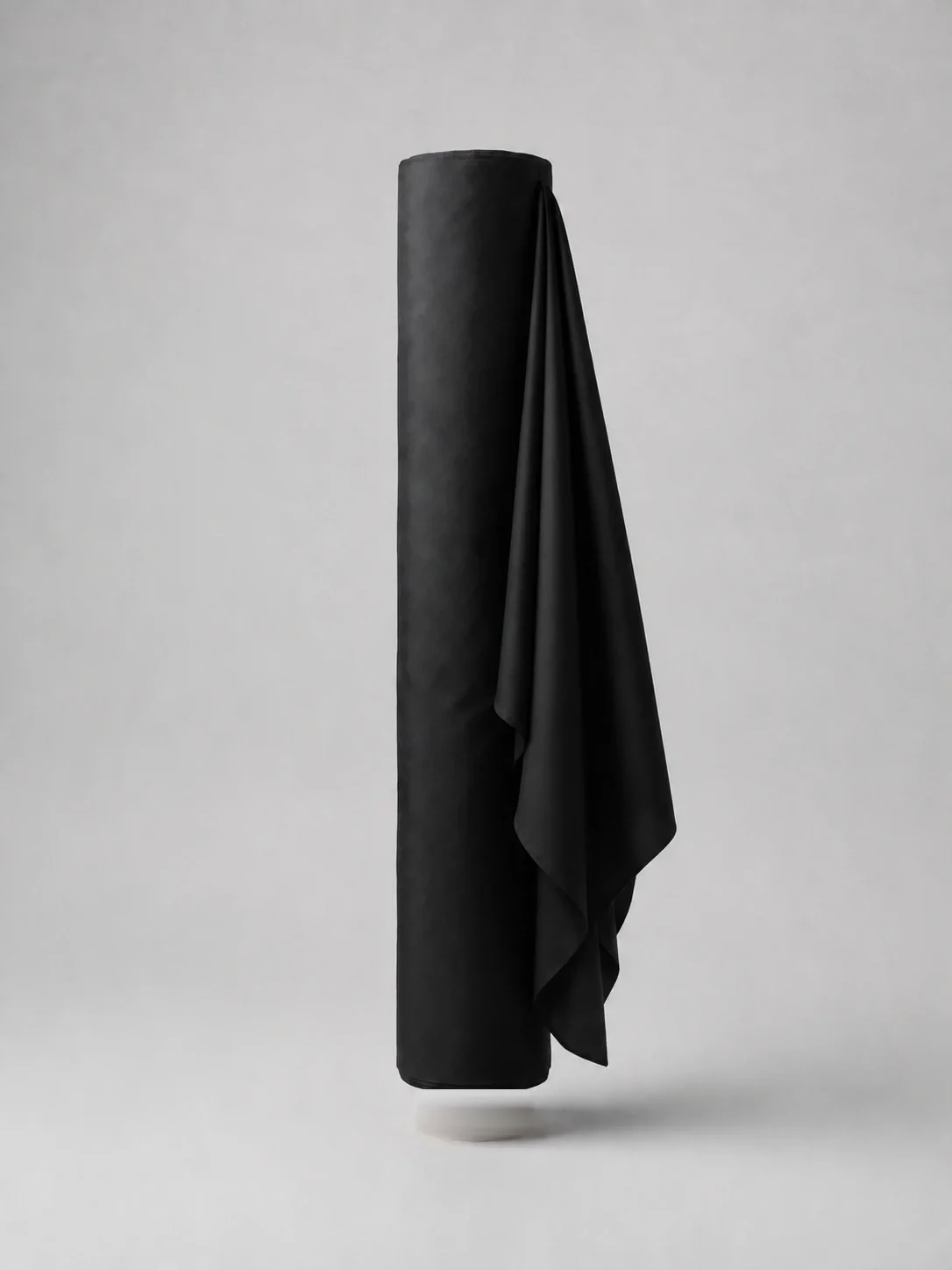
Jesica lining: when you want matt with body
Jesica is a densely woven, matt-faced lining that gives a full hand without adding weight and holds its shape through washing. Here is what a matt lining is for, how to work with trade names, and where it earns its place in jackets and overcoats.
UB-JS150 Updated

What is Jesica?
Jesica is a trade name, not the name of a fibre or a weave. The cloth that travels under that name is a densely woven lining with a matt face that feels full in the hand. Ours is 150 cm wide, in 100-metre rolls.
A lining being "full" does not mean it is heavy. The fullness here comes from the density of the weave: with the threads packed against one another the cloth does not feel empty when you pick it up, it feels like it has a body. A loosely woven lining of the same weight feels lifeless.
Holding its shape through the wash comes from the same density. A tight weave moves less in the cycle, and a lining shrinking and gathering the garment from the inside is not something you expect from this cloth.
Working with trade names
Most names in the lining and leather trade work this way: Jesica, Diego, Yağmur, Zara. They are not standards, they are sellers' names. The same name can point at two different cloths in two different warehouses.
In practice that has one consequence: an order should rest on a sample, not on a name. "The Jesica from last time" is not enough when you place a repeat order. Keep a piece so a comparison can actually be made.
- Cut a piece from the first order and keep it. That piece is the most reliable reference there is.
- Note the product code. On our side it is UB-JS150; the name may change, the code points at the same cloth.
- Discuss tone, hand and width together. If all three do not line up, it is not the same cloth.
- Keep the sample with its date. That is the only way a batch dispute ever gets settled.
A trade name is a shortcut. For the shortcut to work there has to be a physical sample behind it — the name on its own guarantees nothing.
When is a matt lining the right call?
Sheen is a matter of preference, but not always a free one. The cases where a matt lining comes out ahead are fairly clear:
- When the outer fabric is matt. A glossy lining inside a matt wool jacket catches the eye the moment the garment falls open.
- When the look wanted is classic and quiet. Sheen makes a garment read a little more showy, and that is not always the intention.
- Where the lining is likely to be seen — a lapel roll, a pocket opening, a hem. A matt surface draws less attention there.
- When you would rather not see wear. Rub marks read faster on a glossy face than on a matt one.
The reverse holds too: if you want a slippery surface inside and the sleeve sliding on is the priority, satin lining is the better fit. The two cloths are not rivals — they are two different decisions.
Which garments it goes into
Jesica belongs in garments where the lining may be seen and is expected to contribute some substance:
| Garment | Why Jesica | Alternative |
|---|---|---|
| Jackets, blazers | Matt inside, full hand | Satin lining — if you want sheen |
| Overcoats | Substance under a heavy cloth | Micro lining — softer hand |
| Suits | Classic look, clean drape | Polyester lining — thinner |
| Uniforms | Dense weave | 190T lining — more abrasion resistance |
Should the lining give body, or the interlining?
This is where things get mixed up. The fullness Jesica gives is a matter of hand; it is not what holds the shape of the garment. Shape is carried by body interlining and full-width interlining, and the shoulder line is built by shoulder pads.
Expecting body from a lining is asking the wrong layer to do the work. The usual result: the lining gets thicker, the garment swells from the inside, and the shape still does not sit. The right order is to get the interlining right first, then let the lining complete it.
Cutting and sewing
- Needle: 70/10 – 80/12, sharp point.
- Stitch length: 2 – 2.5 mm.
- Use marker under paper in the lay; a dense weave reduces slippage but does not remove it.
- Leave ease in sleeve and body linings, and put a pleat down the centre back.
- Overlock the cut edge the same day.
A matt lining has one advantage here: because the surface does not reflect directionally, the cutting direction is not as critical as it is in satin. Cutting everything one way up is still a good habit — the direction of the weave can show at the seam.
Common mistakes
- Expecting body from the lining. Body comes from the interlining; a thick lining only swells the garment.
- Placing a repeat order without a sample. A trade name on its own is not a specification.
- Matching a matt lining to a glossy outer fabric from a screen. Matt and glossy surfaces show the same tone differently.
- Leaving out the ease. Cut to exact measurement, the lining ties the garment up from inside.
When you order
Rolls are 100 metres, 150 cm wide. Call about colours: on this product there can be a difference in waiting time between tones held in stock and tones dyed to order.
Keep a sample from the first order. Later orders are compared against that piece, and the argument never starts.
Stock, samples and delivery are settled on the phone.
Frequently asked questions
Is Jesica a brand or a type of cloth?
A trade name. It describes a densely woven, matt lining with a full hand, but it has no standard definition — the same name can mean a different cloth in another warehouse. That is why orders are placed against a sample. Our code for it is UB-JS150.
How do I choose between Jesica and satin lining?
If you want sheen and slip inside, satin lining. If you want a matt, substantial inside surface, Jesica. When the outer fabric is matt, Jesica usually sits better with it.
Does a full lining make the garment bulkier?
The fullness here comes from density, not thickness. It gives a sense of body in the hand without adding weight. What swells a garment is choosing a thick lining, not a dense one.
Does it shrink in the wash?
A dense weave moves less in the cycle, and holding its shape is one of this cloth's stronger points. Even so, the shell and the lining should have the same care requirements; if in doubt, wash an offcut and measure it.
How long is a roll?
100 metres, 150 cm wide. If you need a smaller quantity, let us talk it through on the phone.