Marker top paper: what the layer above the lay is doing
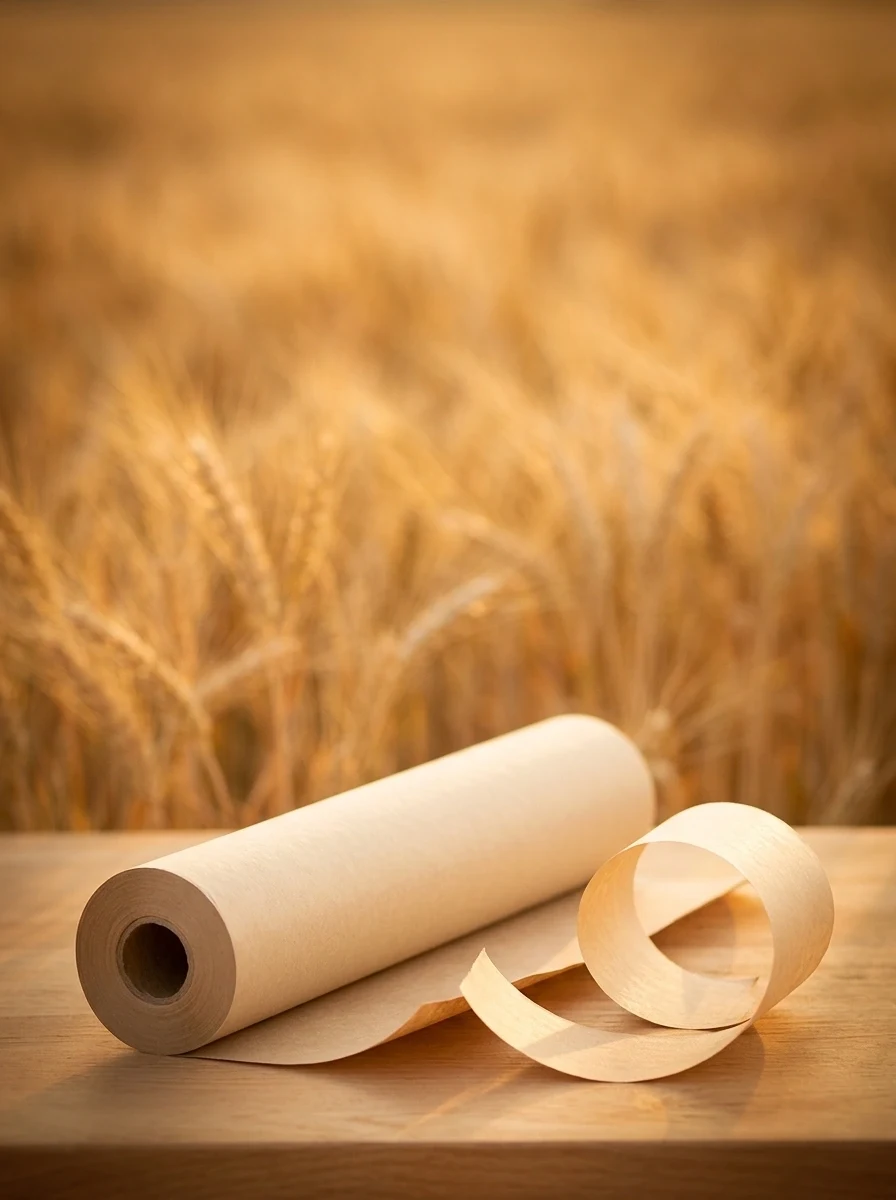
Marker top paper is laid over the fabric plies on the spreading table; it keeps the cutting line clean. Here is why the top ply is a problem of its own, how a cutting line goes wrong, and why this layer is indispensable on an automatic cutter.
UB-PU152 Updated
Where does top paper sit?
A lay has three layers: marker under paper at the bottom, the fabric plies in the middle, and marker top paper above. The bottom one comes between the table and the cloth; the top one between the cloth and the outside world.
The two do different jobs and neither substitutes for the other. The under paper builds a base: it stops slippage and protects the table. The top paper acts as a lid: it holds the top ply down, carries the cutting line, and keeps the lay together as one.
Ours comes in 152, 162 and 182 cm widths — set against fabric widths.
The top ply's own problem
In a lay, every fabric ply is held between two neighbours: one above and one below, both keeping it in place. One ply is outside that arrangement — the top one.
There is nothing above it. No weight, no friction. A draught in the workshop, the air moved by a passing hand, the movement of the cutting head — all of it acts on that ply directly. On light fabrics the top ply lifts, slides and folds.
Then there is static. Synthetic cloths like polyester lining and tulle build a charge from friction; the top ply curls back on itself or clings to the blade.
A shifted top ply is easier to spot than a shifted bottom one: you can see it. But by the time it is noticed, cutting has already begun.
How the cutting line goes wrong
Top paper is described as keeping the cutting line clean. There are three separate mechanisms behind that sentence.
- The blade pushes the top ply as it enters. With paper there, the blade enters the paper first, and the fabric ply is cut without being pushed.
- The paper presses the top ply down. A ply held down does not lift in front of the blade, and the cut edge comes out straight.
- The marker can be carried on the paper. The nesting plan is not drawn on the cloth but on the paper, or printed on it.
That third point is the paper's oldest function: the marker, the plan of where the pieces sit. Drawn on paper, the cloth is never touched — no pencil marks, no chalk dust. In workshops cutting by hand, that is still daily practice.
On automatic cutters: the lid on the vacuum
Automatic cutting tables work on vacuum. The table draws air from below, the lay compresses and the plies lock to one another. In a compressed lay the blade travels without shifting plies — that is where the precision of automatic cutting comes from.
But for the vacuum to work, the top of the lay has to be closed. Left open, the air passes over the lay rather than through it; the suction is lost and the plies do not compress.
The top layer provides exactly that lid. With the top closed, the vacuum presses the whole thickness downwards.
Machines call for different materials for that layer — some paper, some a specific film. If you work with an automatic cutter, tell us what the machine's instructions say before ordering; a layer that does not suit lowers the vacuum and with it the precision of the cut.
Skipping the top layer on a vacuum table means switching off the machine's most decisive feature. It still cuts, but the precision drops to hand-cutting level.
Where it matters most
| Fabric | Importance of top paper | Reason |
|---|---|---|
| Tulle | Very high | Light; lifts in a draught |
| Satin lining | High | Slippery and builds static |
| Non-woven interlining | High | Light, edges lift |
| Fine shirting | Medium | Can lift in front of the blade |
| Heavy wool | Low | Its own weight is enough |
The general rule: the lighter the fabric, the more the top paper is needed. On thick, heavy cloths the top ply stays put under its own weight, and top paper is used mainly for the cutting line and the marker.
Choosing the width
The width rule is the same as for under paper: the paper has to be wider than the fabric. Where the fabric edge falls outside the paper, the top ply is exposed along that edge.
- 150 cm fabric → 152 cm paper.
- 160 cm fabric → 162 cm paper.
- 180 cm fabric → 182 cm paper.
Buying under and top paper in the same width is the easiest thing in practice: tracking two widths causes confusion in the store, and spreading the wrong one can pass unnoticed.
Using it on the table
- Lay the top paper after the fabric spreading is finished, not during it.
- Spread it flat, without tension. Paper spread tight gathers the top ply as it relaxes.
- Fix it at the edges with clamps or weights.
- Do not trim the paper that overhangs the fabric; the overhang holds the edge plies down too.
- On a vacuum table, make sure the paper covers the whole lay; one open corner drops the suction.
One more detail for hand cutting: if you have drawn the marker on the paper, make sure the paper has not shifted relative to the cloth. A shifted marker sheet moves the whole nesting, and that error spreads across the entire lay.
Working out consumption
- One layer per lay, as long as the lay, plus 10 – 15 cm at each end.
- Blade marks wear the top paper too; a densely cut sheet is single-use.
- A sheet with the marker drawn on it can be kept. If the style is produced again, the plan is ready.
- Keep the allowance generous on a first run; the real ratio settles in the second batch.
That third point is a small but real gain: on styles that repeat often, keeping the drawn marker sheet saves doing the nesting again every time.
Common mistakes
- Laying the top paper during spreading. It gets between plies and disturbs the lay.
- Spreading it under tension. It gathers the top ply as it relaxes.
- Using paper narrower than the fabric. The edge plies are left exposed.
- Leaving a corner open on a vacuum table. The suction drops and the plies do not compress.
- Using a layer that does not suit an automatic cutter. Precision falls to hand-cutting level.
When you order
Widths are 152, 162 and 182 cm. Tell us the width of the fabric you work with and we will settle the paper width together.
Say whether you cut by hand or with an automatic cutter. Automatic tables can call for different properties in the top layer; keep the instructions to hand.
It is commonly bought together with under paper — the two are used on the same lay for different jobs.
Metreage, samples, stock and delivery are settled on the phone.
Frequently asked questions
What is the difference between top paper and under paper?
Their jobs. Under paper goes beneath the fabric: it stops the bottom ply shifting, protects the table and lets the lay be moved. Top paper goes over the fabric: it holds the top ply down, keeps the cutting line clean, and on vacuum tables closes the top of the lay. The two are usually used together on the same lay.
Can you cut without top paper?
On thick, heavy cloths it may cause no trouble — the top ply stays put under its own weight. But on light fabrics (tulle, fine lining, non-woven interlining) the top ply lifts and slides and the cut edge goes. On vacuum tables the top layer is compulsory: with the lay open, the vacuum does not work.
Why does a vacuum table need a top layer?
The vacuum draws air from below to compress the lay and lock the plies together. If the top is left open, the air passes over the lay rather than through it; the suction is lost and the plies do not compress. The top layer provides that lid.
Can the marker be drawn on the paper?
It can, and it is common in workshops cutting by hand. Drawn on paper, the cloth is never touched — no pencil marks, no chalk dust. On styles that repeat often, keeping the drawn sheet also saves doing the nesting again.
Which width should I take?
One wider than your fabric: 152 cm for 150 cm cloth, 162 for 160, 182 for 180. Buying under and top paper in the same width is easiest in practice — tracking two widths causes confusion in the store.