Interlining
Interlining is a support layer fused to the back of a fabric to give it body and shape; it is what makes collars, cuffs and jacket fronts stand up. Here is what the base type changes, how the weight is chosen, and the three settings that make a fuse work.
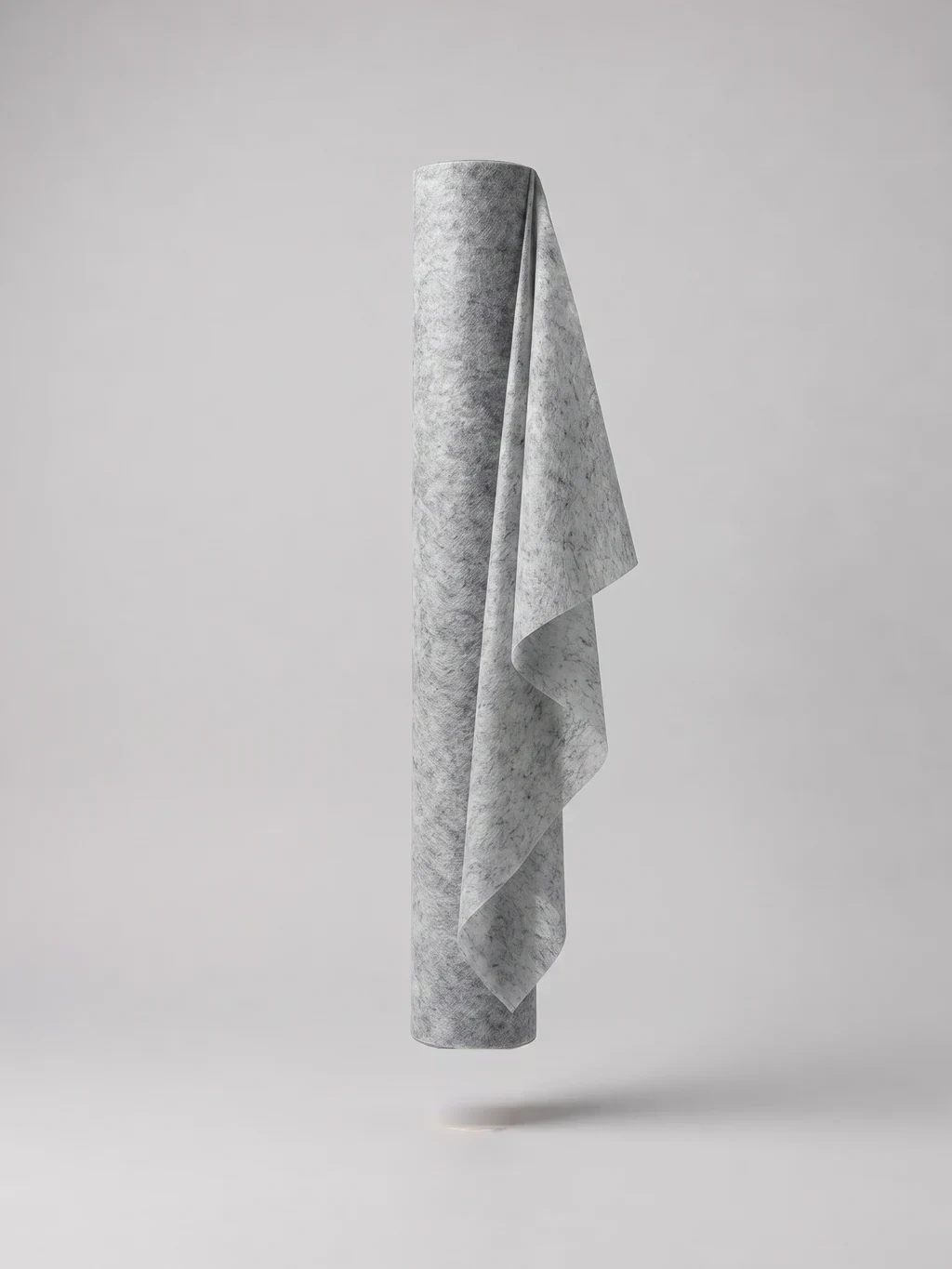
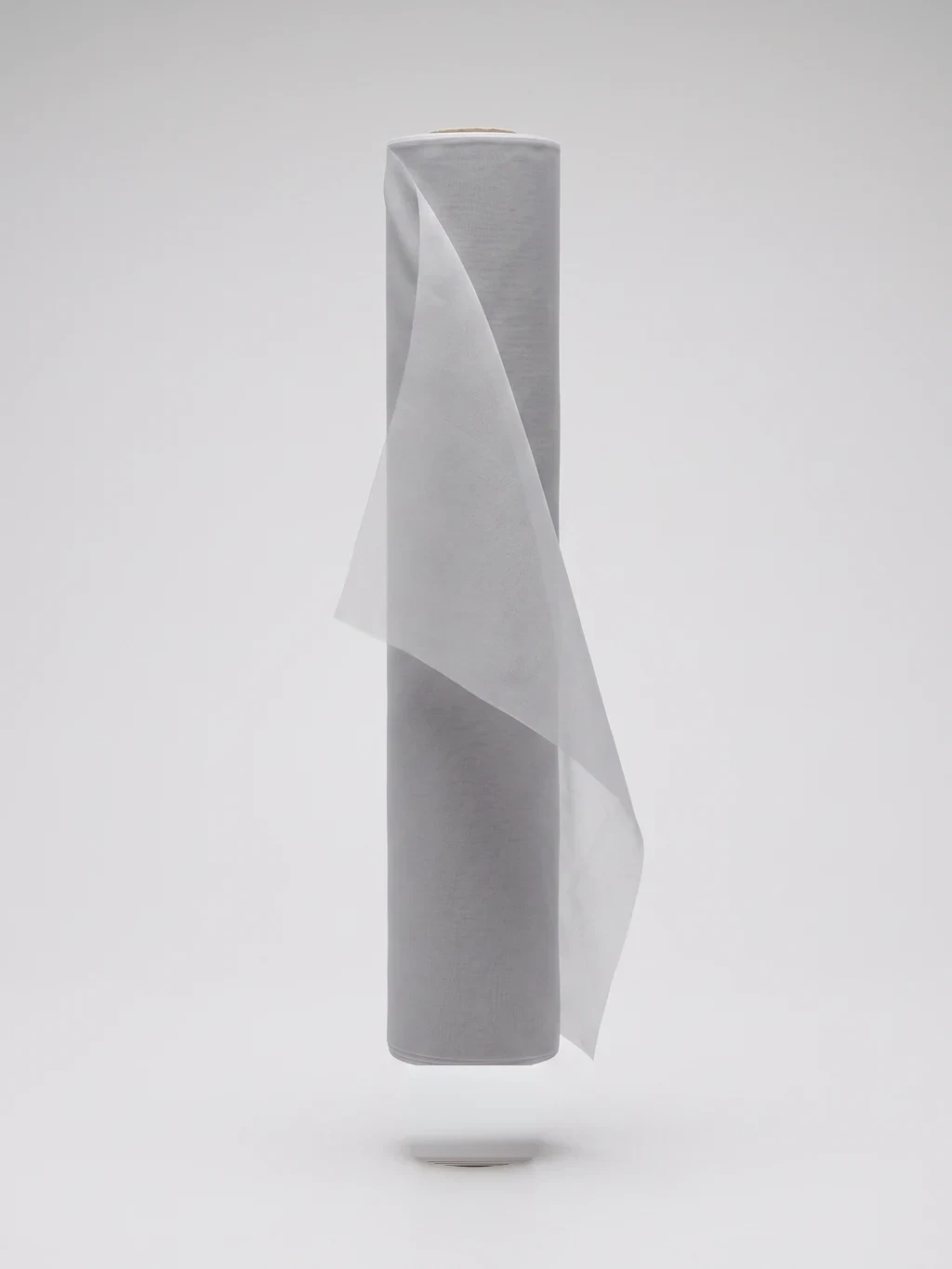
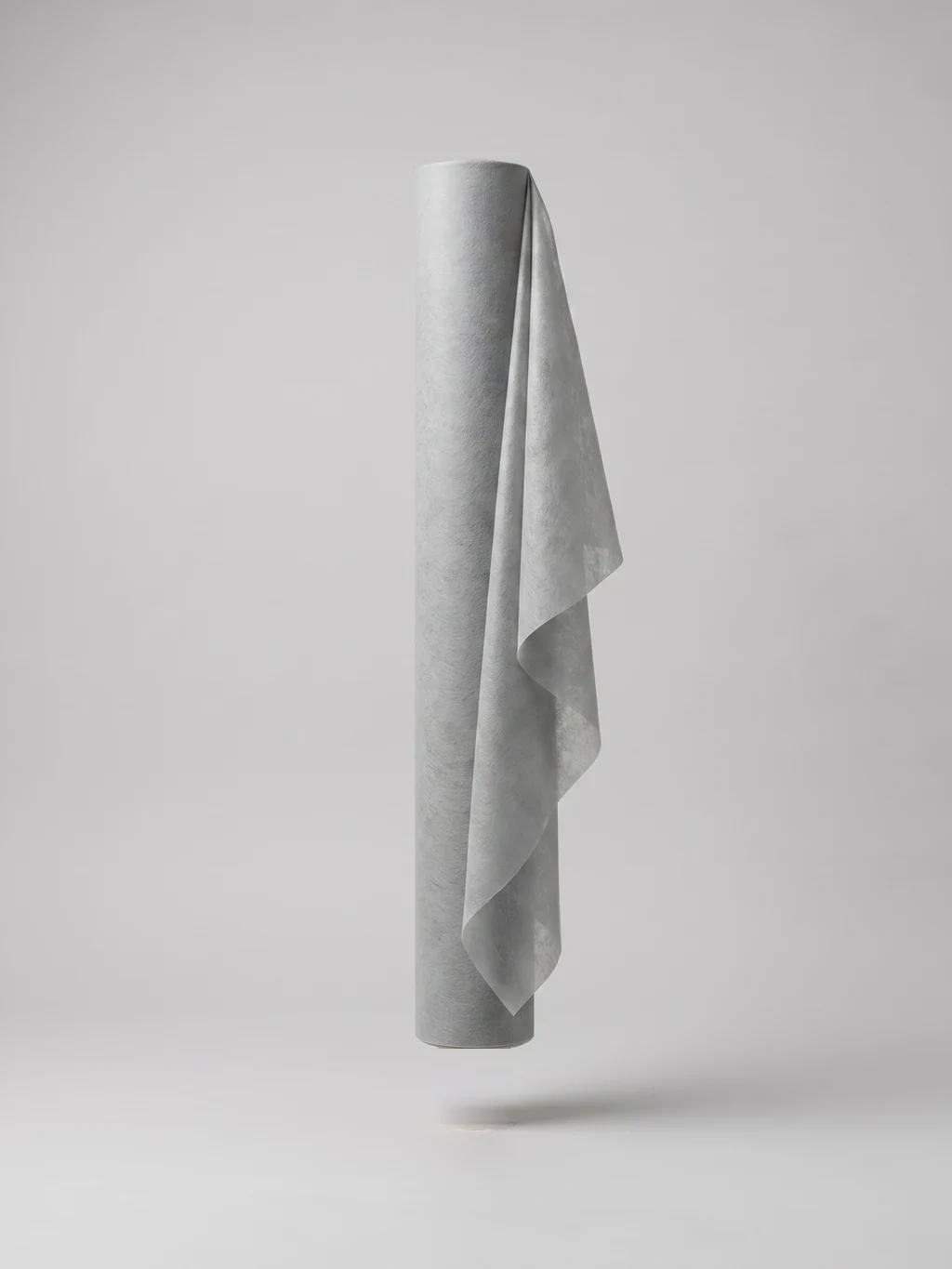
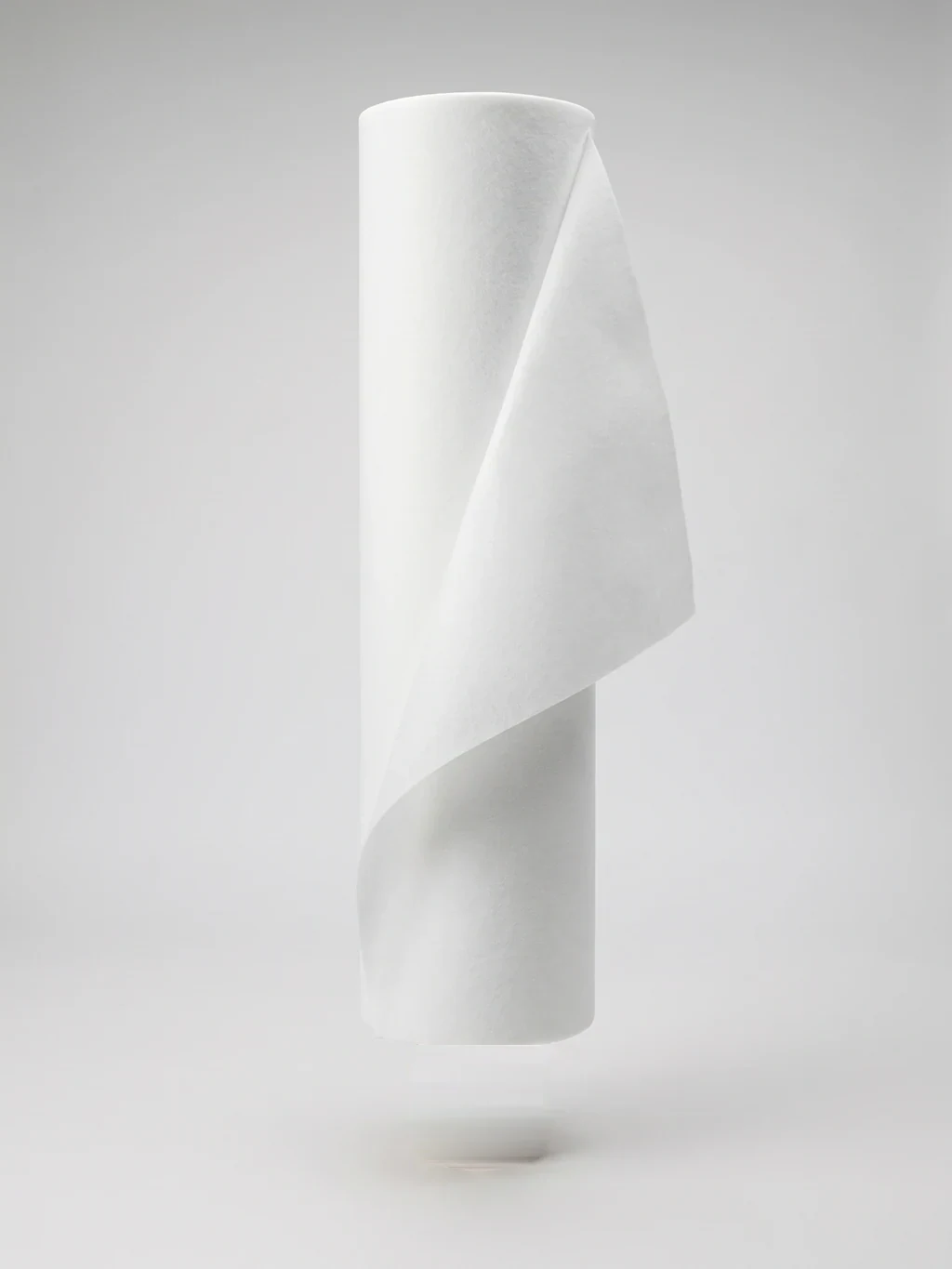
What is interlining and what does it do? Types and how to choose
What is interlining?
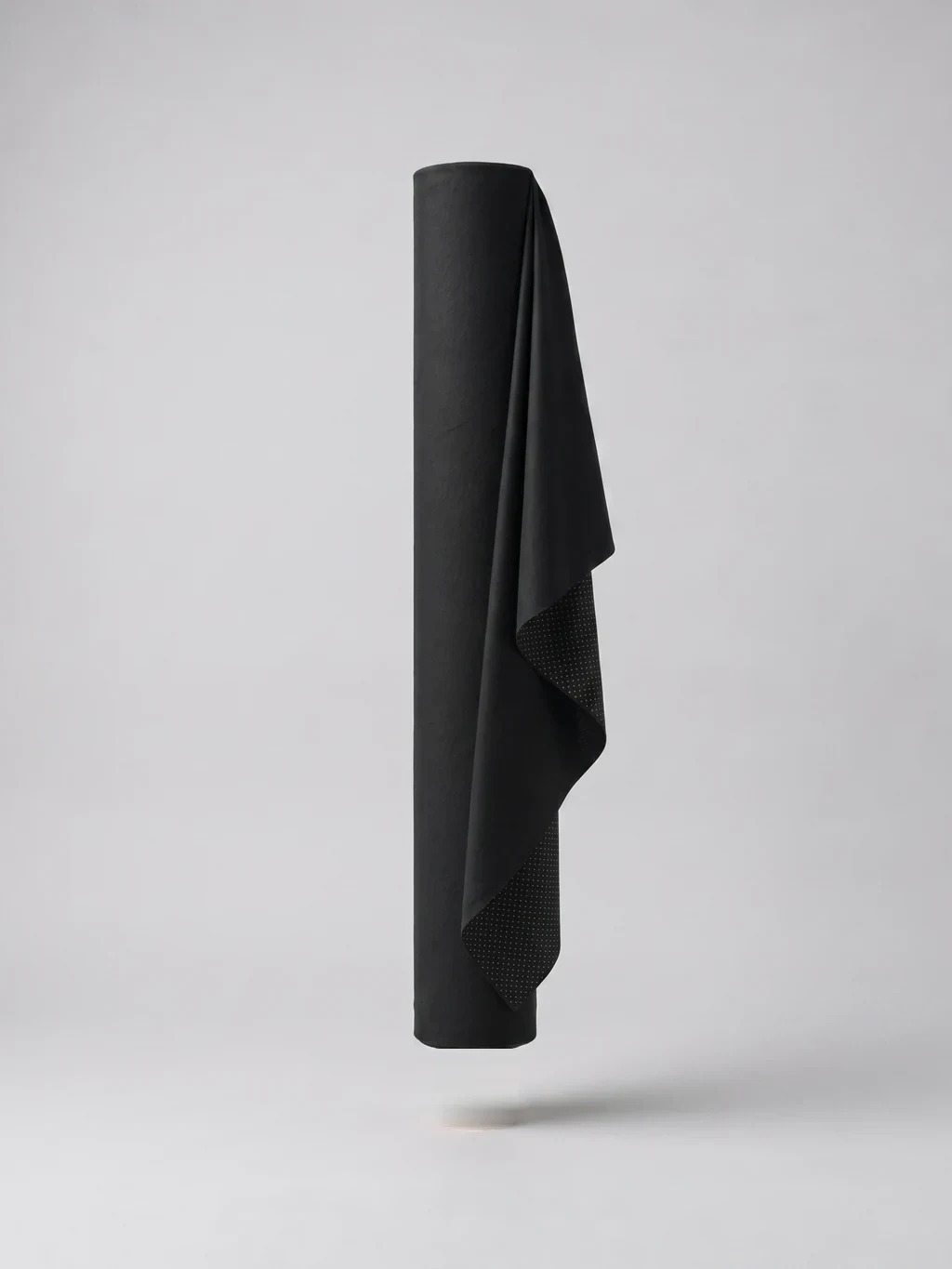
Interlining is a thin support layer fused to the back of a fabric. One face carries adhesive — hot-melt glue laid on as small dots. On the floor those dots are called "şeker", sugar.
Under an iron or a press the dots melt and work into the fibres of the cloth, then set as they cool. From that moment the interlining and the fabric no longer behave as two layers but as one material.
It is an invisible material that largely decides how a garment carries itself. A jacket standing up, a collar not curling, a buttonhole not tearing — all of it is the interlining's work.
What does interlining do?
Three separate jobs, all of them things the cloth cannot do alone:
- It gives body. Cloth does not stand up by itself; an interlined area does. Jacket fronts, collars and cuffs keep their shape because of it.
- It stabilises cut edges. An interlined edge does not open, stretch or fray. That is why plackets, pocket openings and button stands are interlined.
- It reinforces load-bearing points. Buttonholes, buttons and zip edges are pulled constantly; interlining stops the cloth tearing there.
What it does not do is equally clear: it does not cover, hide or slide. Those are the jobs of the lining. Interlining sits directly behind the outer cloth and is never seen; a lining covers the innermost face and shows when the garment falls open.
Thickening the interlining does not produce a better garment. Too heavy an interlining starts deciding the character of the garment: a fine wool jacket ends up looking like a cheap uniform. The rule — the interlining stays lighter than the outer cloth.
Base type: non-woven, woven, knitted
The first thing separating interlinings is what the adhesive is laid on. There are three families, and the choice follows directly from what the panel has to do.
| Base | Behaviour | Where | Product |
|---|---|---|---|
| Non-woven | No grain, same in every direction | Collars, cuffs, plackets, buttonholes | Paper interlining |
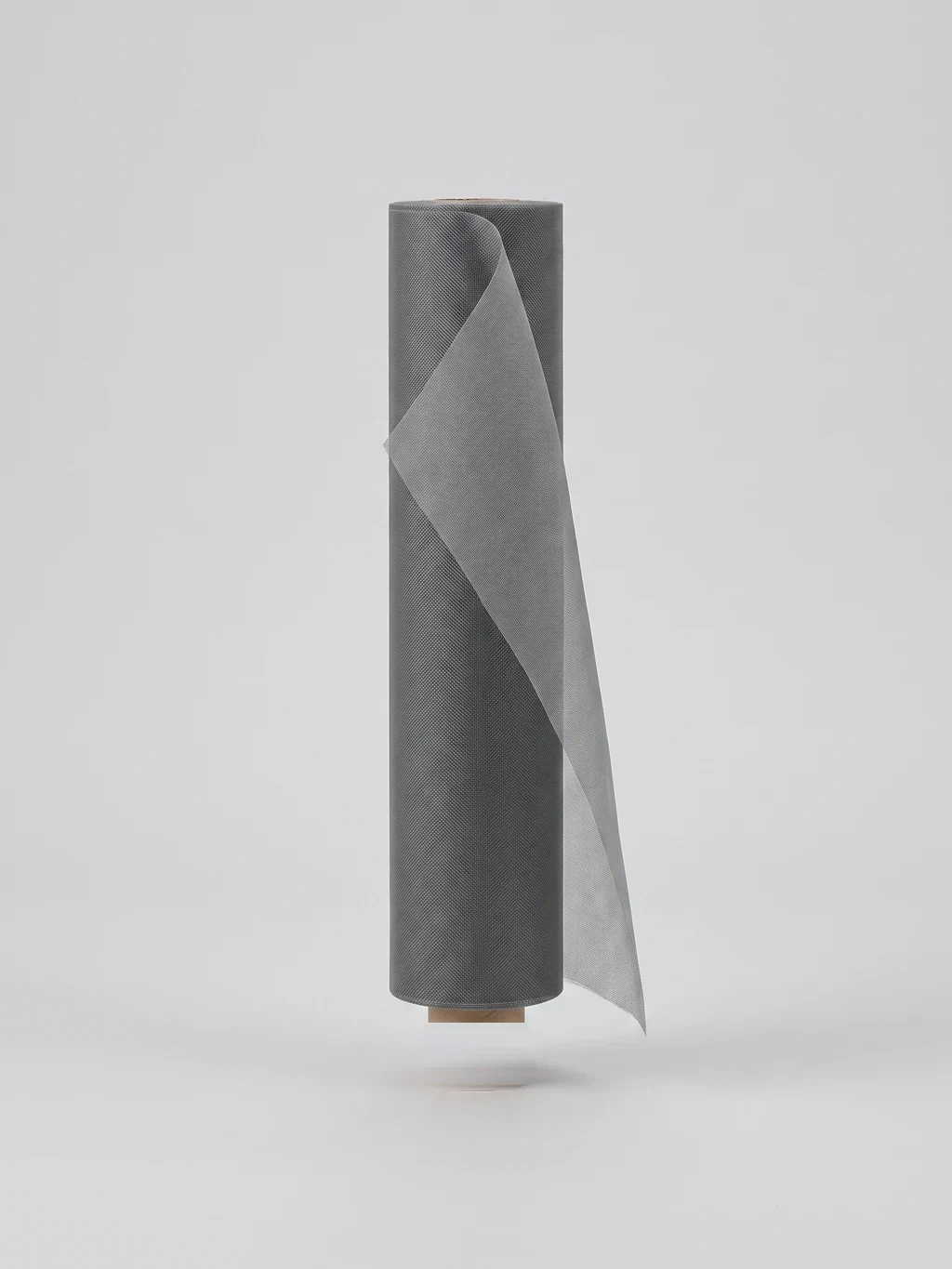
| Woven | Directional, holds its shape | Fronts, coat bodies | Full-width interlining |
| Knitted | Stretches, keeps the give | Knitwear, knitted jackets | Corded jersey interlining |
The most practical advantage of a non-woven is having no grain: you can rotate pieces freely on the marker and the waste drops. In return its stretch and drape are weak, which is why it goes on small pieces that have to sit flat and firm.
Fusing a non-woven to a knit is the clearest mistake in this field. The cloth no longer stretches — and stretching was the only reason it was knitted. That job calls for corded jersey interlining.
How the weight is chosen
The weight is grams per square metre. As it rises the support increases, but the garment stiffens in the same proportion. The right weight is chosen against the weight of the outer cloth — not from a catalogue.
- 30 – 45 g: light, often sheer cloths such as chiffon, silk and fine shirting. Product: chiffon interlining.
- 55 g: light wools, gabardine, summer cloths. A soft jacket. Product: body interlining.
- 65 g: heavy wools, melton, winter cloths. Coat fronts, uniforms. Product: body interlining.
If you cannot decide, start with the lower weight and test on an offcut. Not enough support is a fixable problem; a garment that has gone stiff is not. On fine, sheer cloths there is a second problem too — the interlining showing through. There, its colour matters as much as its weight.
The interlinings we hold
| Product | For what | Where |
|---|---|---|
| Paper interlining | Body in small pieces | Collars, cuffs, plackets, button stands |
| Chiffon interlining | Support without showing on fine cloth | Chiffon, silk, blouses |
| Body interlining | Support spread across an area | Jacket fronts, coats |
| Full-width interlining | Hold in both directions | Panels that must keep their shape |
| Corded jersey interlining | Body that keeps the stretch | Knitwear, knitted jackets |
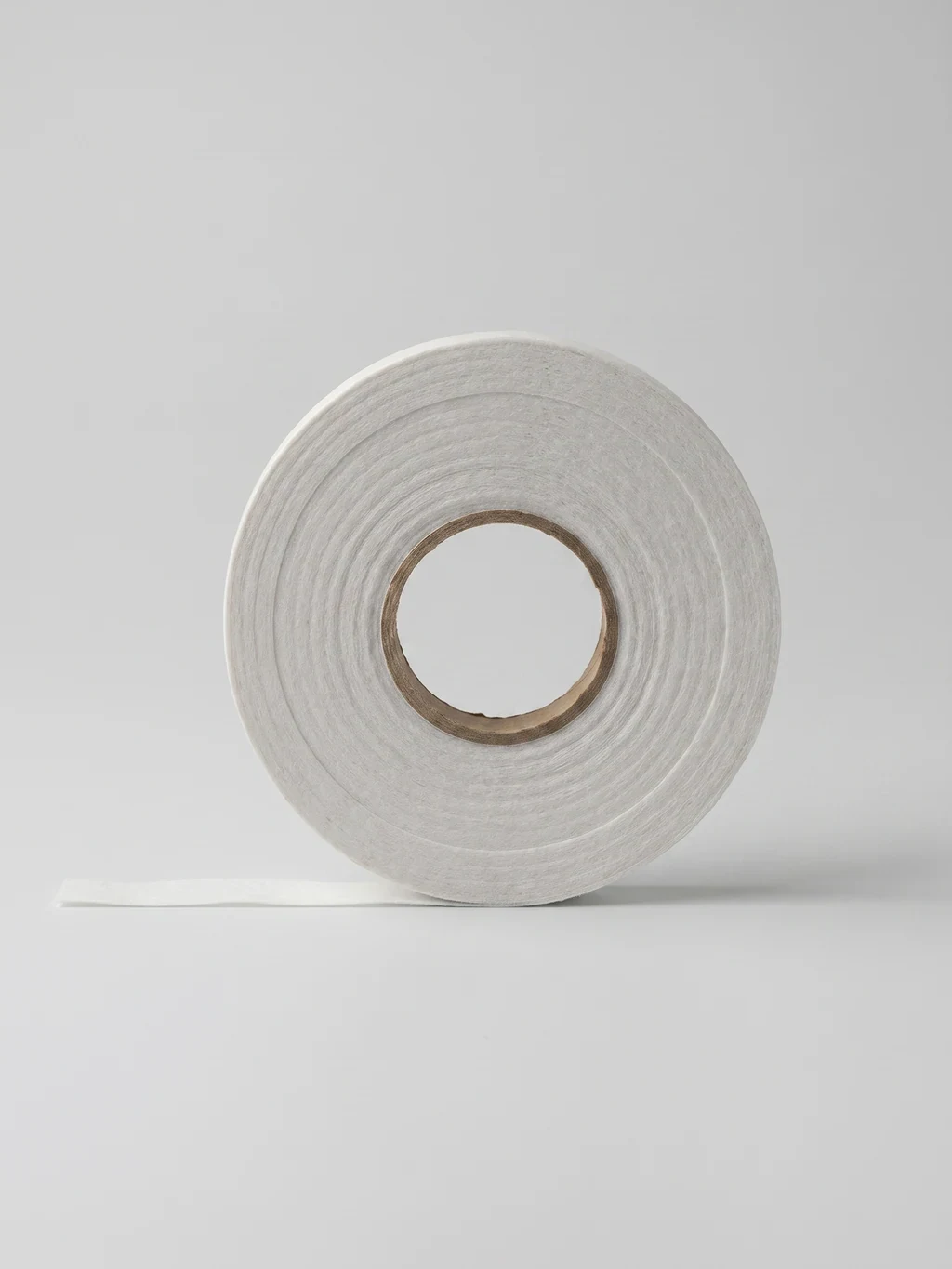
| Terfix tape | Stabilising a single line | Shoulders, necklines, zip edges |
| Filling interlining | Filling and support layer | Bags, footwear, volume production |
The last two stand apart from the rest. Terfix tape holds a line rather than a surface — it comes as a strip and sits inside the seam allowance. Filling interlining works less in garments than in bags and footwear, as a filling layer.
The three settings
With interlining the whole job comes down to three settings: heat, pressure, time. They work together — if one is short, raising the other two is not a fix, it produces a new fault.
- Too little heat: the glue does not fully melt and the interlining lifts later. Too much: the glue strikes through and stains the face.
- Too little pressure: the glue does not enter the fibre and the bond is weak. Too much: the interlining leaves a shine on the cloth.
- Too little time: the melt is not completed. Too much: the fabric yellows.
The right setting is not a single number; it changes with the fabric. That is why every new cloth gets a test: fuse to an offcut, wait until it is completely cold, then try to lift a corner. If it comes away easily, the heat or the pressure is short. The detailed version is in the paper interlining article.
Testing before it cools misleads you — the glue bonds as it cools. An interlining that holds while hot can come away in your hand once cold.
Common mistakes with interlining
- Choosing an interlining heavier than the outer cloth. The interlining starts deciding the character of the garment.
- Fusing a non-woven to a knit. The stretch dies and the garment loses its purpose.
- Skipping the shrinkage test. If interlining and cloth shrink at different rates the surface puckers — and because the layers are bonded, it does not come out.
- Fusing a wide panel with a sliding iron. The interlining shifts, the pressure stays uneven, and it bubbles at the first wash.
- Expecting one layer to do another's job. The shoulder curve belongs to the shoulder pad, the sleeve cap to the sleeve head, the shoulder line to Terfix tape — thickening the interlining solves none of them.
When you order
An interlining cannot be chosen independently of the cloth. Tell us which fabric and which panel you are working on — the same interlining gives different results on a fine gabardine and a heavy melton.
You can ask for a small piece to test with. Fusing one front panel and washing it is the fastest way to settle the order decision.
Samples, stock and delivery are settled on the phone.
Frequently asked questions
What is interlining and what does it do?
A thin support layer fused to the back of a fabric with an iron or a press. It does three jobs: it gives the cloth body so it stands up, it stabilises cut edges, and it reinforces load-bearing points like buttonholes and buttons. A jacket standing up is largely the interlining's work.
What is the difference between interlining and lining?
Interlining sits directly behind the outer cloth, is fused with heat and is never seen; it gives the cloth body. A lining covers the innermost face, is held by stitching and shows when the garment falls open; it covers, slides and hides. Interlining holds a jacket up; the lining covers that structure.
Which interlining should I choose?
The base first: non-woven (paper interlining) for small pieces that must sit flat and firm, knitted (corded jersey) for knits that must keep their stretch, woven (full-width) for large panels that must hold their shape. Then the weight, staying lighter than the outer cloth.
The interlining lifts after fusing. Why?
Nearly always low heat or not enough pressure — the glue has not fully melted, so it never enters the fibre. Test on an offcut and raise the setting, but run the test after the piece is completely cold: the glue bonds as it cools.
A fused panel puckered in the wash. Can it be corrected?
No. The cause is interlining and cloth shrinking at different rates with the two layers bonded together. That is why every new fabric needs a fused offcut washed and measured — a five-minute check that saves the batch.
Should the whole front be interlined?
Both are done. Full fusing gives an upright, formal stance — uniforms, classic suits, overcoats. Partial fusing produces a softer jacket. If you fuse partially, land the boundary on a seam or a roll line, or it reads as a line in raking light.