Paper interlining: how a fusible works and how to set the press
Paper interlining is a fusible with a non-woven face; it gives body to collars, cuffs and plackets and keeps cut edges from opening up. Here is what non-woven means in practice, the three settings that make a fuse work, and the three faults that come up most.
UB-KT090 Updated

What is paper interlining?
Paper interlining is a surface made by bonding fibres together rather than weaving or knitting them. The trade calls it non-woven. It takes its Turkish name — kağıt tela, paper interlining — from the papery hand it has.
One face carries adhesive, laid on as small dots of hot-melt glue. On the floor those dots are called "şeker", sugar. When the interlining is pressed onto the fabric under heat, the dots melt and work into the fibres; on cooling they set, and the two layers start behaving as one.
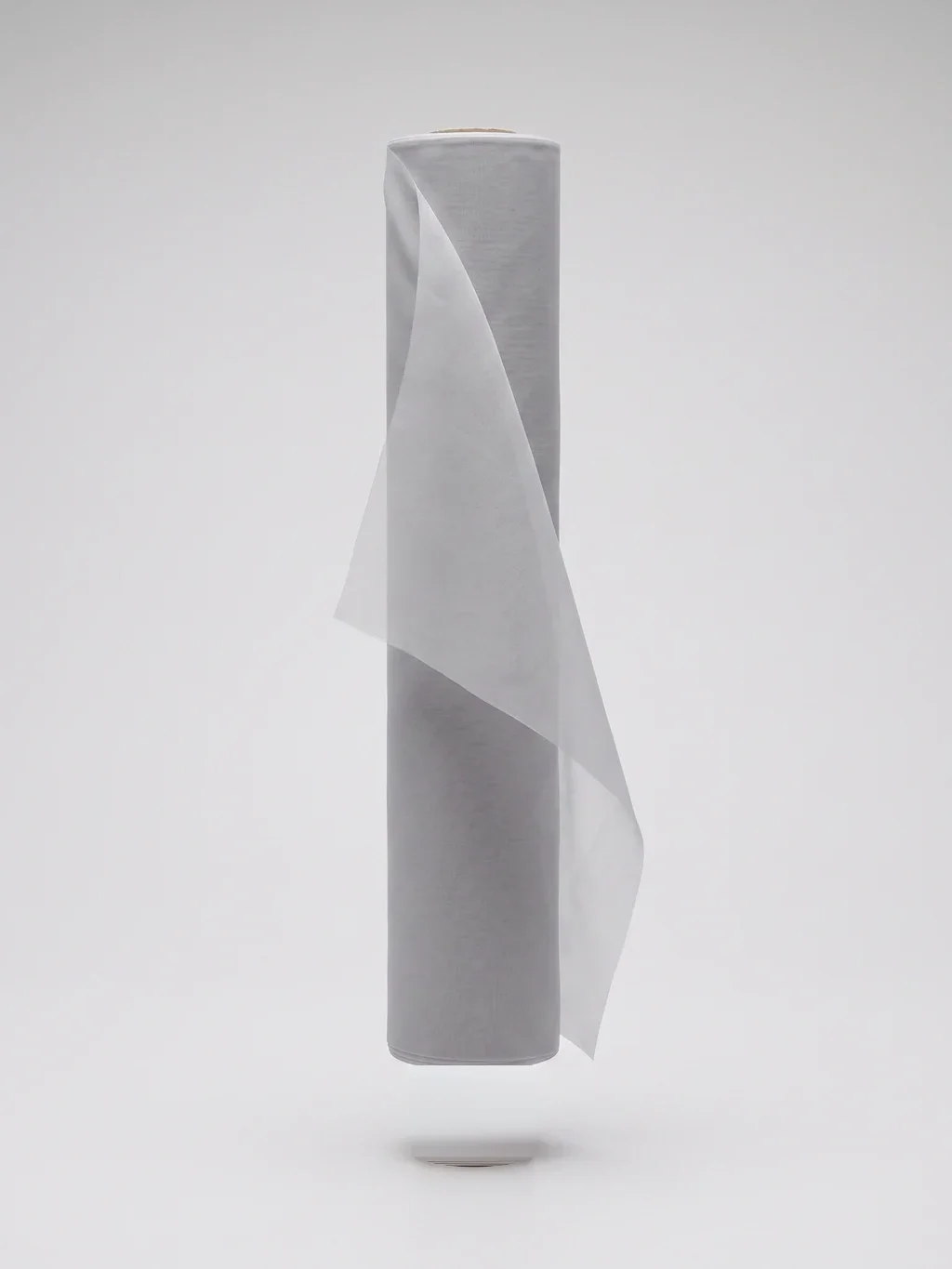
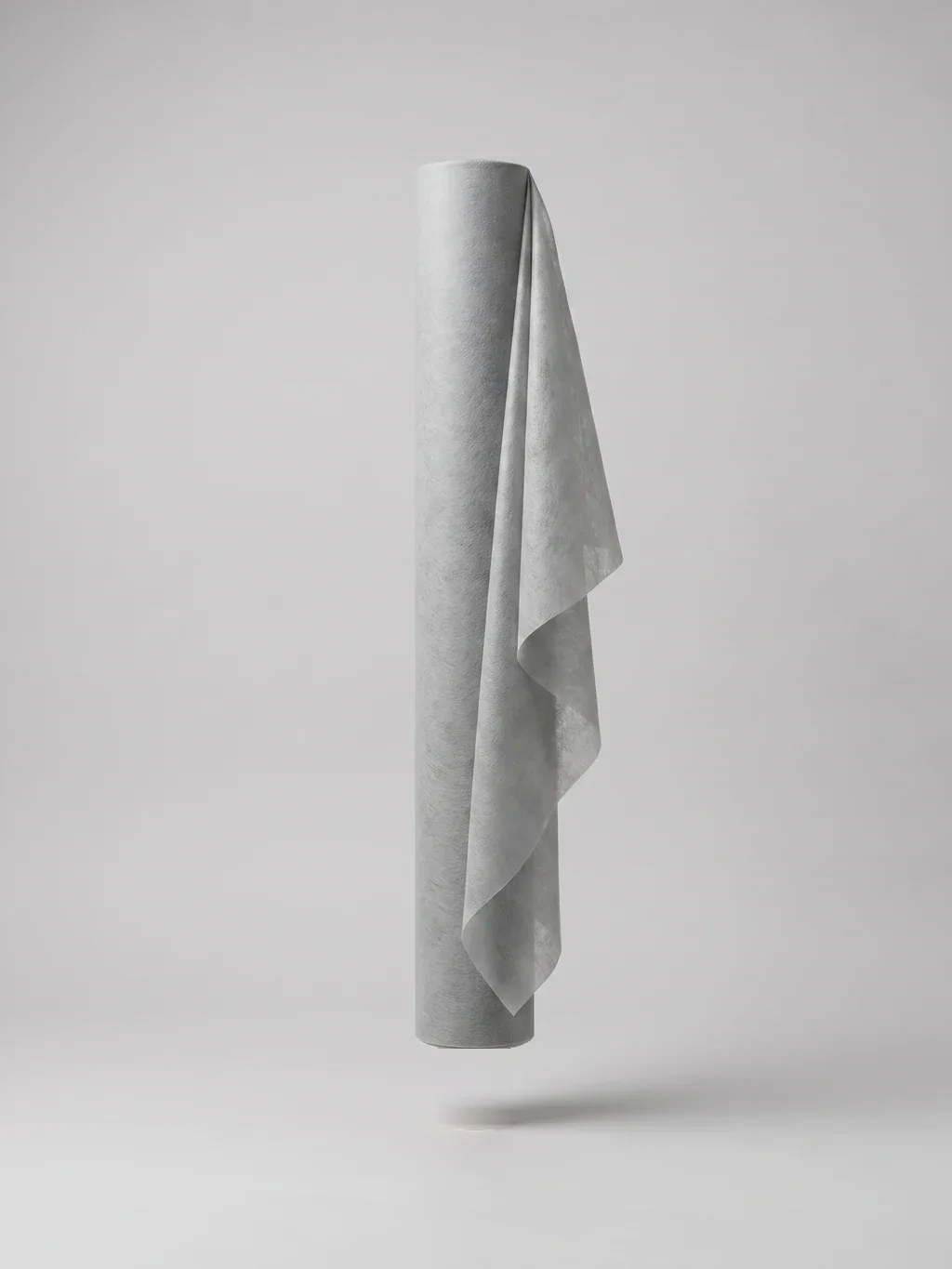
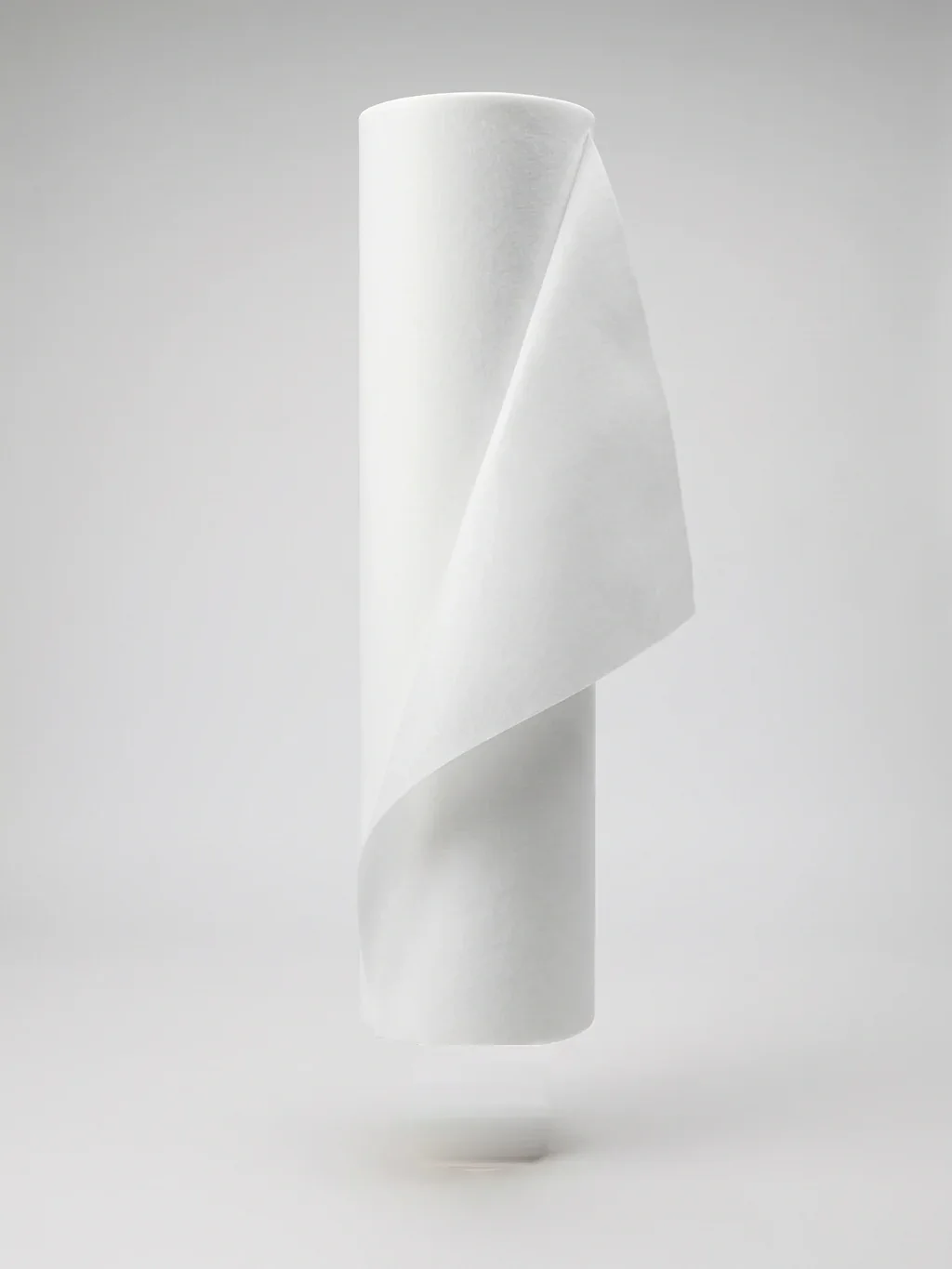
Ours is 90 cm wide, in 200-metre rolls, in the tones shown plus white.
What non-woven means on the floor
A non-woven has one advantage over a woven interlining that directly affects the daily workload: it has no grain.
In a woven cloth the warp and the weft behave differently, so which way a piece is cut matters. In a non-woven the fibres lie in random directions, so the material behaves the same way whichever way you turn it. On the marker you are free to rotate pieces — which means getting far more out of a narrow width.
- Cutting direction is free, so marker efficiency goes up.
- The cut edge does not fray.
- Thickness is even everywhere; the collar point comes out the same as the collar centre.
- Offcuts can be used on small parts.
You give something up in return: a non-woven does not stretch or drape as well as a woven interlining. That is why it goes where things have to sit flat and firm — collars, cuffs, plackets — and why corded jersey interlining is used where stretch has to survive.
Three settings: heat, pressure, time
With a fusible, the whole job comes down to three settings, and they work together. If one is short, raising the other two is not a fix — it usually produces a new fault instead.
| Setting | Too little | Too much |
|---|---|---|
| Heat | The glue does not fully melt; the interlining lifts later | The glue strikes through and stains the face |
| Pressure | The glue does not enter the fibre; the bond is weak | The interlining leaves a shine and an outline on the cloth |
| Time | The melt is not completed | The fabric yellows and loses substance |
The right setting is not a single number; it changes with the fabric. The same interlining wants different settings on a fine shirting and on a heavy wool. That is why every new fabric gets a test.
Run the test like this: fuse the interlining to an offcut, wait until it is completely cold, then try to lift a corner. If it comes away easily, the heat or the pressure is short. Testing before it cools misleads you — the glue bonds as it cools.
Where it is used
| Where | For what | Note |
|---|---|---|
| Collars and cuffs | To sit flat and stand up | The most common use |
| Plackets and pocket openings | To keep the cut edge from opening | Buttons and buttonholes included |
| Button stands | So the button does not pull the cloth | A small piece is enough |
| Zip edges | To keep the line straight | Terfix tape is handier in strip form |
| Hems | So the fold sits cleanly | Cut as a narrow strip |
The body of the garment is not on that list, because it is a different job: a jacket front needs broad support across the panel, and that is what body interlining is for. Fusing paper interlining across a whole front makes the garment feel like card.
The three faults you will meet
Almost every interlining problem falls under three headings, and all three come back to the settings.
- Bubbling, or delamination. After a wash or a few months of wear the interlining separates and blisters appear on the surface. The cause is usually low heat or not enough pressure.
- Strike-through. The glue shows on the face of the cloth as shiny marks. The cause is too much heat or too long a dwell, and it appears sooner on light fabrics.
- Differential shrinkage. Interlining and fabric shrink at different rates in the wash and the surface puckers. The cause is a mismatched interlining, and it shows up on jobs that skipped the test.
All three have the same answer: test on an offcut before you start on a new fabric. Five minutes saves the whole batch.
Storage and cutting
- Keep the interlining cool and dry. Damp reduces the grip of the adhesive.
- Do not store rolls on end; lying flat stops the surface being crushed.
- The adhesive face always goes against the fabric. Fused the wrong way round, the interlining sticks to the iron and fouls the soleplate.
- A thin cloth between the soleplate and the interlining makes that accident a cheap one.
- Cut the interlining piece a shade smaller than the fabric piece; interlining that runs past the edge leaves a mark in the seam.
When you order
90 cm wide, 200-metre rolls. That width is plenty for small parts like collars, cuffs and plackets; if you need broad coverage, body interlining or filling interlining is the conversation to have.
Tell us what fabric you are working with. An interlining is not chosen independently of the cloth — a fine shirting and a heavy wool do not want the same one.
Samples, stock and delivery are settled on the phone. You can ask for a small piece to test with.
Frequently asked questions
Which side of the interlining fuses?
The side carrying the small dots. Run a hand across it and that is the face that feels rough. It always goes against the fabric; the other way round, the glue sticks to the iron.
The interlining lifts after fusing. Why?
Nearly always low heat or not enough pressure. The glue has not fully melted, so it sits on the surface instead of entering the fibre. Test on an offcut and raise the setting — and do the test after the piece is completely cold.
Iron or fusing press?
Either works, but a press distributes pressure and time evenly, so results are more consistent in volume. If you are working with an iron, do not slide it — press down and lift, then move on. Sliding shifts the interlining.
Does paper interlining shrink in the wash?
If the interlining and the fabric shrink at different rates, the surface puckers. That is not a fault of the interlining but a mismatch. With a new fabric, washing a fused offcut and measuring it is the surest route.
How long is a roll?
200 metres, 90 cm wide. If you need a smaller quantity, let us talk it through on the phone.