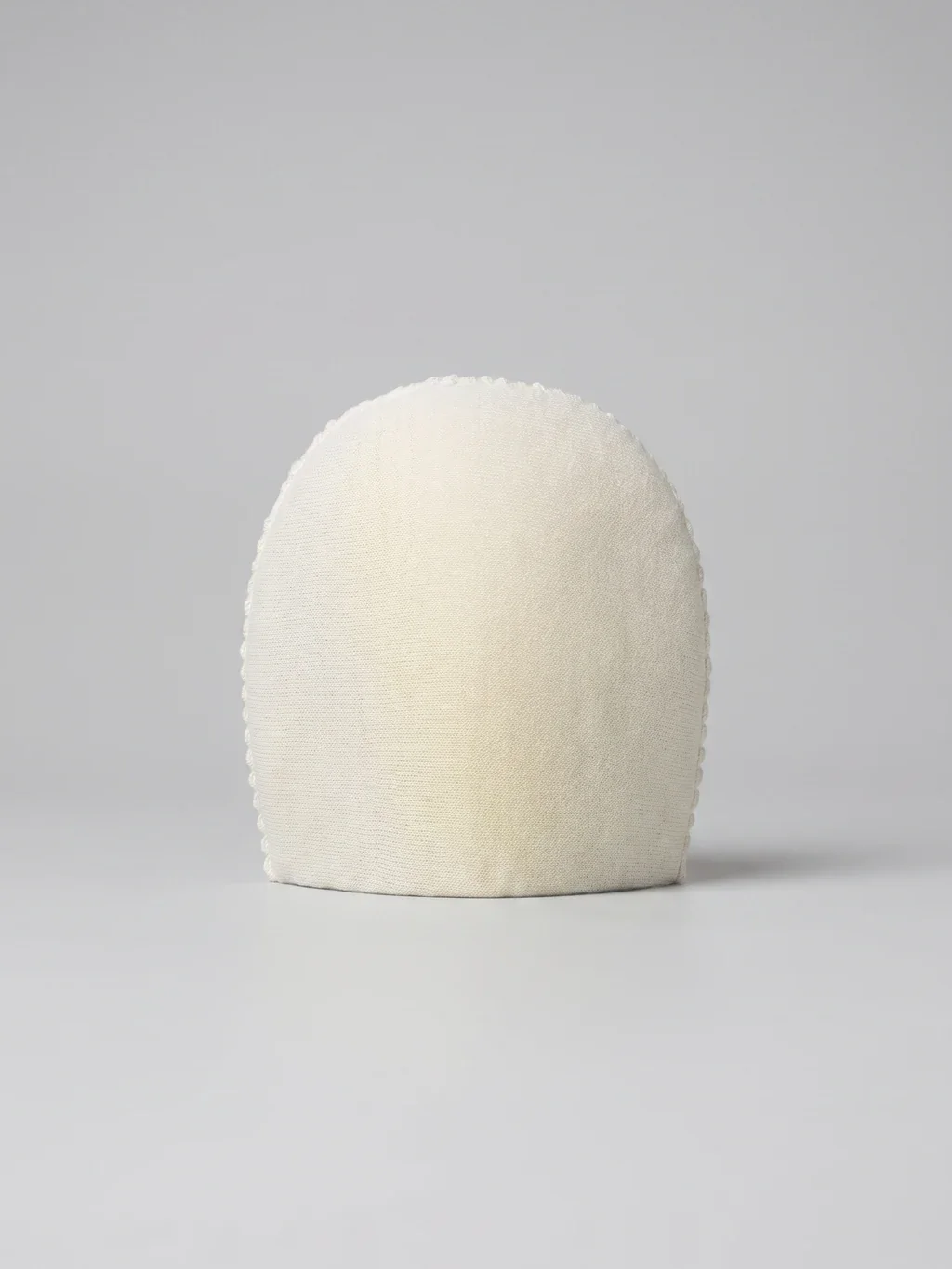
Shoulder pads: how a shoulder line is built
A shoulder pad shapes the shoulder line; thickness and curve are chosen to match the garment size. Here is why the shoulder needs support at all, what thickness and curve each change, and where and how the pad is placed.
UB-VT001 Updated
Why does a shoulder need support?
A human shoulder is not flat; it slopes downwards, and the slope differs from person to person. A jacket shoulder, meanwhile, is drawn as a straight and symmetrical line. There is a gap between those two things, and the pad fills it.
What happens without one? The jacket breaks downwards from the shoulder, the armhole collapses inwards, and the whole weight of the garment hangs from one narrow point. The result: the front creases, the lapel opens away, and the garment does not sit on the body.
A shoulder pad is not a fashion choice — its thickness is. Some degree of support is a requirement of any structured jacket.
A jacket without a pad is not "more natural"; it simply asks another layer for shoulder support. Even soft-construction jackets use a thin pad or a roll.
Thickness: how much?
Pad thickness decides the character of the garment directly. Three different jackets can come out of the same pattern by changing nothing but the pad.
| Thickness | Look | Where |
|---|---|---|
| Thin | Natural shoulder, soft transition | Summer jackets, shirt jackets, dresses |
| Medium | A defined but unexaggerated line | Classic jackets, blazers, suits |
| Thick | A sharp, broad shoulder | Overcoats, uniforms, structured styles |
Two things guide the choice: the weight of the garment and the silhouette you want. A heavy coat with a thin pad collapses at the shoulder; a light dress cannot carry a thick pad, and the pad declares itself from outside.
Curve: the detail that gets skipped
Thickness gets discussed; curve usually does not. Yet the curve is what decides how the pad sits on the shoulder.
A flat pad does not follow the slope of the shoulder; it lifts at the shoulder point and raises a bump in the cloth. A correctly curved pad settles onto the shoulder and is not seen from outside.
- The curve should be close to the shoulder slope of the size — as the size grows, the curve changes with it.
- The curve differs by sleeve type: a set-in sleeve and a raglan do not take the same pad.
- A curved pad is handed: there is a left and a right. Fitted the wrong way round it distorts the shoulder line.
- In fitting, hold the pad on the shoulder by hand; if it lifts, the curve is wrong.
This is the check most often skipped. A pad with the right thickness and the wrong curve gives a worse result than one with the wrong thickness.
Where and how it is placed
The position of a pad moves in millimetres, and those millimetres change how the garment carries itself.
- The outer edge of the pad should pass the armhole seam by a few millimetres — it must not stop at the seam.
- The centre of the pad lines up with the shoulder seam; a pad that has shifted pulls the shoulder forward or back.
- The pad reaches slightly further to the front and stops shorter at the back. That is the anatomy of a shoulder.
- It is stitched in by hand; fixing it by machine gathers the cloth.
- The pad sits under the lining and touches neither skin nor the outer fabric directly.
The pad does not work alone. A sleeve head goes in as well to keep the sleeve cap round, and together they build the shoulder-to-sleeve transition. The pad gives the height; the sleeve head softens the transition.
Who does what at the shoulder
| Layer | Its job |
|---|---|
| Body interlining | Spreads support across the front |
| Terfix tape | Stops the shoulder line stretching |
| Shoulder pad | Gives the shoulder line height and form |
| Sleeve head | Keeps the sleeve cap round |
| Padded shoulder pad | Hides the edge line of the pad |
| Lining | Closes everything off |
Every row in that table answers a different problem. Thickening the pad to do the sleeve head's job, or stiffening the interlining to do the tape's job, does not work — it only makes the garment heavier.
If the pad shows from outside
This is the most common complaint, and it has three possible causes. Holding the garment up to the light and looking at the shoulder from the side is enough to tell which.
- If an edge line is visible: the pad's edge is sharp. The answer is a padded shoulder pad — being covered, its edge transition is softened.
- If there is a bump at the shoulder point: the curve is wrong. The pad is not following the shoulder, it is sitting on top of it.
- If there is a general puffiness: the pad is thick. Under a thin outer cloth a thick pad always shows.
On fine, pale cloths a pad can show regardless. In that case either the pad is made thinner or an intermediate layer goes between the pad and the outer fabric.
Common mistakes
- Looking only at thickness and skipping the curve. A wrong curve raises a bump at the shoulder point.
- Mixing up left and right. A curved pad is handed.
- Stopping the pad at the armhole seam. It has to pass it by a few millimetres.
- Fixing it by machine. The cloth gathers; a pad is stitched in by hand.
- Skipping the sleeve head and thickening the pad instead. The sleeve cap still will not sit and the garment gets heavier.
When you order
Pads are chosen against garment sizes; there is no single measurement. When you order, tell us the size range, what the garment is, and the sleeve type — set-in or raglan.
Say what the outer fabric weighs too. For the same size, a light summer cloth and a heavy melton want different pads.
If the edge line is a problem, padded shoulder pads are the conversation; being covered, they soften the transition.
Measurements, samples, stock and delivery are settled on the phone.
Frequently asked questions
How do I choose the thickness?
By the weight of the garment and the silhouette you want. Thin pads give a natural shoulder in summer jackets and dresses; medium in classic jackets and blazers; thick in overcoats and uniforms. A heavy coat with a thin pad collapses at the shoulder, and a light dress cannot carry a thick one.
The pad raises a bump at the shoulder. Why?
Most likely the curve is wrong. A flat or badly curved pad does not follow the slope of the shoulder; it sits on top of it and lifts at the shoulder point. In fitting, hold the pad on the shoulder by hand — if it lifts, change the curve.
The edge of the pad shows through the outer fabric.
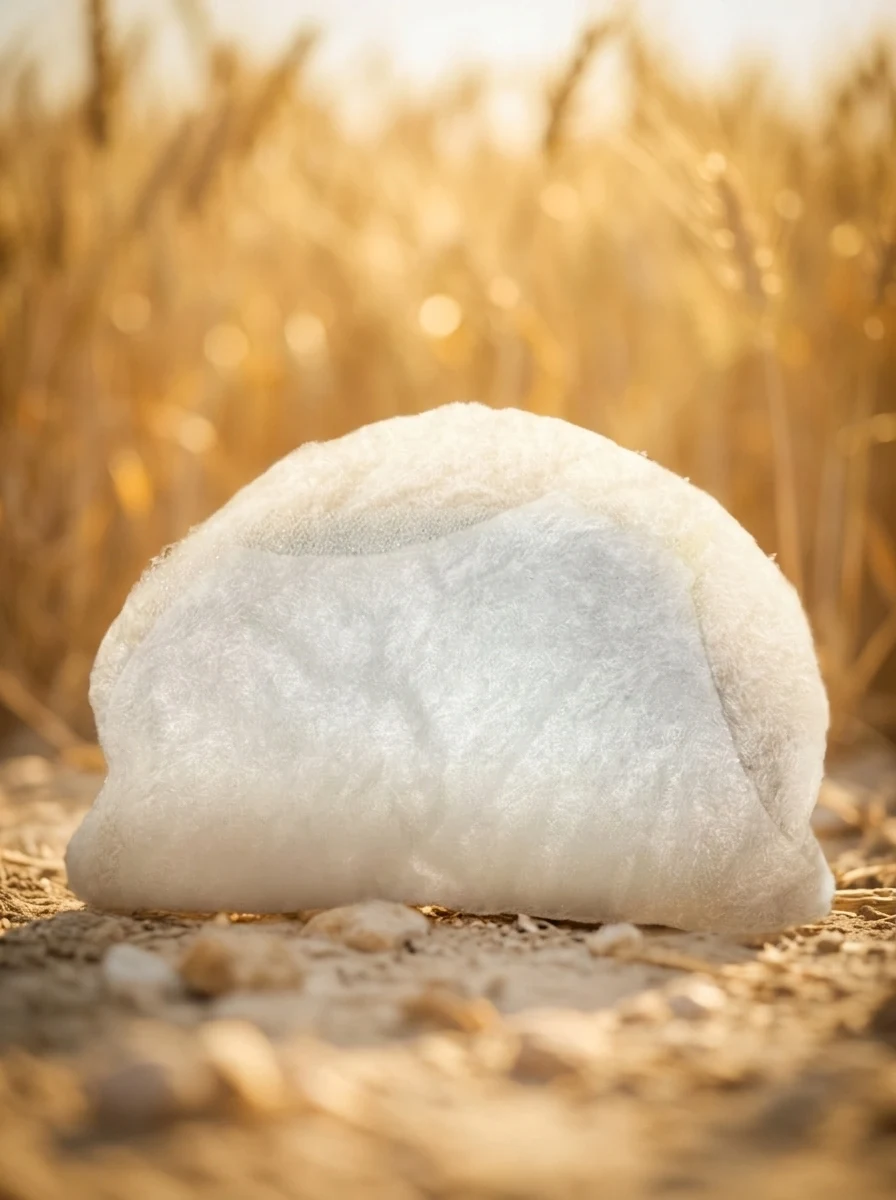
That means the pad's edge is sharp. The answer is a padded shoulder pad: covered with wadding, its edge transition is softened and it leaves no mark on the outer fabric. On fine, pale cloths that is close to compulsory.
Do the pad and the sleeve head do the same job?
No, they are separate. The pad gives the shoulder line height and form; the sleeve head goes into the armhole and keeps the sleeve cap round. You cannot do the sleeve head's job by thickening the pad — the garment just gets heavier.
Which sizes are available?
Pads are chosen against garment sizes. Tell us your size range, the type of garment and the sleeve type, and we will work out the thickness and curve together.