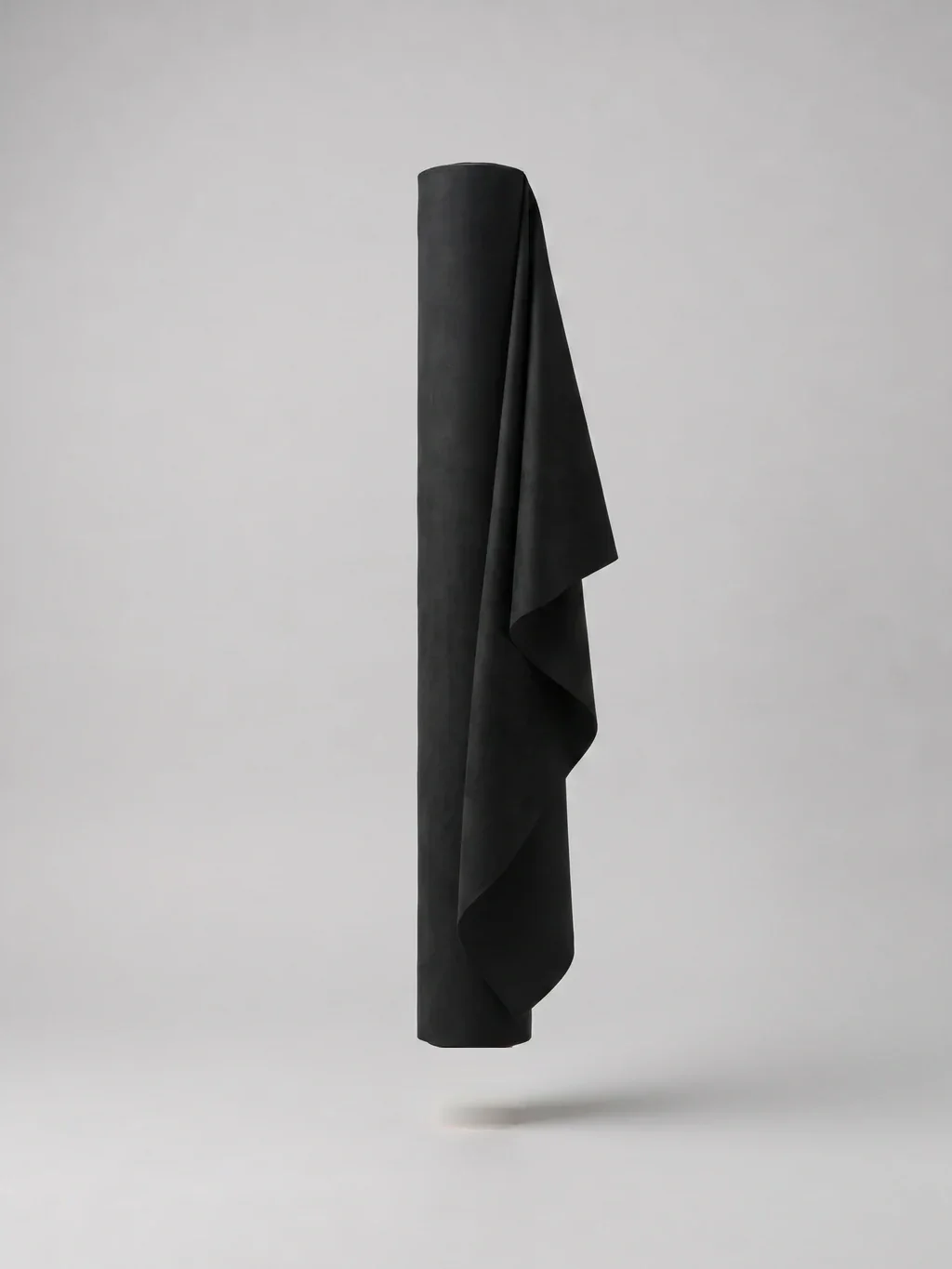
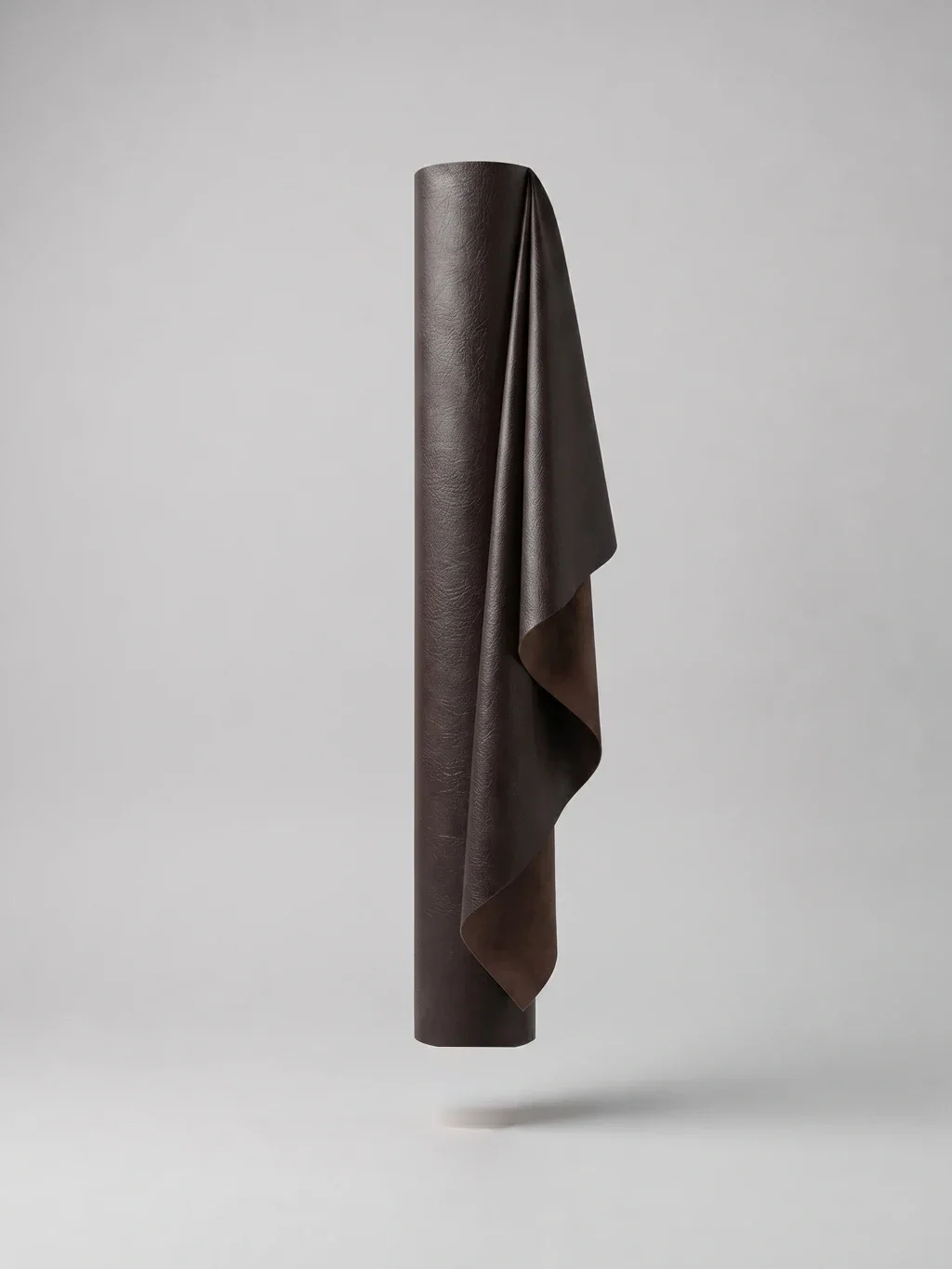
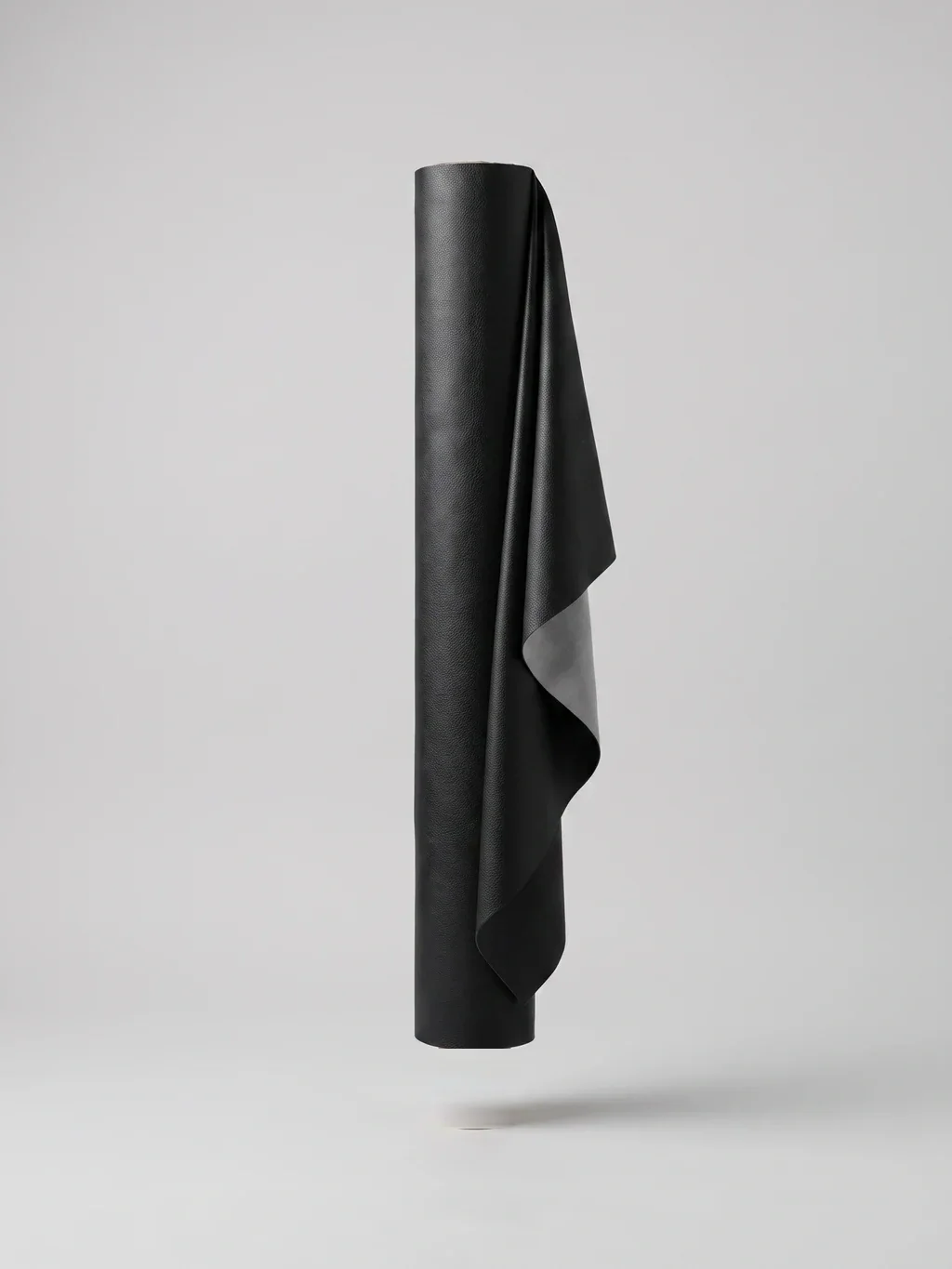
Diego leather: how synthetic leather is sewn, and where it goes wrong
Diego is a matt-faced synthetic leather; its soft drape and wide colour range suit everyday wear. Here is how a synthetic leather is built, where the drape comes from, and the mistakes made most often at the machine.
UB-DD135 Updated
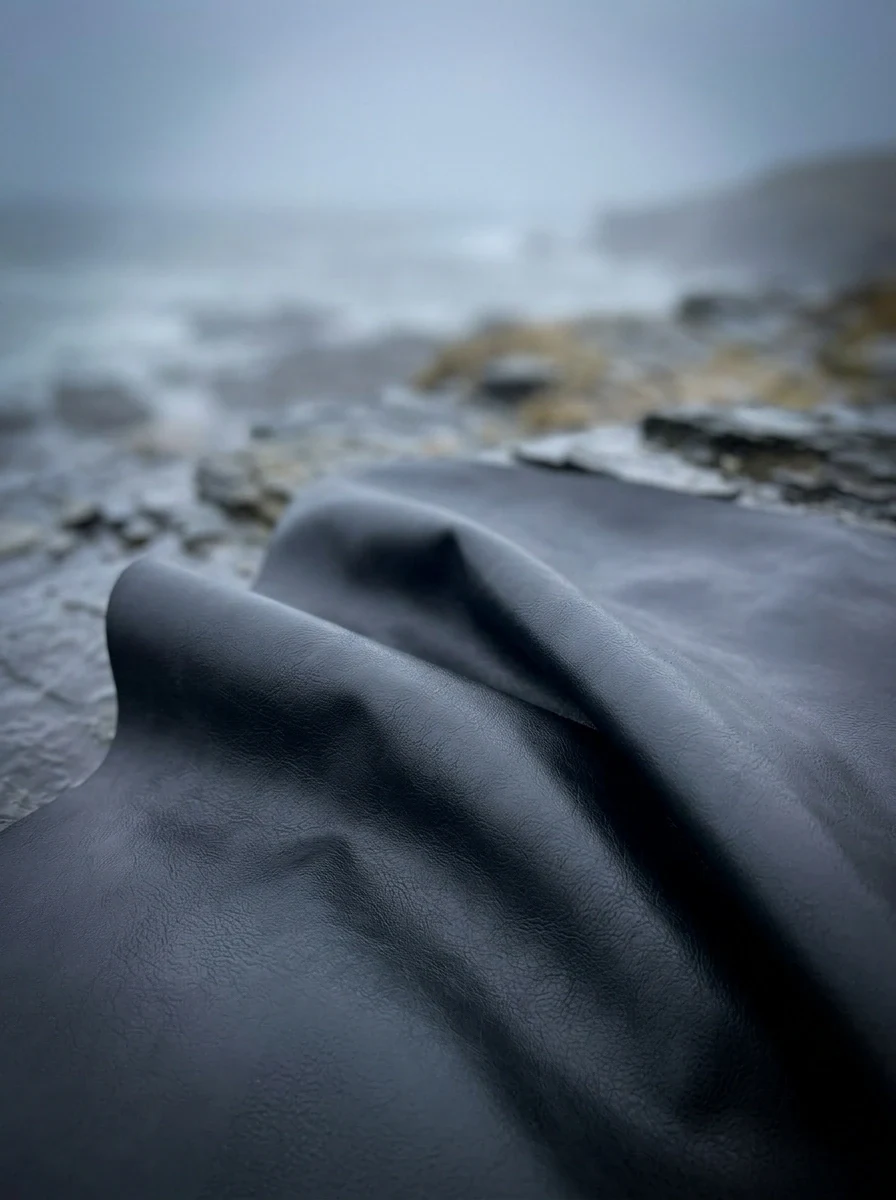
What is synthetic leather made of?
Synthetic leather is not one material but two layers bonded together. Underneath there is a carrier cloth, usually knitted or woven. On top there is a polymer coating; on garment products that is generally polyurethane.
The division of labour is clear, and it is the key to understanding the material: the coating decides the look, the carrier cloth decides the behaviour. Whether the surface is matt or glossy, how the texture reads — that is the coating's work. How the cloth drapes, how much it gives, how it behaves under the needle — that belongs entirely to the carrier underneath.
This is why two synthetic leathers "of the same thickness" can behave completely differently. If you have two samples in your hand, look not at the face but at the back — that is what tells you how the cloth will behave.
When choosing a synthetic leather, turn the sample over and bend it in your hand. A soft, flexible back means a cloth that drapes. A firm, papery back means a cloth that holds its shape but reads stiff in a garment.
Why a matt face is preferred
What distinguishes Diego is its matt face. A glossy synthetic leather reflects light directly, and that has two consequences: the garment reads more showy, but every flaw on the surface reads more too.
A matt face scatters the light as it reflects. The consequences:
- In everyday wear it looks more natural and reads closer to real leather.
- Scratches and rub marks are noticed later.
- The curves and seam lines of the pattern look softer; on a glossy face every seam becomes a line of light.
- The colour reads deeper, particularly in dark tones.
If sheen is what you want, Yağmur leather is worth discussing — it has a textured, slightly lustrous face. If a thin, soft drape is the priority, Zara leather suits better.
Where the drape comes from
What is described as "soft drape" in a synthetic leather is a property of the carrier cloth, not the coating. A synthetic leather on a knitted base follows the line of the body; one on a woven base holds its shape more.
Diego is built for everyday wear: in jackets, coats, skirts and trousers the cloth is expected to move with the body. In practice that means the pattern can work like a fabric pattern rather than a leather pattern.
- No extra ease is needed in the pattern; the cloth moves with the wearer.
- Curved seams sit; on a stiff synthetic leather a curve puckers.
- Gathers and pleats are possible within limits.
- Lining choice gets easier; there is no obligation to put a soft lining under a stiff shell.
At the machine: five rules for synthetic leather
Sewing synthetic leather is not difficult, but it is different from sewing cloth. The whole difference rests on one fact: every hole made is permanent. In cloth a needle mark closes; here it does not.
- Do not use pins. Every pin leaves a permanent hole. Use clips, pegs, or a single pin kept inside the seam allowance.
- Do not unpick. The holes from an unpicked seam stay, and the piece has to be sewn again on the same line. Always do test seams on an offcut.
- Use a Teflon, roller or walking foot. A standard foot sticks to a coated surface and the cloth advances in jerks; the stitching comes out uneven.
- Lengthen the stitch: 3 – 3.5 mm. A short stitch sets the holes too close and perforates the material — it then tears along the seam line.
- Needle: leather or microtex, 80/12 – 90/14. A standard needle tears its way through the coating.
There is also the question of backstitching. A backstitch at the start and finish puts three holes in the same place, and the material tears from exactly there. Instead, shorten the stitch for a few stitches, or tie the thread ends off on the back.
Those five rules really collect into one sentence: in synthetic leather a mistake cannot be undone. That is why the first piece of every new style is sewn from an offcut.
Cutting and the marker
On the cutting side synthetic leather is an easy material: the edge does not fray and does not ladder. But two points need attention.
- The face has a direction. Coated surfaces can reflect light directionally; cut every piece the same way up.
- Keep the ply count low. Coated surfaces cling to one another and lower plies can shift.
- Put marker under paper on the table; the back of a synthetic leather can stick to it.
- Keep the blade sharp. A dull blade melts the coating and hardens the edge.
- Do not use chalk or pencil; the marks do not come out. Marking is done inside the seam allowance or on the back.
The non-fraying edge is a design freedom here too: hems, cuffs and pocket openings can be left raw. The same freedom belongs to scuba suede and felt.
Seam allowances, and what replaces the iron
In cloth a seam allowance is opened and pressed flat with an iron. On synthetic leather the iron cannot be used — the coating melts and glazes. So what happens to the allowance?
- Press the allowance open with a finger or a roller; it opens without heat.
- Fix the open allowance with topstitching. On synthetic leather, topstitching is both functional and a design element.
- Where needed, hold the allowance down with adhesive.
- Thin the allowance to reduce bulk; stitching over thick allowances waves.
This is why topstitching is characteristic of synthetic leather garments. It is not there for decoration — it is the only practical way to keep a seam allowance lying flat.
Care and storage
- Do not iron. If you must, very low heat, always a press cloth, no pressure and a short dwell.
- Clean with a damp cloth; solvents and alcohol damage the coating.
- Do not store folded for long; a crease line can be permanent in the coating. Rolls are hung or stored flat.
- Direct sun and high temperatures harden the coating over time.
- Put washing instructions on the product; synthetic leather does not take every wash.
Common mistakes
- Using pins. The holes are permanent.
- Unpicking a seam. The holes stay and the piece has to be sewn again on the same line.
- Using a short stitch length. The holes join up and the material tears along the seam.
- Sewing with a standard presser foot. The cloth catches and the stitching comes out uneven.
- Backstitching at the start and finish. Three holes in one place, and the tear starts there.
When you order
135 cm wide, 50-metre rolls, in 20 – 30 base colours. Tell us the colour and what product it is going into.
Ask for a sample and look at the back. The softness of the carrier says more about how the cloth will sit in a garment than the face does.
There can be batch variation on a repeat order; keep a piece from the first one.
Samples, stock and delivery are settled on the phone.
Frequently asked questions
Can pins be used on synthetic leather?
They are not. Every pin leaves a permanent hole that does not close. Use clips, pegs, or a single pin kept entirely inside the seam allowance.
Why is the stitch length kept long?
A short stitch sets the holes too close together and perforates the material — it then tears along the seam line. Between 3 and 3.5 mm suits. For the same reason there is no backstitching at the start and finish: three holes in one place become the starting point of a tear.
Can synthetic leather be ironed?
In practice, no. The coating melts and glazes, and the glaze does not come back out. Seam allowances are opened with a finger or a roller rather than an iron, then fixed with topstitching. If you have no choice, use very low heat, a press cloth and a short dwell.
How do I choose between two synthetic leathers?
Turn the sample over and bend it. The face is the coating's work; how the cloth will drape is decided by the carrier underneath. A soft, flexible back means a cloth that drapes; a firm, papery back means one that holds its shape but reads stiff in a garment.
How long is a roll?
50 metres, 135 cm wide. If you need a smaller quantity, let us talk it through on the phone.