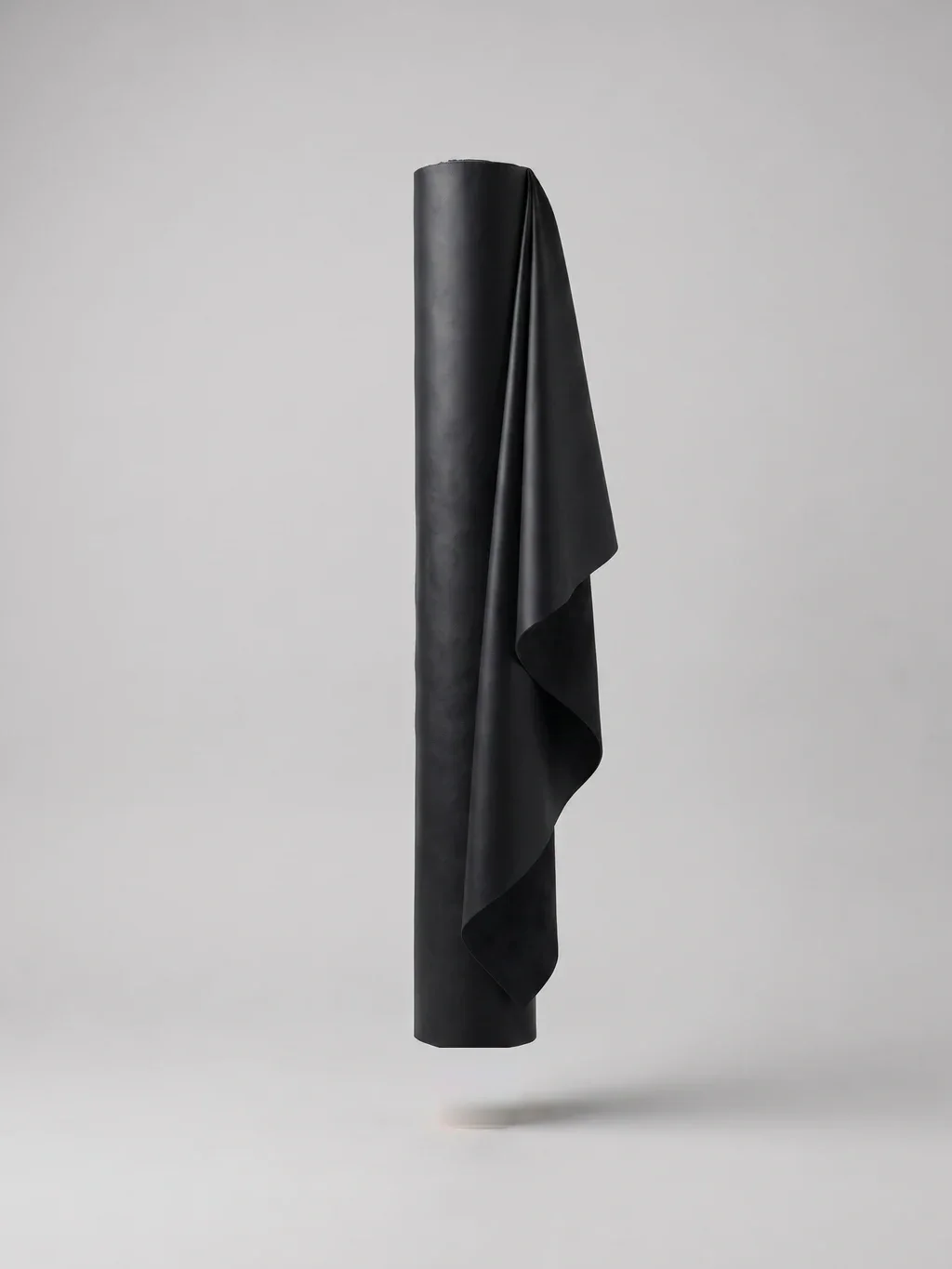
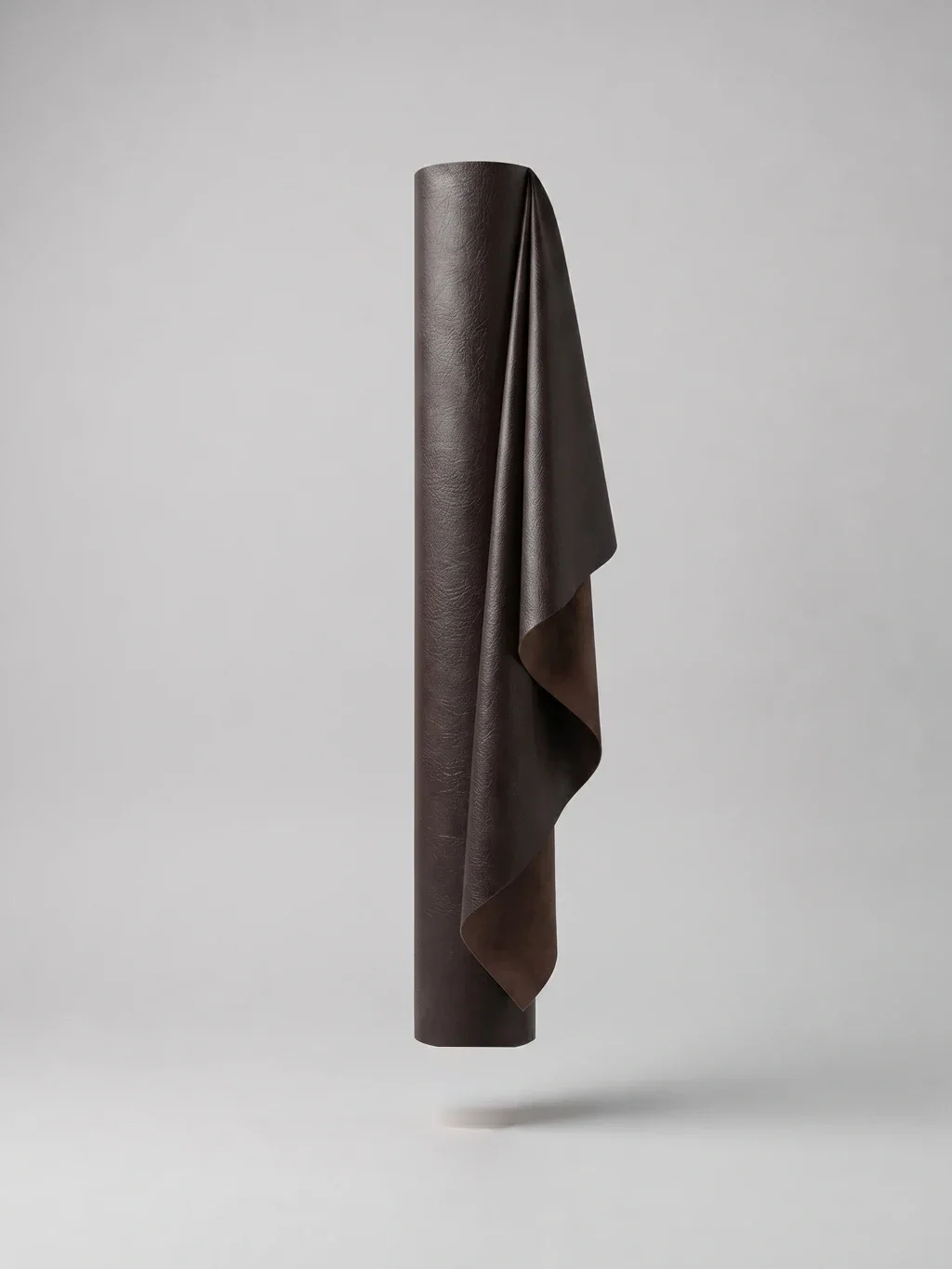
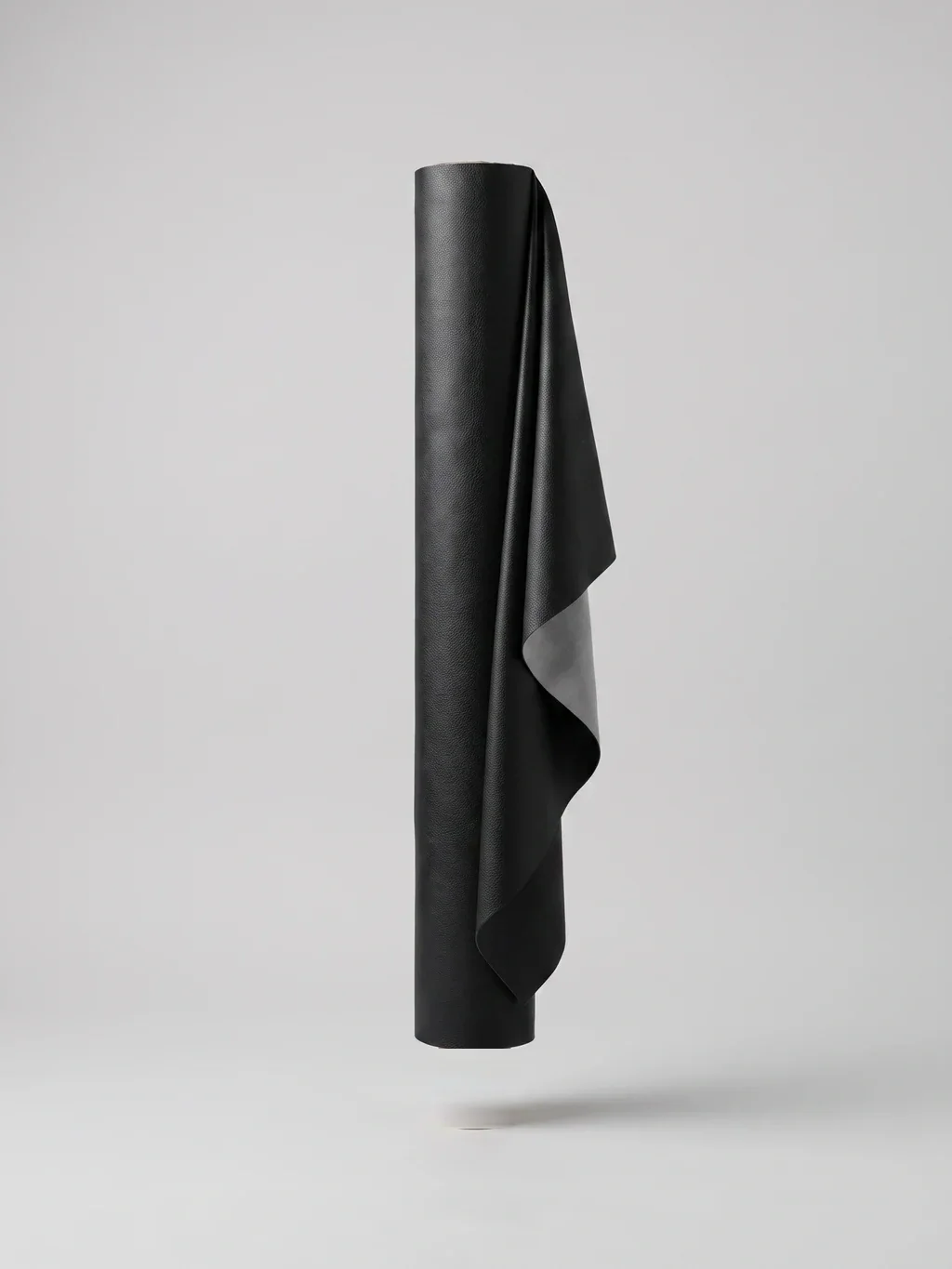
Scuba suede: a cloth that holds its shape and does not fray
Scuba suede has a suede-touch back and a full hand; it holds its shape and the cut edge does not fray. Here is how a scuba is built, what a non-fraying edge changes in design, and how buying by weight is worked out.
UB-SS150 Updated
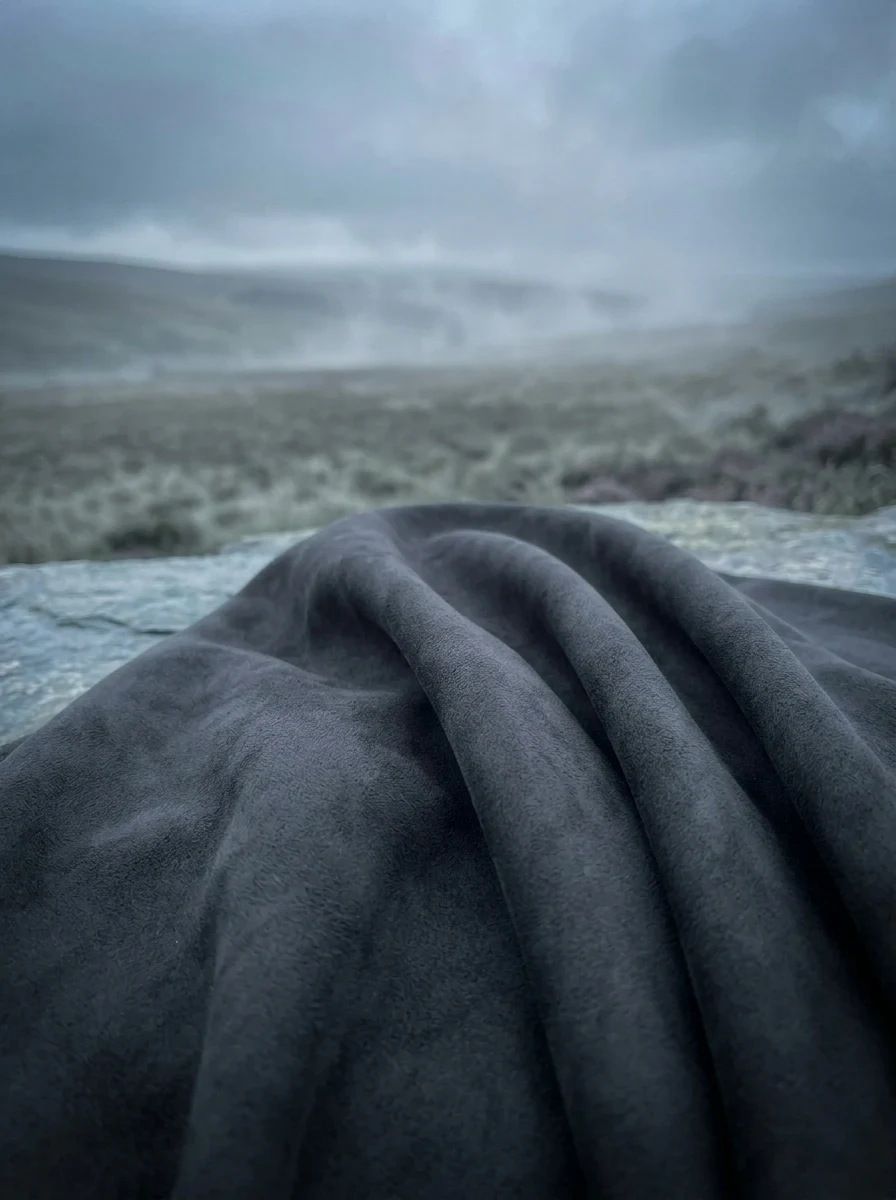
What is scuba?
Scuba is a family of knitted cloths named after diving suits. What they share is a double-faced knit structure: there is a thin volume between two surfaces, and that is why the cloth feels full in the hand.
That structure gives it something else: the ability to stand up by itself. An ordinary knit falls over the body; a scuba keeps its shape while it falls. A curve in the pattern stays a curve in the cloth.
Scuba suede is the member of that family with a suede-touch back. The face is flat and matt, the back soft and brushed. Ours is 150 cm wide and sold by weight, in 5 – 10 base colours.
What a non-fraying edge changes
The cut edge of a knitted cloth normally causes trouble: a ladder starts, or the edge curls. Scuba's double-faced structure prevents both — it stays as cut.
That opens up the same freedom you get with felt:
- Hems, cuffs and neckline edges can be left raw.
- Turning and binding steps drop out; production gets shorter.
- The cut edge can become a design element in its own right.
- Laser cutting and cut-out patterns are possible; the edges do not open.
- Seam allowances can be kept narrow.
You give something up in return: thickness. Scuba is a full cloth, and even unturned the edge reads thick. If a very fine finish is wanted, this is not the right cloth.
Before going into production with raw edges, wash an offcut a few times. The edge does not fray, but it can fuzz with friction; whether that is acceptable needs to be seen before the product, not after.
The suede back: which face goes out?
The two faces of scuba suede are different and both can be used. The decision follows what the garment is.
| Flat face out | Suede face out | |
|---|---|---|
| Look | Matt, flat, clean | Soft, textured, catches light |
| Soiling | Low | Higher; a brushed face holds dust |
| Wear | Durable | Flattens where it rubs |
| Where | Dresses, jackets, everyday wear | Detail pieces, collars, pocket flaps, accessories |
One thing to watch where the suede face goes out: a brushed surface has a direction. Run a hand over it both ways and the tone reads differently. Every piece has to be cut the same way up — the same rule that applies to velvet and to satin lining.
Cutting and sewing
Scuba is a full cloth with limited stretch. It is not difficult to sew, but it behaves differently from an ordinary knit.
- Needle: 80/12 – 90/14, ball point. A sharp point damages the knit structure.
- Stitch length: 2.5 – 3 mm. A short stitch in a thick cloth joins the holes up.
- Drop the presser foot pressure; a thick cloth stretches as it feeds under too much of it.
- The stitch has to be able to give: zigzag, overlock or a stretch stitch.
- Because the edge does not fray, overlocking is not compulsory — it is done only for appearance.
- Needle marks can be permanent — an unpicked seam leaves a trace. Do test seams on an offcut.
Be careful with the iron: scuba is synthetic and its full structure is crushed by heat. Once crushed, the volume does not come back. If pressing is needed, use low heat, a press cloth and steam without bearing down.
How buying by weight works
This cloth is sold by weight rather than by the metre. The reason is simple: in full, bulky cloths the weight per metre can vary between batches, and weight is the more reliable measure.
But what you need when ordering is metres. Bridging the two takes one piece of information: the weight per metre.
- Work out the metres per unit from the marker.
- Multiply the total metreage by the order quantity.
- Find out the weight per metre — we give you that on the phone.
- Metres × weight per metre = the weight you need.
- Add an allowance for waste and testing.
On a first order the healthiest route is to do this calculation together. From the second batch you know your own consumption, and we can talk directly in kilos.
Roll weight and weight per metre can vary between batches. Confirm the current figures on the phone before ordering — building the calculation on an old number throws your consumption estimate out.
Where it is used
| Product | Why scuba | Note |
|---|---|---|
| Dresses and skirts | A silhouette that holds | A curve in the pattern stays in the cloth |
| Jackets | Body without interlining | The cloth supports itself |
| Accessories | Cut edges can be left raw | Fewer production steps |
| Detail pieces | With the suede face out | Collars, pocket flaps, sleeve bands |
The second row is worth noting: because scuba gives body on its own, jackets and dresses often need no separate body interlining. That reduces both the production steps and the number of layers.
Common mistakes
- Cutting the suede face in different directions. The pieces read as two different tones.
- Sewing with a sharp needle. The knit structure is damaged.
- Pressing with a hot iron. The full structure is crushed and the volume does not return.
- Unpicking a seam. Needle marks are permanent; test on an offcut.
- Building the weight calculation on an old metre-weight figure. The consumption estimate goes wrong.
When you order
150 cm wide, sold by weight, in 5 – 10 base colours. Call for the current roll weight and weight per metre.
Tell us how many units you are producing and we can convert your metre requirement into kilos together.
Say if you are putting the suede face out — direction checking and tone matching become more critical then.
Samples, stock and delivery are settled on the phone.
Frequently asked questions
Can a scuba edge really be left raw?
It can — the double-faced knit prevents laddering and curling. But wash an offcut a few times before going into production: the edge does not fray, yet it can fuzz with friction. Whether that is acceptable for your product needs to be seen in advance.
Is interlining used with scuba?
Usually it is not needed. Because scuba gives body on its own, jackets and dresses can do without separate body interlining. For point support at collars and buttonholes, a fine interlining or Terfix tape can still be useful.
Can the suede face go out?
It can, and it is often chosen for detail pieces. Two things to watch: a brushed face holds dust and flattens where it rubs. It also has a direction — every piece must be cut the same way up, or they read as two different tones.
How much should I order when it is sold by weight?
Work out the metres per unit from the marker, multiply by the order quantity, then multiply by the weight per metre. We give you the weight per metre on the phone and it can vary by batch, so confirm the current figure before ordering. On a first order the healthiest route is to do the calculation together.
Can it be pressed?
With care. Scuba is synthetic and its full structure is crushed by heat; once crushed, the volume does not come back. If you must, use low heat, a press cloth and steam without bearing down — and test the setting on an offcut first.