Felt: working with a material whose edge never frays
Felt is a pressed non-woven surface; thick, with a cut edge that does not fray, it works as filling and support. Here is how it is made, how much that non-fraying edge changes in design, and where it goes in bags and footwear.
UB-KC100 Updated
What is felt?
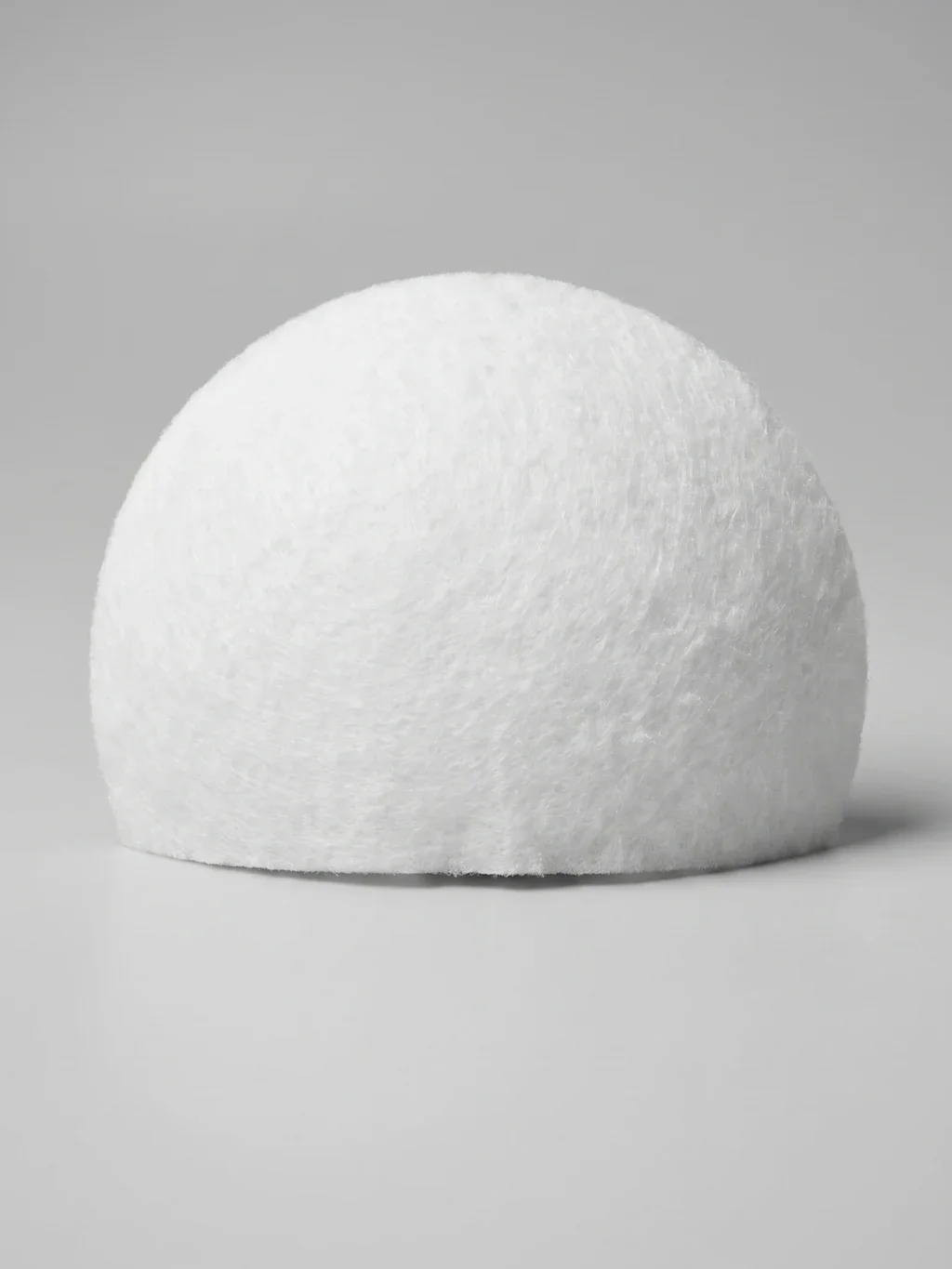
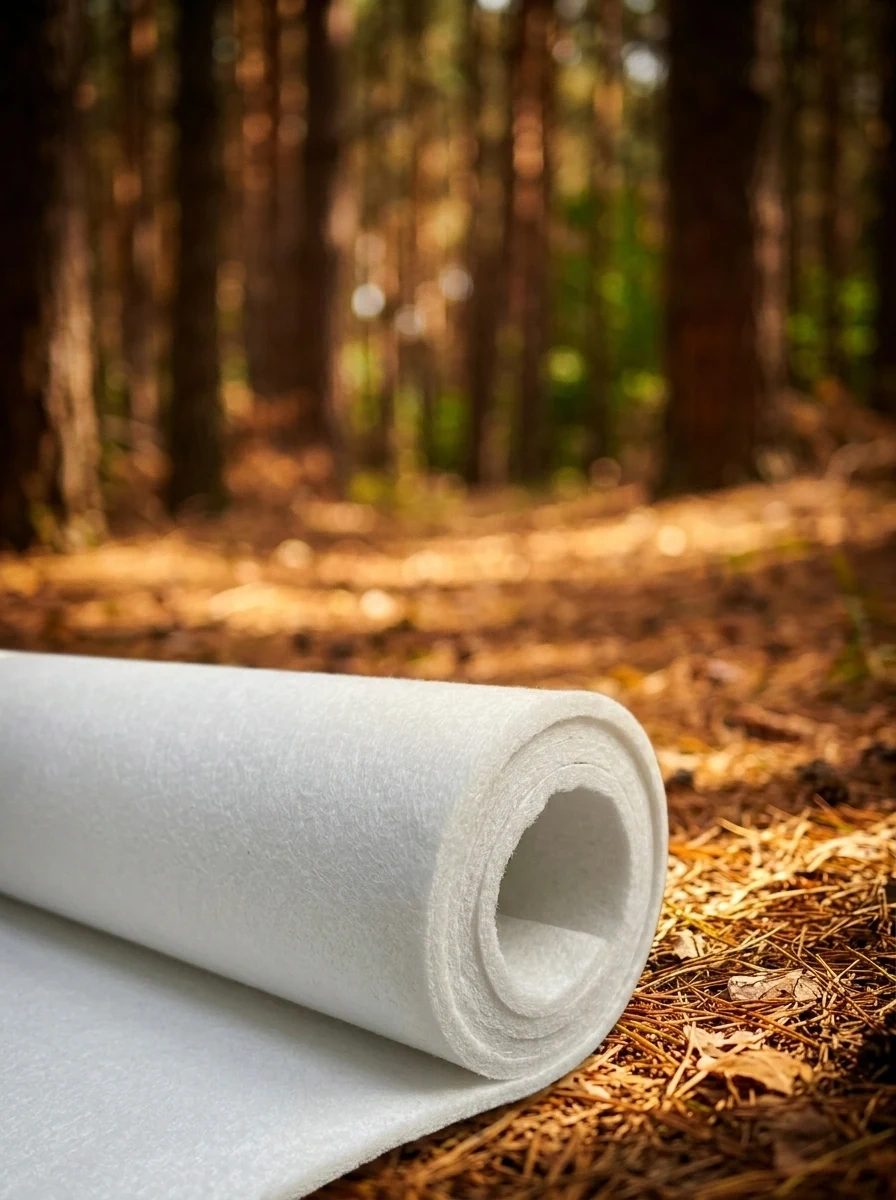
Felt is a surface formed by matting fibres together under pressure, heat and moisture. There is no weaving, no knitting, not even a yarn — only fibres locked into one another. It is one of the few textiles that becomes a fabric without ever passing through a spinning stage.
That method of making gives the material three clear properties: thickness, a cut edge that does not fray, and no grain. All three earn their keep below.
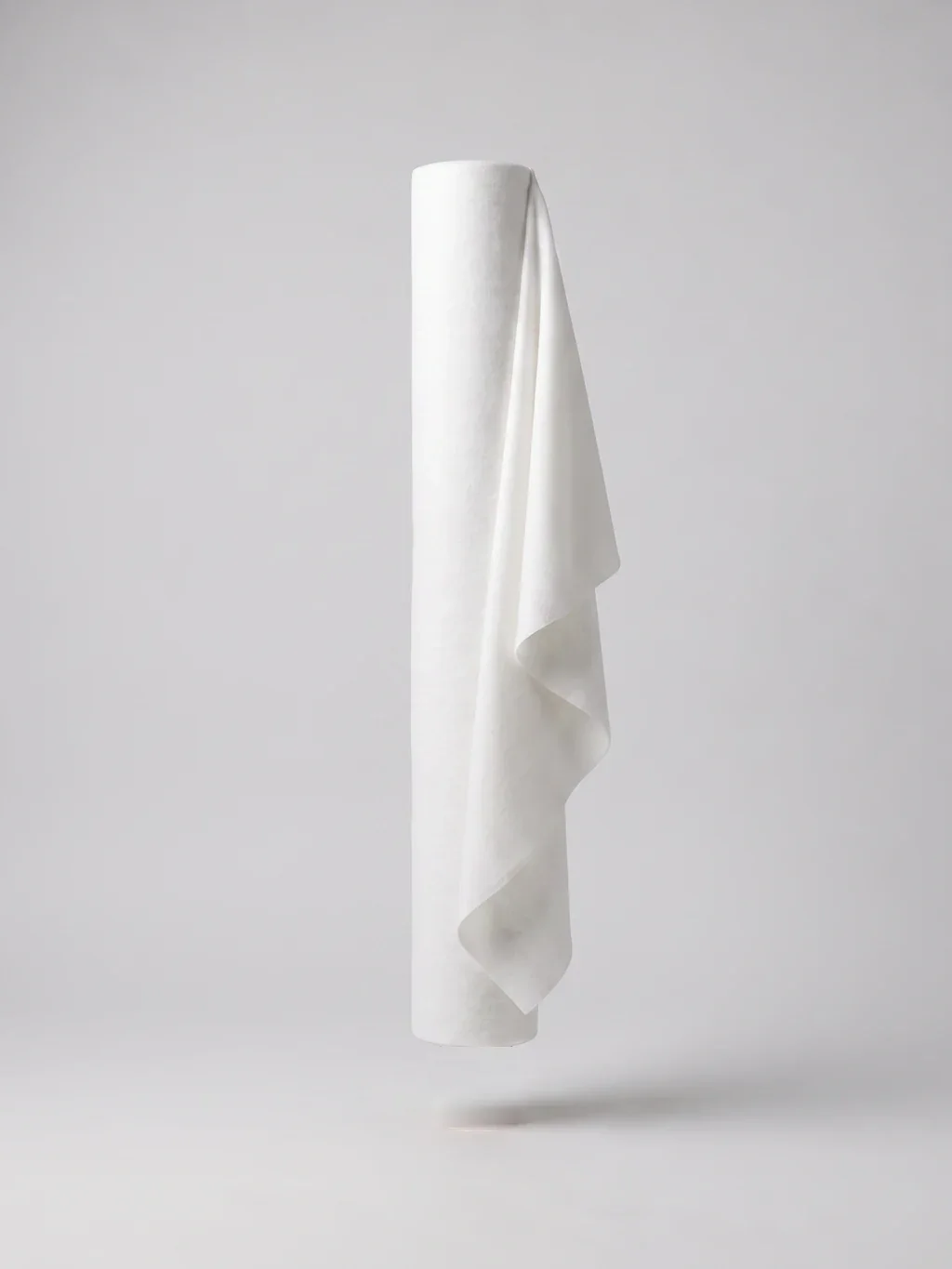
Ours is 100 cm wide, in 50-metre rolls, in the tones shown plus black.
The non-fraying edge: the defining property
In a woven cloth a cut edge cannot be left open. The threads separate, the cloth frays, and over time the piece gets smaller. That is why every cut edge is either turned, overlocked or bound.
Felt carries no such obligation. The fibres are locked; the edge stays as cut, and stays that way for years. What that buys in practice is considerable:
- No edge finishing — stitching, binding and overlocking steps drop out.
- The cut edge can become a visible design element in its own right.
- No seam allowance is needed; the piece is cut to its exact size.
- Pattern geometry opens up: sharp corners, narrow tabs, thin strips — all can be cut and left.
- Holes and cut-outs can be made without their edges opening.
That single property lets you treat felt like a sheet material rather than a cloth. When you design with it, you never once ask "how am I going to close this edge?"
Having no grain
In a woven cloth the warp and the weft behave differently, so the direction a piece is cut in affects its measurement, its drape and its strength. In felt the fibres lie in random directions, so the material behaves the same way whichever way you turn it.
On the marker that turns straight into yield. Pieces can be rotated freely and the dead space between them closes up. Do the same job in a woven and the fixed cutting direction would push the waste ratio up. The same advantage belongs to filling interlining and paper interlining — all of them non-wovens.
Where it is used
| Field | Its job | Note |
|---|---|---|
| Bags | Body and base support | Carries the form, spreads impact |
| Footwear | Inner structure and filling | Often used with filling interlining |
| Accessories | Pieces with a visible cut edge | No edge finishing needed |
| Filling layer | Volume between two layers | The thickness is the point |
| Protection and separators | Surface protection, interleaving | In packing and transport |
What felt does in bags and footwear is close to what body interlining does in a garment: it gives an outer material a form it could not hold on its own. The difference is that felt works as a separate layer rather than being fused on.
Choosing the thickness
Thickness is the decisive measurement in felt. How much support and volume you want runs straight through it.
- Thin felt: interleaving, surface smoothing, light filling. It folds and sews easily.
- Medium: bag bodies, accessories, general support. The most common use.
- Thick: bases, structural parts, impact spreading. Harder to machine; on some jobs bonding is preferred.
As thickness rises, two things get harder at once: sewing and folding. Thick felt resists the needle, and its outer surface can crack when it is bent. If a piece has to fold, either a thinner felt is chosen or the fold line is thinned beforehand.
Cutting and sewing
Felt is thick and dense; cutting it has more in common with leather than with cloth.
- Keep the blade sharp. A dull blade does not cut felt, it crushes and tears it, and the edge comes out furry.
- Keep the ply count low. Because of the thickness, lower plies can slide under the blade.
- In volume, die cutting gives the cleanest result — sharp, repeatable edges.
- Needle: heavy, sharp point. A fine needle breaks in thick felt.
- Stitch length: 3 – 3.5 mm. A short stitch in a thick material brings the holes together and creates a tear line.
- Adjust the presser foot height; thick felt does not pass easily under a standard foot.
That last point matters: dense stitching in a thick material sets the holes side by side and perforates it — the piece then tears exactly along the seam. As the thickness rises, the stitch length has to go up with it.
Storage and behaviour
- Store rolls flat; a roll on end is crushed along its bottom edge, and that mark can be permanent.
- Keep it dry. Felt absorbs moisture, and damp changes both its thickness and its hand.
- Do not leave it folded for long; a crease line is more permanent in felt than in cloth.
- An area held under pressure thins and does not fully recover.
- It does not need pressing; if it must be, use steam without bearing down.
The most misunderstood thing about felt is that its thickness is not permanent. Felt under constant pressure thins over time. In load-bearing places like a base, that has to be planned for.
Common mistakes
- Cutting with a dull blade. The edge comes out furry and uneven, and felt's biggest advantage is lost.
- Using a short stitch in thick felt. The holes join up and the piece tears along the seam.
- Making a piece that has to fold from thick felt. The outer surface cracks at the bend.
- Adding a seam allowance. Felt does not need one, and the allowance throws the measurement out.
- Storing it somewhere damp. The thickness and the hand both change.
When you order
100 cm wide, 50-metre rolls, in the tones shown plus black.
Thickness is discussed against the job; tell us what product it is for and how much support you expect from it.
Say if the cut edge is going to be visible — in that case how the edge comes out is directly a matter of product quality.
Samples, stock and delivery are settled on the phone.
Frequently asked questions
Does a felt edge really never fray?
It does not. There is no yarn in felt, only matted fibres; with no thread to separate, the edge stays as cut. That is why overlocking, binding and turning all drop out — you do not even need a seam allowance.
Which thickness should I choose?
It depends on the job. Thin felt for interleaving and surface smoothing; medium for bag bodies and general support (the most common); thick for bases and structural parts. If the piece has to fold, avoid thick felt — the outer surface can crack at the bend.
Does cutting direction matter?
No. The fibres lie in random directions, so felt behaves the same way whichever way you turn it. Pieces can be rotated freely on the marker, which is why the waste ratio comes out lower than with a woven material.
Does felt thin over time?
Areas under constant pressure thin and do not fully recover. In load-bearing places like a base that has to be planned for from the start — either choose a thicker felt or share the load with another layer.
How long is a roll?
50 metres, 100 cm wide. If you need a smaller quantity, let us talk it through on the phone.