Chiffon interlining: fusing to a fabric that shows everything
Chiffon interlining is a thin, semi-transparent fusible; in 30 and 45 g it supports light fabrics without disturbing their drape. Here is how to stop the interlining showing through a sheer cloth, how to pick between the two weights, and why the press setting is more delicate here.
UB-ST150 Updated
What is chiffon interlining?
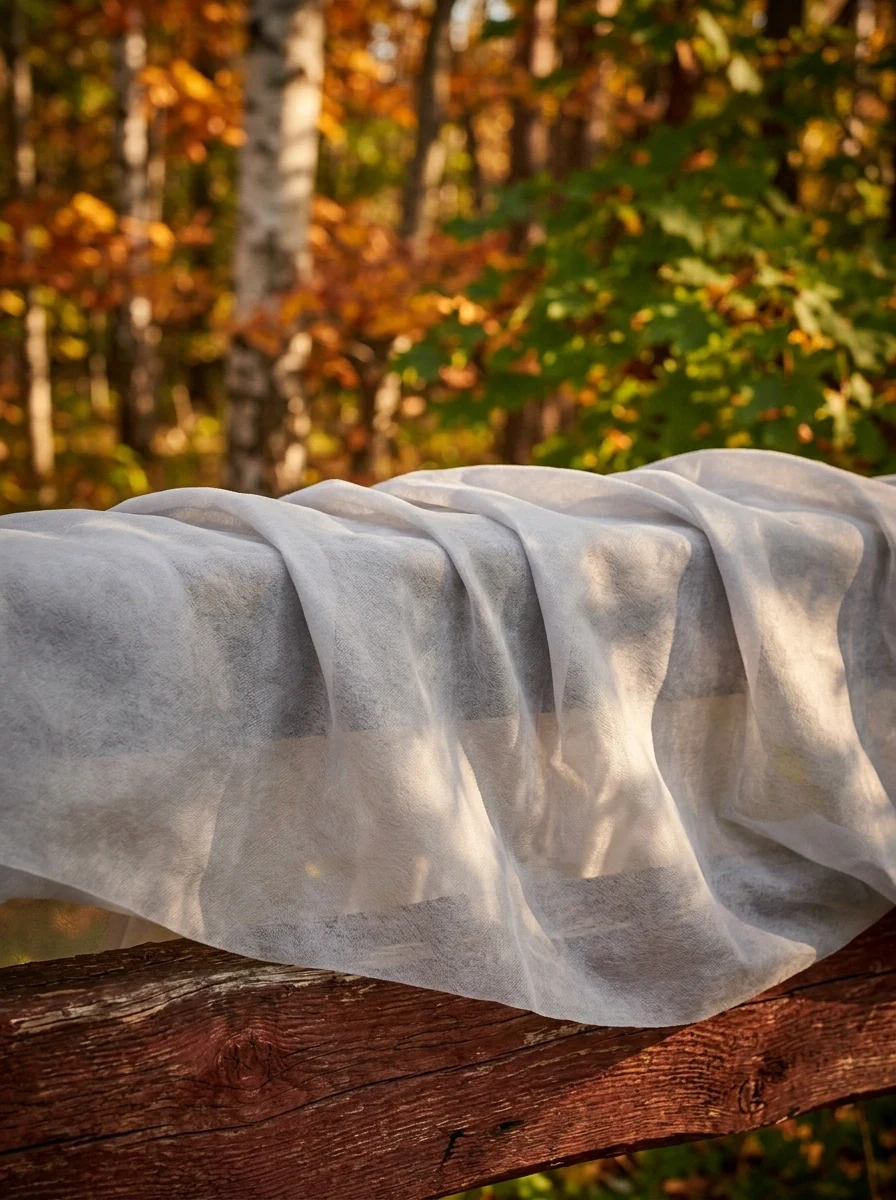
Chiffon interlining takes its name from the group of fabrics it is used on: chiffon, silk, fine shirtings — light cloths that are often semi-transparent. It is built on the same logic: very thin, semi-transparent, barely there in the hand.
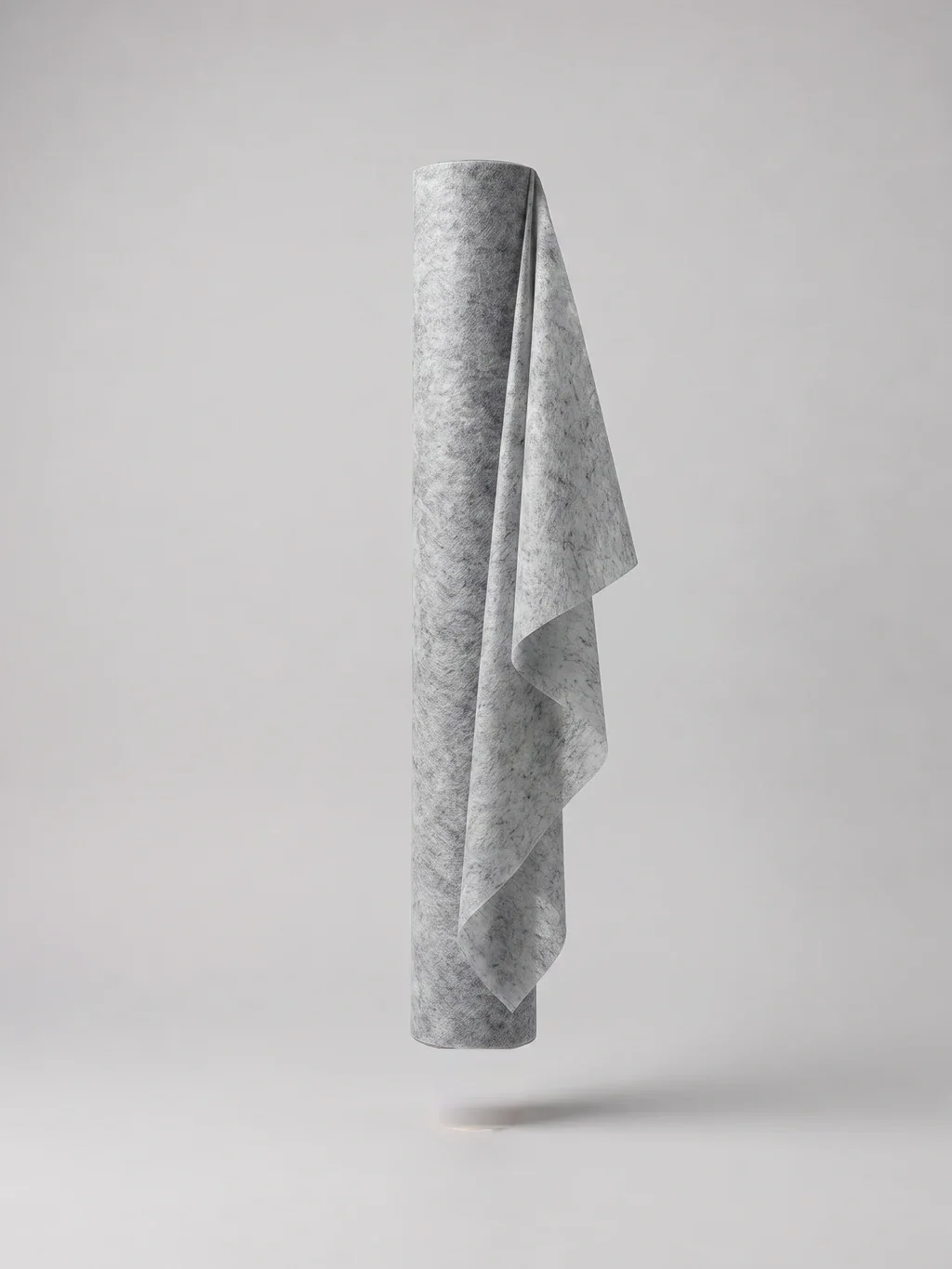
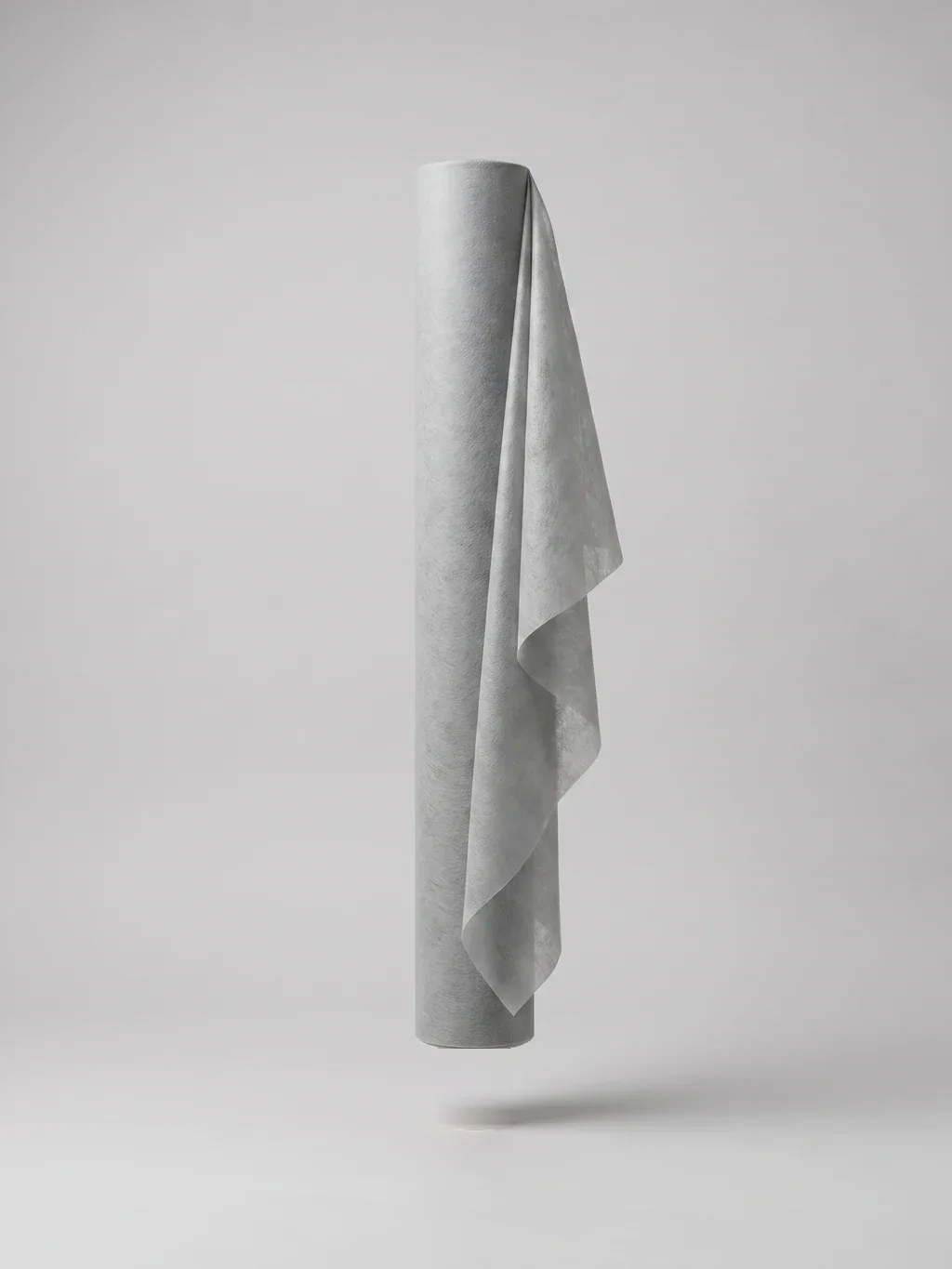
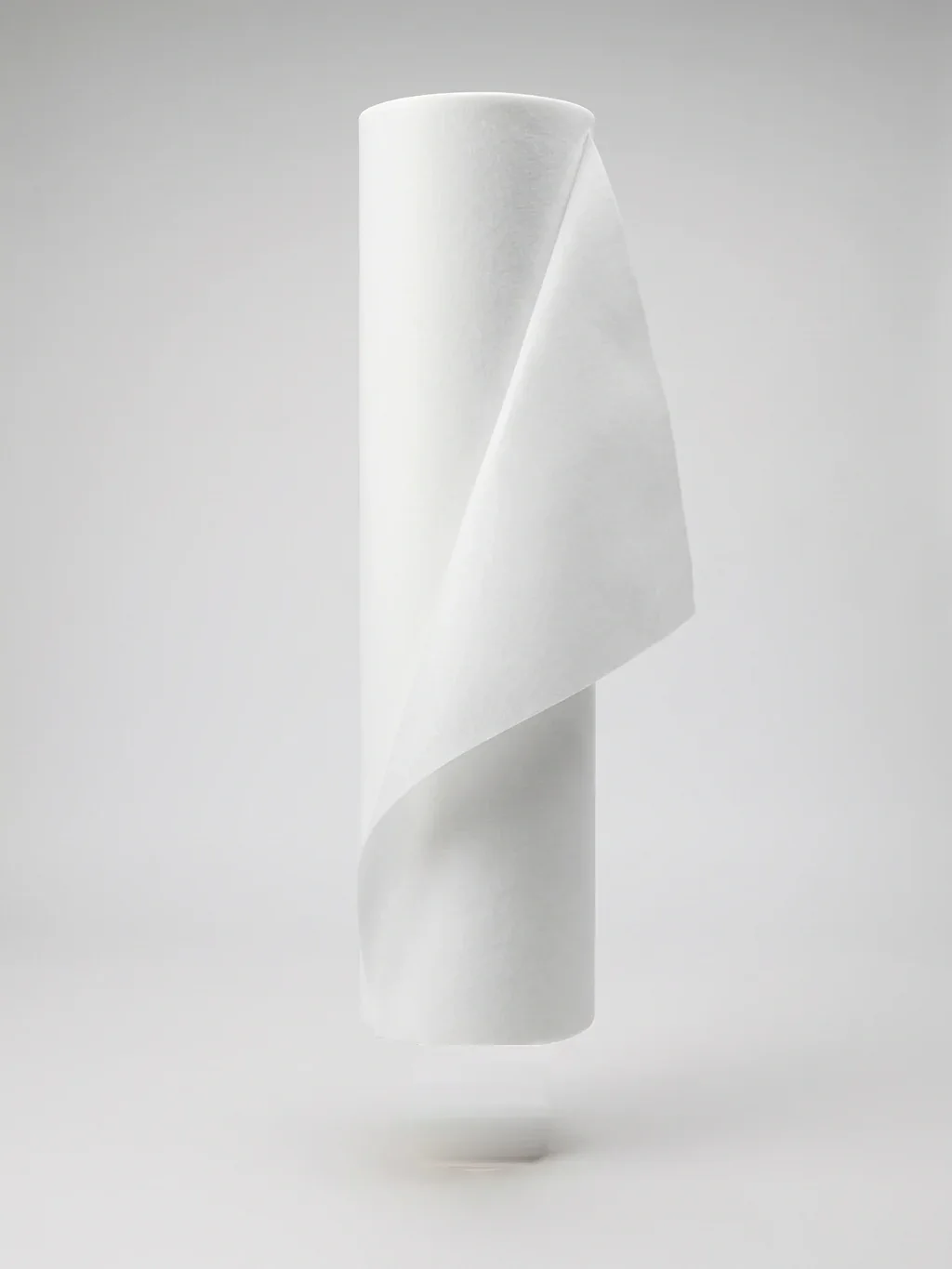
It comes in two weights, 30 and 45 g. 150 cm wide, in 100-metre rolls, in the tones shown plus white.
The gap between this and a heavier interlining is not only thickness. Fused to a light cloth, an interlining faces two tests: it must not disturb the drape, and it must not be visible from outside. Paper interlining passes the first and fails the second.
The real problem: the interlining showing through
On a heavy cloth, interlining is a support layer. On a light cloth it is a visibility problem. Light passes through the fabric, what is underneath declares itself, and the garment reads second rate.
It shows up in three ways, and each has its own answer:
- Colour difference. White interlining leaves a pale shadow under a coloured chiffon. Fix: choose the interlining close to the tone of the cloth — dark under dark, white under pale.
- Edge line. The cut edge of the interlining reads as a fine line on the face. Fix: cut the interlining slightly smaller and keep its edge inside the seam allowance.
- Texture difference. The fused area looks matter or firmer than the rest of the cloth. Fix: drop the weight and lower the heat.
Before you decide anything, fuse a piece to an offcut and hold it up to a window. Whatever shows in the light will show on the body. Skipping that test and going straight to the batch is the mistake we see most.
30 g or 45 g?
The number is grams per square metre. The higher it goes, the more support the interlining gives — and in the same proportion, the more it shows and the more it takes out of the drape.
| 30 g | 45 g | |
|---|---|---|
| Hand | Barely detectable | Light but definite support |
| Transparency | Hard to spot under a sheer | Can show under a very fine cloth |
| Where | Chiffon, silk, very fine shirting | Blouses, fine shirting, unlined dresses |
| For what | Stabilising the cut edge | A touch of body in collars and cuffs |
If you cannot decide, the rule is simple: the sheerer the cloth, the lower the weight. Not enough support is a fixable problem; a visible interlining is not.
Why the setting is more delicate here
A thin cloth passes heat straight through. The temperature and dwell that work on a heavy wool can yellow a chiffon or drive the glue to the face.
So all three settings come down on a light cloth: less heat, less pressure, less time. The fuse still happens — the adhesive does not need much heat to melt in the first place.
- Keep the heat at the lowest setting that works; work upward from cold on an offcut.
- Drop the press pressure. High pressure prints the interlining outline through a thin cloth.
- Shorten the dwell. On a light cloth the heat reaches the other side in seconds.
- With an iron, do not slide — press down and lift, then move on.
- Put a thin cloth between the iron and the interlining; it protects both the soleplate and the fabric.
Where it is used
| Where | For what | Weight |
|---|---|---|
| Chiffon and silk dresses | Stabilising the cut edge | 30 |
| Blouse collars | Keeping the collar from curling | 30 – 45 |
| Fine shirt cuffs | A little body | 45 |
| Unlined dresses | Neckline and armhole | 30 |
| Buttonholes and button stands | Stopping the cloth tearing | 45 |
In this group of fabrics you do not fuse everywhere. What makes chiffon worth using is the way it falls, and every fused centimetre takes a piece of that away. Only the load-bearing places get interlined: cut edges, buttonholes, button stands, the lapel roll.
What can be used instead
Sometimes the right answer is not an interlining at all. Support on a light cloth can come three ways, and which one you take depends on what the piece has to do.
- Chiffon interlining — when the support has to cover an area: collars, cuffs, plackets.
- Terfix tape — when only a line needs stabilising: a shoulder, a neckline, a zip edge. Being a strip, it does not spread over the surface.
- Organza or a second layer of the cloth — where no adhesive is wanted at all. It is stitched in, so there is no risk of glue marks.
The third route belongs mostly to made-to-measure work; in volume, fusible interlining wins because it is both fast and repeatable.
Common mistakes
- Fusing white interlining under a dark cloth. A grey shadow appears in the light.
- Using heavy-cloth settings on a light cloth. Yellowing and strike-through follow immediately.
- Cutting the interlining the same size as the fabric piece. The edge line reads from the face.
- Interlining the whole panel. The drape of the chiffon disappears and the garment becomes a different thing.
- Skipping the window test. Noticing a visible interlining after fusing costs the batch.
When you order
150 cm wide, 100-metre rolls. Naming the weight — 30 or 45 — along with the colour is enough.
Tell us what fabric you are working with; on light cloths the interlining cannot be chosen independently of it. Bring a piece if you can, and we can run the test together.
Samples, stock and delivery are settled on the phone.
Frequently asked questions
How do I choose between 30 and 45 g?
The thinner and sheerer the cloth, the lower the weight should be. 30 goes on very fine cloths like chiffon and silk; 45 on blouses and fine shirtings. If you cannot decide, take the lower one: not enough support can be corrected, a visible interlining cannot.
The interlining shows through the fabric. What now?
Three possible causes: the interlining colour does not match the cloth, the weight is too high, or the piece was cut the same size as the fabric. Check them in that order, and fuse to an offcut and hold it to a window before deciding.
What is used instead of interlining on chiffon?
If only a line needs stabilising, Terfix tape suits better — being a strip, it does not spread across the surface. Where no adhesive is wanted, stitched-in organza or a second layer of the cloth is used.
What press setting should I use on a light cloth?
There is no single number; it depends on the fabric. But all three settings — heat, pressure, dwell — should come down compared with a heavy cloth. Start at the lowest on an offcut and work upward.
How long is a roll?
100 metres, 150 cm wide. If you need a smaller quantity, let us talk it through on the phone.